Cat Hydration: Simple Kitchen Scraps That Add Real Moisture to Your Cat’s Diet
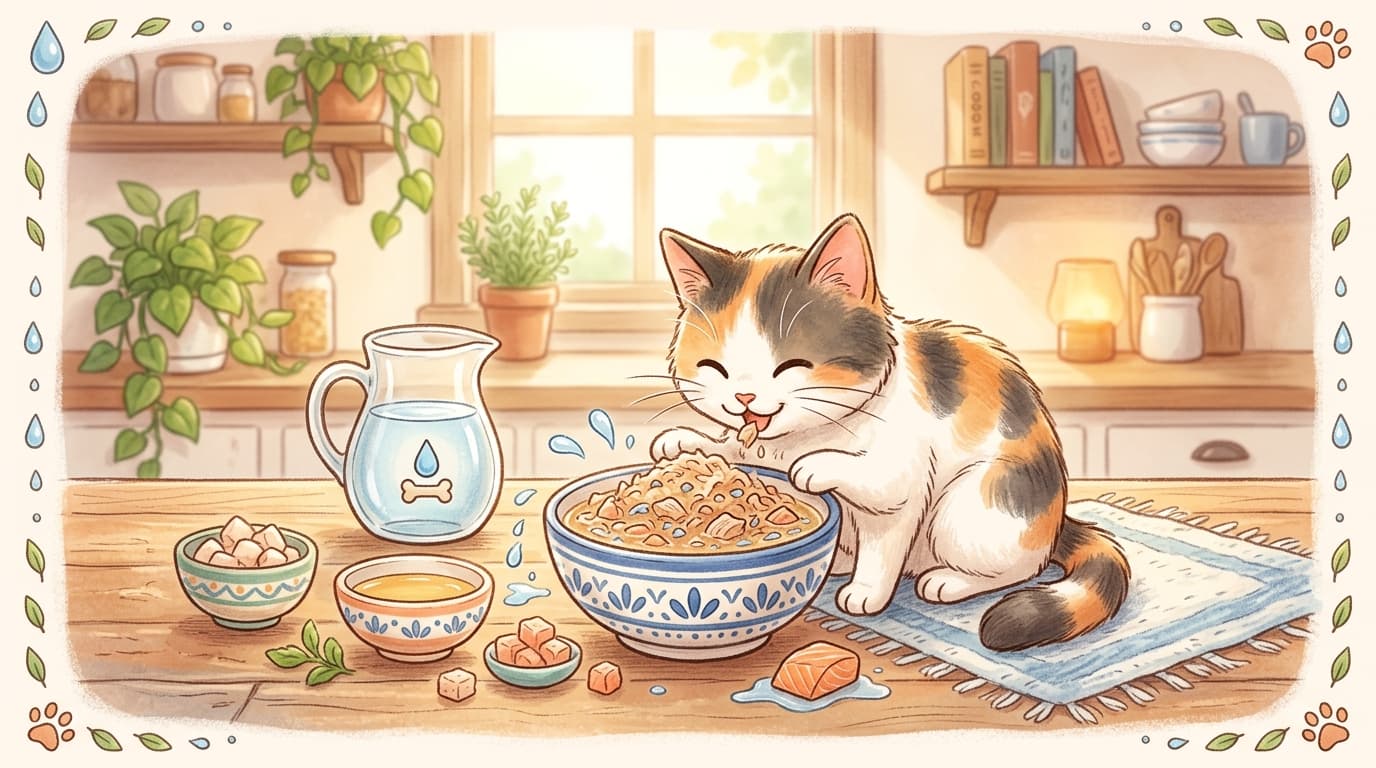
Most pet owners don’t realize how little water is in dry kibble—often under 10%. Meanwhile, a cat’s natural “menu” in the wild contains moisture closer to 70%, and that gap can quietly chip away at cat hydration over the years.
If you feed kibble (even alongside wet food), the goal isn’t to panic. It’s to sneak more usable water into your cat’s day in ways they’ll actually accept.
Why cat hydration is harder than “just drink more”
Cats didn’t evolve to rely on a water bowl the way dogs often do. Their bodies are built to conserve water and make concentrated urine—handy for desert ancestors, not so great if most of their calories come from crunchy, low-moisture food.
That’s why a cat can look totally fine—bright eyes, normal playtime, same attitude—and still be running a little dry. Kidney issues also tend to stay hidden until they’re advanced, which is one reason hydration-friendly habits matter long before anything seems wrong.
Water fountains and wet food can help a lot, but there’s another piece people miss: cats often do better getting water through food.
The “kitchen scrap” strategy (small amounts, often)
Think of these add-ins as moisture boosters, not a new diet. You’re aiming for tiny portions mixed into wet food or offered as a curious little side bite.
A few tips that make a big difference:
- Go slow. New textures can trigger instant suspicion. Let your cat sniff, paw, and investigate.
- Keep portions small. You want hydration, not a veggie-heavy meal.
- Be consistent. A little bit daily beats a big portion once in a while.
Cucumber scraps: the crisp hydration booster
Cucumber is basically a portable water pack (around the mid-90% water range). The nice part is that it’s water held inside plant cells, so it doesn’t behave like “free liquid” that just sloshes through—it’s released as your cat chews and digests it.
How to use it:
- Save the ends and the seedy middle you’d normally toss.
- Peel it if you’re not sure about pesticides on the skin.
- Dice into pea-sized bits and mix 2–3 tiny pieces into wet food.
Some cats love the crunch immediately. Others act offended. If you’ve ever offered your cat something “healthy” and gotten the look of betrayal, you know the vibe.
Portion guide: For an average-sized adult cat, keep it to about 1 tablespoon chopped cucumber per day at most, especially because cucumber contains potassium and you don’t want to overdo minerals if your cat already has kidney concerns.
Zucchini for cat hydration (and a kidney-friendly bonus)
Zucchini is another high-moisture option (also in the mid-90% water range), and it has an extra point in its favor: it’s considered a low-oxalate vegetable. That matters because high-oxalate foods can contribute to certain urinary crystal issues, while zucchini stays on the gentler side.
How to use it:
- Save the ends, the seedy center, and even some skin if it’s organic.
- Steam for 2–3 minutes, then cool.
- Chop small and mix a little into wet food.
Steaming helps soften the texture and can reduce the mild bitterness some cats reject in raw zucchini.
Portion guide: About 1/2 teaspoon to 1 teaspoon per day max for a typical 10 lb (4.5 kg) cat. The magic is the routine—tiny daily amounts over months.
Celery leaves: moisture plus gentle “movement” support
Celery doesn’t get much attention in cat hydration conversations, but it’s surprisingly useful. It’s very water-rich and has a crisp texture some cats enjoy. The leafy tops are the real secret because they’re softer and easier to chew than the stringy stalk.
How to use it:
- Save the celery leaves (the part many people throw away).
- Chop very finely and mix just a pinch into wet food.
- If you want to try stalk: chop extremely small and steam about 3 minutes to soften.
Celery also contains natural sodium and potassium. In tiny amounts, that can support electrolyte balance, but it’s also the reason you must keep portions conservative.
Portion guide: About 1/4 teaspoon of finely chopped leaves per day max for an average cat. Skip celery if your cat has advanced kidney disease or has been told to avoid sodium.
Melon or watermelon rind: the summer moisture treat
The white, firm layer of rind (not the hard outer skin) from watermelon or other melons holds a lot of water—low 90% range—and the slightly sweet scent can tempt picky cats who ignore greener veggies.
How to use it:
- Remove the hard outer skin.
- Cut the white rind into tiny cubes.
- Offer a couple pieces as a treat or mix a small amount into wet food.
Portion guide: A few small pieces once or twice a week is plenty. Avoid this option for cats with diabetes or cats who gain weight easily, since even rind can contain some sugars.
A simple weekly plan to improve cat hydration without stress
If you like structure, try this:
- Most days: cucumber or steamed zucchini (tiny amounts)
- A few days per week: a pinch of chopped celery leaves
- Occasional treat: melon rind in warm months
Your job is to find the one your cat accepts and repeat it consistently. Even “one extra spoonful of moisture per day” adds up over time.
Closing takeaway
Your cat’s kidneys and urinary system run best with moisture coming from food, not just a bowl nearby. Start with one scrap, keep the portion tiny, and let your cat set the pace.
If your cat has diagnosed kidney disease, diabetes, or a strict prescription diet, check with your vet before adding new foods—small ingredients can matter a lot in those cases.
Continue reading

What Happens When You Feed Your Cat Wet Food Every Day (Hydration, Weight, Coat & More)
Daily wet food can boost hydration, support a healthy weight, improve coat quality, and calm food-obsessed behavior—if you serve it safely.

Daily Wet Food for Cats: What Changes in Hydration, Weight, Coat, and Behavior
Daily wet food can boost hydration, support urinary health, help weight control, improve coat shine, and reduce food anxiety in cats.

14 Everyday Mistakes That Can Quietly Damage Your Cat’s Kidneys
Kidney disease is a leading killer in cats. Learn the daily habits—food, water, litter, toxins—that can quietly harm your cat’s kidneys.