Daylight Saving Time and Dogs: A Simple 7-Step Plan to Keep Your Pet Calm and On Schedule
Help your dog (or cat) adjust to daylight saving time with gradual schedule shifts, calm routines, and smart feeding and walk tips.
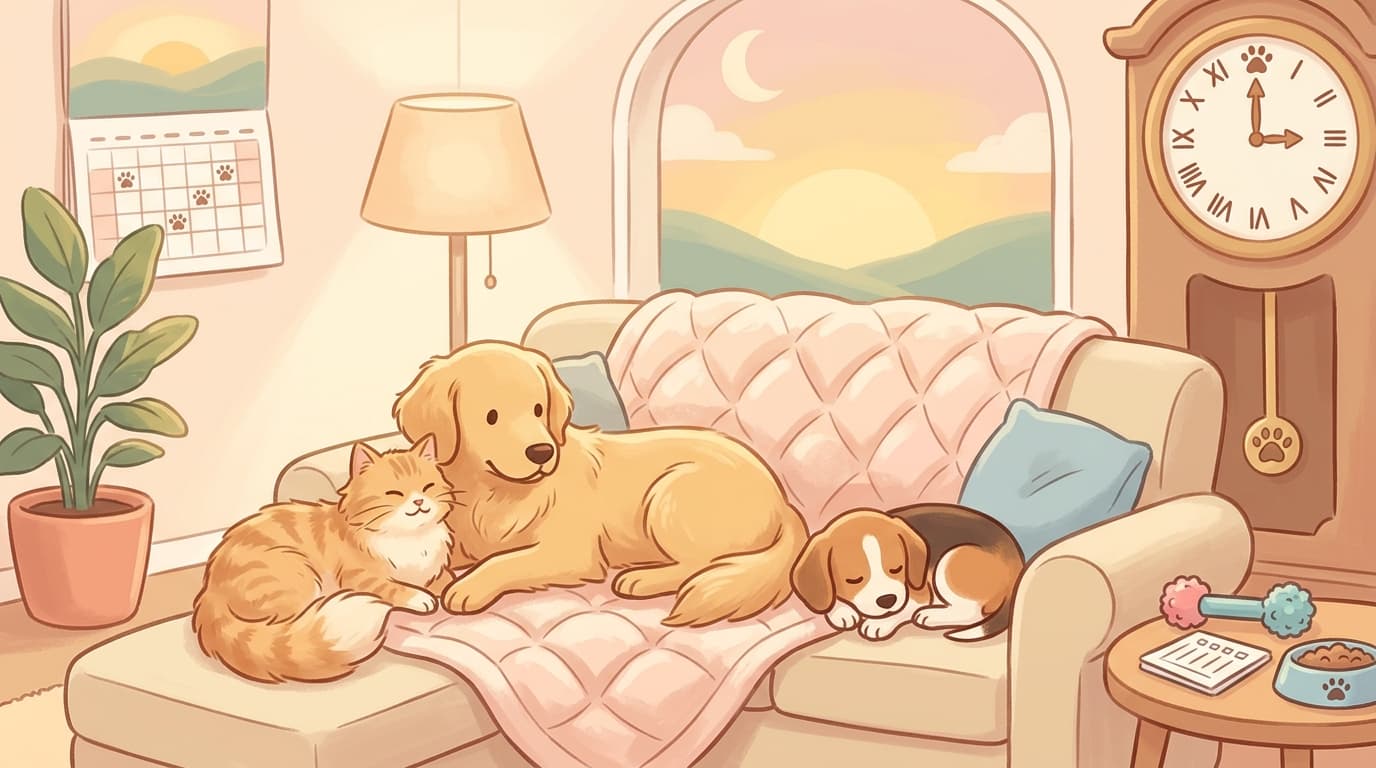
Your dog may not read a clock, but they absolutely “read” your routine. So when daylight saving time hits and dinner shows up an hour “late,” don’t be surprised if you get the stare-down, the pacing, or the extra-early wake-up call.
Why daylight saving time and dogs don’t always mix
Dogs (and cats, too) run on patterns: light and dark, household noise, your morning habits, and the usual timing of food, walks, play, and bedtime. Daylight saving time and dogs can clash because that one-hour shift breaks the rhythm they’ve been using to predict their day.
For some pets, it’s a mild annoyance. For others—especially pets with strict meal times, regular potty breaks, or medication schedules—it can feel like their whole world got rearranged overnight.
Start adjusting your dog’s schedule before the clock changes
The smoothest transitions usually start early. About 1–2 weeks before daylight saving time, begin nudging your dog’s routine in small steps.
Aim to shift key activities by 5–10 minutes per day:
- Meals
- Walks and potty breaks
- Playtime
- Bedtime
Those tiny moves add up, and your pet’s internal “timer” has a chance to catch up gradually instead of being forced into an instant one-hour jump.
Keep the new routine consistent (and think in intervals, not exact times)
Once the time officially changes, consistency is your best friend. Try to keep meals and walks happening at predictable intervals rather than constantly “correcting” the schedule day to day.
If you’ve ever noticed your dog getting antsy at their usual walk time, you’ve seen how strong that routine-memory is. The more steady you are after the switch, the faster they settle.
A helpful tool here: automatic feeders. They can take the pressure off you (and reduce the chance of accidental “oops, I’m late” meals that confuse your pet even more).

Keep the house calm so your pet doesn’t absorb your stress
Most pet owners don’t realize how much their animals mirror their energy. If you’re rushing around because the morning feels off, your dog may read that as, “Something’s wrong.”
A calmer environment can make daylight saving time and dogs a much easier combo:
- Avoid sudden blasts of light or noise, especially first thing in the morning
- Keep wake-ups gentle (no dramatic flipping on every light)
- Dim lights before bed to signal wind-down time
- Set up a cozy, predictable resting spot
The goal is to make the routine feel familiar even if the clock says something different.
If your pet takes medication, adjust timing slowly (and get a plan)
Medication schedules can be a bigger deal than meals or walks, especially for pets taking drugs that need steady levels in the body (think conditions like diabetes or seizure disorders).
If your pet is on time-sensitive meds, talk with your veterinarian about a safe adjustment plan. Useful questions to ask include:
- Can the dose time shift in 10–15 minute increments?
- Should the change happen over several days or a full week?
- What signs of a bad timing shift should you watch for?
- What’s your emergency protocol if a serious reaction occurs?
This is one area where “winging it” isn’t worth the risk.
Don’t skip exercise and enrichment—use it to burn off extra jitters
A time change can make some pets restless, clingy, or generally “off.” One of the easiest ways to help is to keep up with physical activity and add a little extra mental work.
Great options:
- Scent games (hide treats and let your dog hunt)
- Puzzle feeders
- Treat-dispensing toys
These activities give your pet something productive to focus on, and they can take the edge off that weird, unsettled feeling that comes with a disrupted routine.
Watch for stress signals and be patient for a few days
Even with preparation, your pet might act a little different for a short stretch. Mild confusion is common.
Signs your pet may be stressed by the schedule shift:
- Panting when it’s not hot
- Pacing
- Whining
- Appetite changes (hungrier than usual or temporarily picky)
Offer reassurance, keep your tone relaxed, and stick to the new routine. Most pets adjust within a few days to a week or two, especially if you eased into the change.
Daylight saving time and cats: yes, they notice too
Indoor cats often seem “above it all,” but they’re usually very schedule-driven—especially around food and attention. After the time shift, you might notice:
- More vocalizing
- Restlessness
- “Reminders” that breakfast is late
The same approach works: small schedule shifts ahead of time, consistency afterward, and a calm household rhythm.
A simple way to get back on track after the time change
If things feel messy after daylight saving time, don’t keep bouncing around trying to fix it. Pick the new schedule and commit to it. Praise, treats, and normal routines help your pet accept the updated pattern faster.
Your pet won’t understand why the clock changed, but they’ll feel safer the moment life becomes predictable again.
Closing takeaway
Daylight saving time can throw dogs (and cats) off because routine is their version of “time.” A week of tiny adjustments, a calm home vibe, and steady follow-through can make the whole change feel like no big deal.
Continue reading

Can Dogs Eat Avocado? The Real Risks (And Safer Fruit Choices)
Avocado isn’t the best snack for dogs. Learn the risks of the pulp, pit, and skin—and which fruits are safer instead.

Dogs and Humans: The 16,000-Year Friendship That Started With Wolves
New DNA evidence shows dogs have been by our side for over 16,000 years—longer and wider across Eurasia than we thought.

Dogs Have Been By Our Side for Over 16,000 Years: What DNA Reveals About Our Oldest Pet Bond
New DNA research suggests dogs have lived alongside humans for 16,000+ years—much earlier than we thought.