
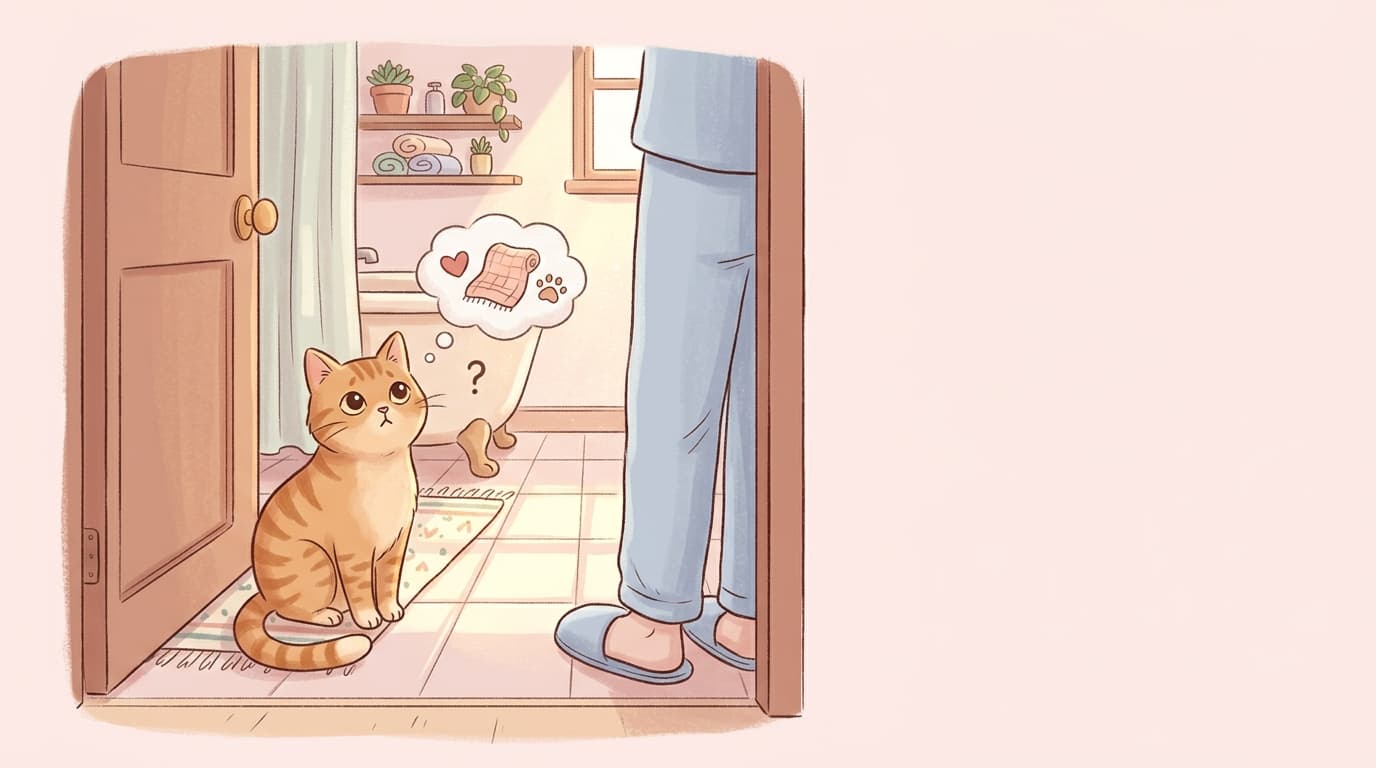
Why Your Cat Follows You to the Bathroom (and What They’re Really Saying)
Your cat isn’t being “weird” when they escort you to the bathroom. Most of the time, they’re doing something much sweeter: checking that their world (you included) is safe, predictable, and still under their watch.
Cats speak in body language, routines, and tiny rituals. If you’ve ever noticed your cat stretching dramatically the second you walk in, staring at you like a little detective, or crying when a door closes, you’re seeing a whole conversation—just not in words.
Why your cat follows you to the bathroom
Bathroom-following usually comes down to two very cat-like reasons:
- Closed doors feel “wrong” in their territory. Cats like access. A shut door can trigger curiosity, frustration, or the need to monitor what’s happening on the other side.
- You’re their safety anchor. Many cats get a bit uneasy when their favorite human disappears behind a barrier. Following you is their way of confirming you’re still there and everything is fine.
In other words, your cat isn’t just being clingy. They’re doing a quick security check… with you as the main priority.
The slow, dramatic stretch that happens right when you appear
That long, theatrical stretch when you enter the room isn’t random. Stretching exposes a cat’s body and lowers their guard—so doing it in front of you can be a quiet sign of trust.
It’s like your cat is saying, “I can relax fully because you’re here.”
The belly-up “trap”: trust, not always an invitation
When your cat rolls over and shows their belly, it’s a big deal. The belly protects vital organs, so exposing it is a major confidence move.
But here’s the part most pet owners don’t realize: belly exposure doesn’t automatically mean “please pet me.” Some cats enjoy belly rubs, but many will react with a quick grab or bite if you go straight for that area. It’s not betrayal—it’s your cat protecting their most sensitive zone after offering you trust.
Why your cat rubs on your legs (you’ve been “claimed”)
That face-and-body rub against your legs is scent marking. Cats have scent glands around the face and body, and rubbing transfers their smell onto you.
If your cat does it more when you come home, it’s often because you return with “outside” scents. They’re basically restoring you to the proper household fragrance: theirs.
Sleeping on you is a bigger compliment than it looks
Sleep is a vulnerable state for any animal. So when your cat chooses to nap on your legs, curl up against your back, or settle on your chest, it’s not just about warmth.
It’s a trust signal: your cat believes you’re part of their inner circle—the place where they can fully power down.
Why your cat climbs onto your chest while you’re busy
Yes, they want warmth. But there may be more going on.
Many cats find the steady rhythm of a human heartbeat soothing. Lying on your chest can be a comfort habit—your cat using you as their calm-down spot, like a living security blanket.
The intense stare: curiosity, control, and comfort
That unblinking, suspense-movie stare can feel dramatic, but it often means you’re simply the most interesting thing in the room.
Cats observe to feel in control of their environment. Staring can be a mix of fascination and confidence—your cat is comfortable enough to watch you closely, like they “get” your patterns.
Boxes aren’t just fun—they’re stress relief
Cats love boxes because they’re strategically perfect: covered sides, one main entrance, and a safe little hideout.
A box lets your cat watch the world without feeling exposed. For many cats, hopping into a box quickly lowers stress—it’s not only play, it’s instinct.
Licking you is social bonding (you’re in the family)
When your cat licks your hand, face, or hair, they’re not just tasting yesterday’s lotion. Grooming is a social glue among cats.
This kind of licking can mean your cat considers you part of their group—and they’re treating you the way they’d treat a trusted companion.
The “loaf” position: paws tucked, peace activated
When your cat tucks their paws under their body like a little bread loaf, it usually signals deep relaxation.
Those paws are their tools for quick escape or defense. Tucking them away suggests your cat feels safe enough to fully chill.
Why your cat turns their back to you
It looks like snubbing, but it’s often the opposite.
When a cat sits near you while facing away, they’re showing trust. They’re exposing a vulnerable area and basically saying, “I don’t need to keep an eye on you—you’re safe.”
The 3 a.m. zoomies: stored energy looking for an exit
Those sudden nighttime sprints aren’t your cat being possessed. Cats naturally have activity spikes around dawn and dusk.
If your cat regularly goes full racecar at night, it can mean they need more play and stimulation during the day—more chances to hunt, chase, pounce, and burn off that extra fuel.
Your cat’s meow is basically designed for humans
Adult cats don’t typically meow at each other the way they meow at people. Many cats learn that humans respond to vocal sounds, so they develop a whole “menu” of meows—different tones for different outcomes.
If it feels like your cat has a special voice just for you… you’re probably right.
The “scratch my hand” back arch is a pleasure signal
When you pet your cat and they lift or arch their back into your hand, they’re often maximizing the sensation.
It’s a strong sign they’re enjoying the contact and trust your touch enough to ask for more pressure in the spots that feel best.
Eating grass and throwing up: an instinctive reset
Seeing your cat nibble grass and then vomit can be alarming, but it’s often a purposeful behavior.
Cats don’t digest plant fiber well. They may use grass to help bring up hairballs or other indigestible bits—an instinctive “clear-out” that’s been part of cat life for a very long time.
Hiding can be a red flag
Most of these behaviors are everyday bonding signals. But one deserves extra attention: sudden hiding and withdrawal.
Cats instinctively conceal weakness because, in nature, a sick animal becomes a target. If your normally social cat disappears, stops interacting, or seems unusually withdrawn, it may be their way of saying something feels off.
A simple way to tell if you’re your cat’s person
If you’re seeing several of these—rubbing, loafing near you, sleeping on you, grooming you, following you room to room—your cat isn’t just tolerating you. They’ve chosen you as a safe place.
Pay attention to the small signals, respect the boundaries (especially the belly), and return the affection in your cat’s language. That’s how you build the kind of bond that doesn’t need words.
Meta description: From bathroom shadowing to slow blinks, learn what your cat’s everyday behaviors really mean—and how to respond.
Continue reading
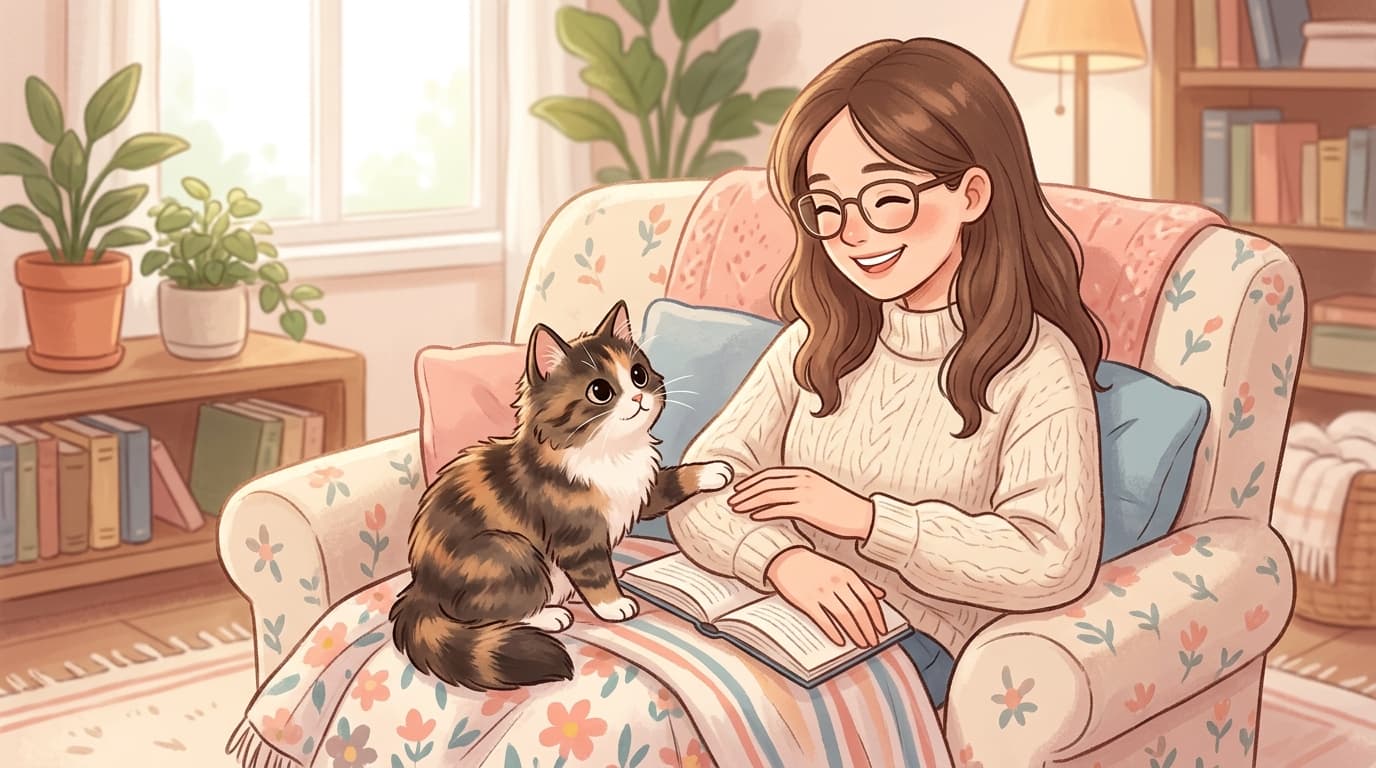
Why Your Cat Puts a Paw on You: 5 Real Messages Hiding in That Tiny Tap
That gentle paw tap isn’t always affection. Here are 5 common reasons cats place a paw on you—and what to watch for.
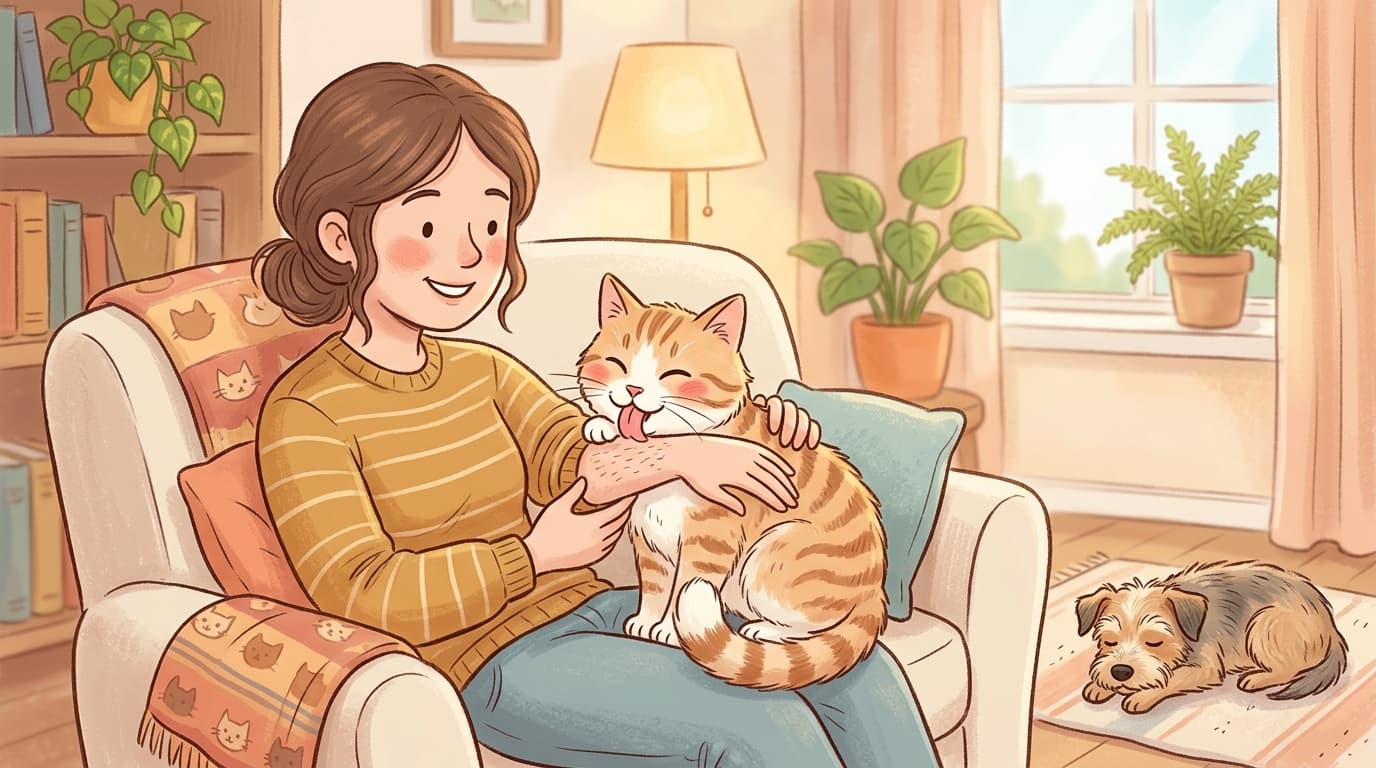
Why Your Cat Licks You (And Why It’s Not Always About Love)
Cat licking isn’t just affection—it can be scent-marking, bonding, stress-soothing, or even checking on you. Here’s what it means.
How Cats Secretly Test You Every Day (And What They’re Really Looking For)
Cats test your patience, boundaries, and consistency daily. Learn the subtle signs—and how to earn real feline trust.