Skip to content
Why Your Cat Licks You (And Why It’s Not Always About Love)

Why Your Cat Licks You (And Why It’s Not Always About Love)

5 min read

Your cat licking you can feel like the sweetest little love note. But most pet owners don’t realize that a lick is often more like a message—sometimes affection, sometimes instinct, sometimes a quiet way of saying, “You’re mine.”

Below are 10 surprising cat behaviors (including licking) that can help you understand what your cat is really trying to tell you.

Why your cat sits on your feet

When your cat parks themselves right on your feet, it’s not random coziness—your feet tend to carry the strongest “you” scent. Cats are obsessed with smell, and sitting on your feet is a comfort move that keeps them close to what feels safe.

If someone new walks into the room and your cat presses in even harder, that’s not shyness. It’s a clear “this is my person” moment.

The low growl when you wake your cat

If you’ve ever tried to wake your cat and got a grumbly growl in return, it can feel personal. Usually, it isn’t.

In deep sleep, a cat can snap into defense mode before their brain fully catches up with what’s happening. They’re vulnerable, they’re startled, and the growl is basically an automatic security alarm. A simple fix is to say your cat’s name before touching them, and make sure kids don’t rush up to a sleeping cat. Punishing this reaction tends to make cats more anxious and confused.

Why some cats eat dirt or potting soil

Catching your cat nibbling dirt is unsettling, but it’s more common than you’d think. Sometimes cats do this because they’re instinctively seeking minerals or nutrients they may be missing. Other times it’s plain boredom and sensory curiosity.

Because eating non-food items can also connect to health or diet issues, this is one of the few behaviors worth taking seriously sooner rather than later.

Sneezing during play is a “reset button”

If you’ve ever noticed your cat sneeze mid-wrestle or during an intense play session, it can actually function like a friendly signal. Think of it as your cat’s way of saying, “We’re playing—this isn’t a real fight.”

It helps keep excitement from tipping into conflict, especially if play gets a little too rough.

Why your cat won’t eat unless you’re nearby

Some cats stare at their bowl and wait… until you show up. It’s not that your cat needs permission—it’s that eating makes them feel vulnerable. Head down, attention narrowed, senses focused on food.

Your presence can act like a safety blanket: “My trusted human is here, so I can relax enough to eat.”

The sudden zoomies aren’t “bad behavior”

Those wild sprints, sharp turns, tail-chasing laps, and occasional furniture-rearranging moments? That’s your cat burning off excess energy.

Zoomies are normal and often a sign your cat feels healthy and confident in their space. The main job for you is making sure the runway is safe—no fragile items in the path, no slippery obstacles, and ideally no tiny kids directly in the launch zone.

Why your cat hides toys (or “treasures”) in your bed

If you’ve ever pulled back the covers and found a slobbery toy tucked into your sheets, your cat isn’t being weird for fun. They’re doing something deeply instinctive: protecting resources.

Cats choose “safe” storage spots, and your bed smells strongly like you—aka the safest thing in the house to them. Instead of scolding, it’s usually more effective to manage access (close the door when you’re out) and wash bedding as needed.

The truth behind “killing” toys

When your cat grabs a toy, shakes it hard, bunny-kicks it with their back legs, or tears stuffing out, you’re watching hunting instincts play out.

That intense shaking and kicking is designed to subdue prey quickly in the wild. It can look dramatic, but it’s actually a healthy outlet. If you’ve ever noticed your cat getting extra fired up with certain textures or squeaky sounds, it’s because those cues mimic what their brain is wired to hunt.

Why your cat lies on your suitcase

If your cat flops onto your suitcase the second it appears, they’re not just being cute and clingy. Many cats learn that the suitcase predicts one thing: you leaving.

Lying on it can be an attempt to delay the process, and it also lets them soak up your scent for comfort. If suitcase time makes your cat genuinely stressed, packing out of sight can reduce the emotional build-up.

Why your cat licks you (and why it’s not always love)

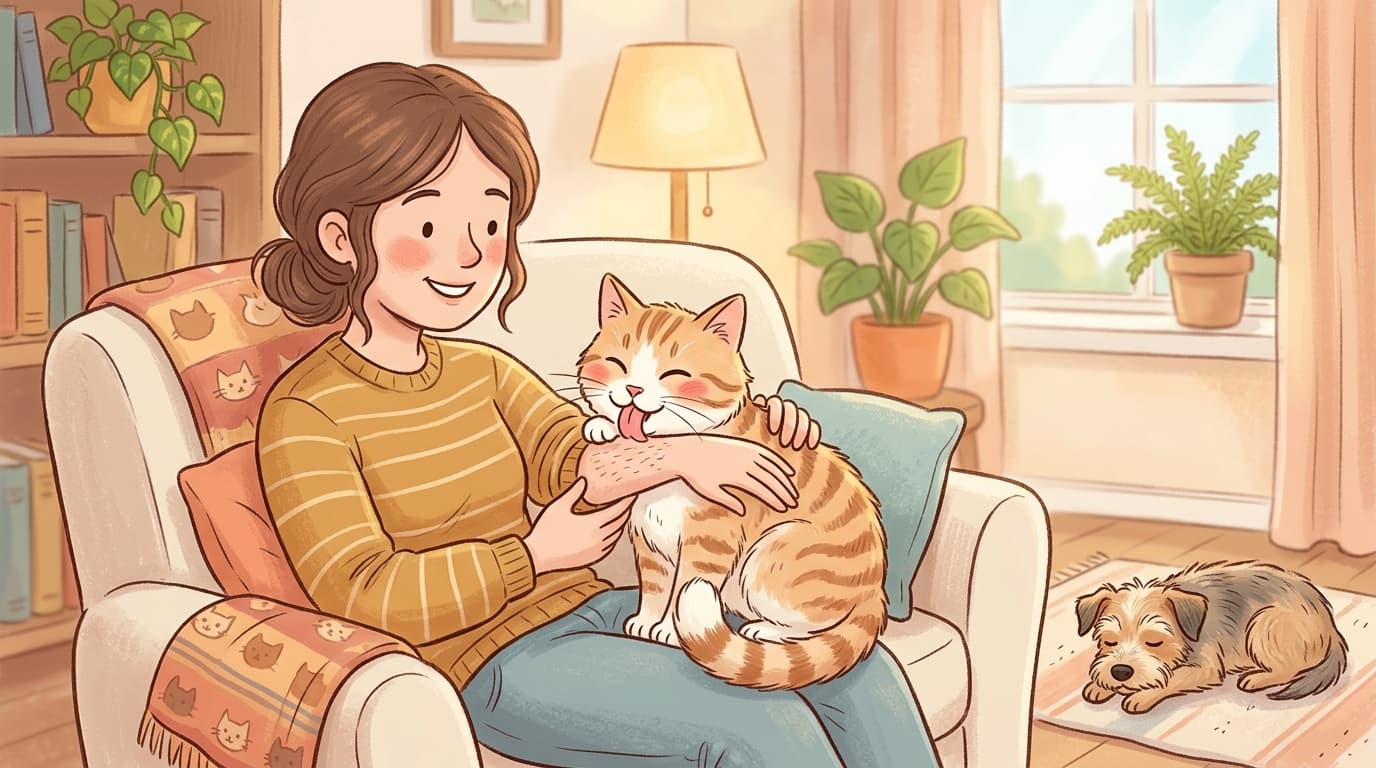
Yes, cat licking can be affection. But it’s also one of your cat’s most powerful communication tools.

Cats learn licking from kittenhood—mother cats lick to soothe, stimulate, bond, and care for their babies. That instinct doesn’t disappear. When your cat licks you, they may be:

  • Bonding and reinforcing “family” status by mixing their scent with yours
  • Scent-marking you in a subtle, social way (you’re part of their inner circle)
  • Investigating you—especially if you have a scrape, cut, or sore spot that smells “different”
  • Trying to comfort or care for you in the only nurturing language they know

If you’ve ever noticed your cat go straight to a bandage or a bruised area, it’s not a coincidence. Your cat is picking up information from smell and taste that you don’t even realize you’re broadcasting.

A simple way to feel closer to your cat

The more you see these behaviors as communication instead of “random cat stuff,” the easier it gets to respond in a way your cat actually understands. Pay attention to patterns—what happens before the licking, the hiding, the growling, or the suitcase flop—and you’ll start hearing your cat loud and clear.

Meta description: Cat licking isn’t just affection—it can be scent-marking, bonding, stress-soothing, or even checking on you. Here’s what it means.
Continue reading