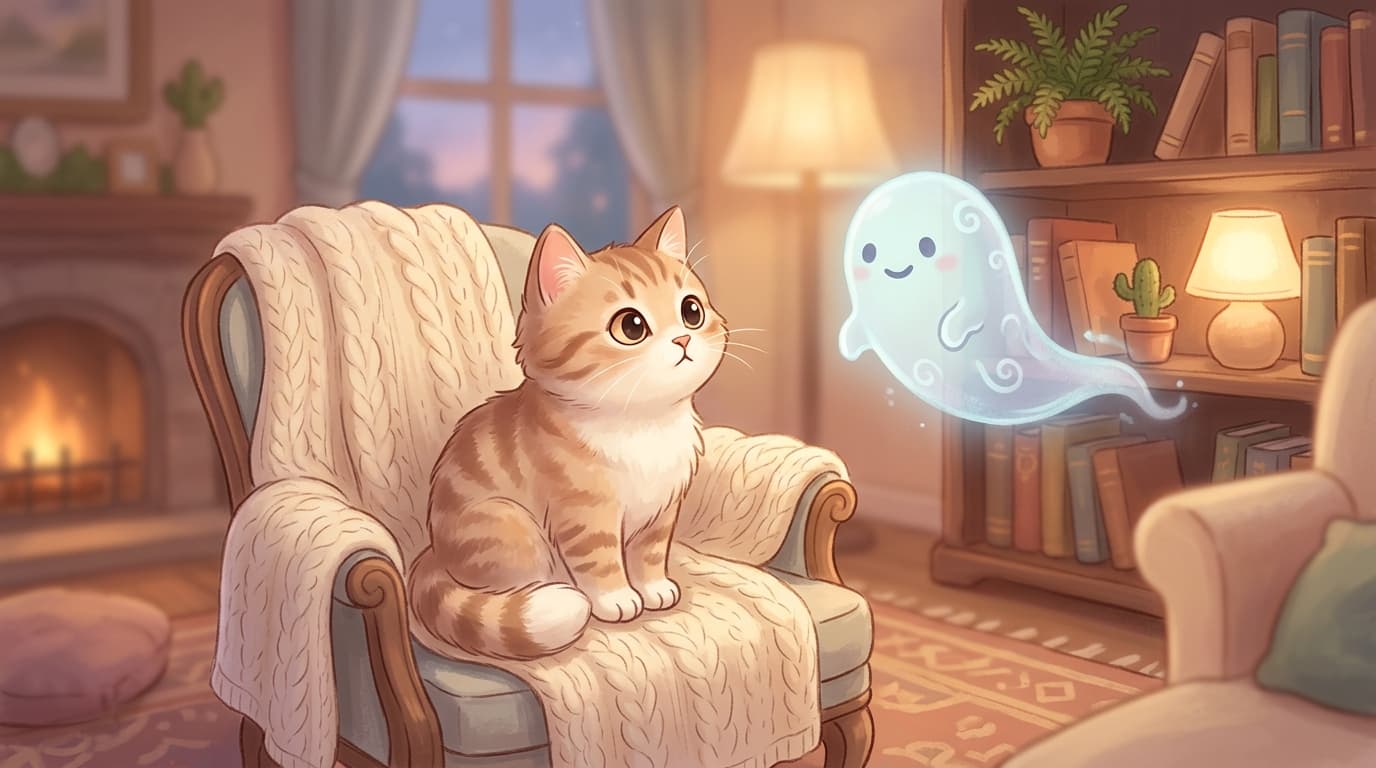
Do Cats See Ghosts? Why Your Cat Stares at “Nothing”
Your cat isn’t being dramatic for no reason. One minute they’re calmly loafing on the couch, and the next they’re locked onto an empty corner like it’s the most interesting thing in the house.
The idea that cats see ghosts is a fun one, but the real explanation is usually even more fascinating: your cat is picking up on movement, light, and sound that never reaches your senses.
Do cats see ghosts, or just more of the world?
When people wonder, “Do cats see ghosts?”, they’re often reacting to classic moments: a slow head turn toward a blank wall, a sudden stare into a dark hallway, or a midnight sprint that looks like a tiny furry panic attack.
Most pet owners don’t realize how different a cat’s sensory world is. Your cat isn’t staring at “nothing.” They’re staring at something you can’t detect.
Cats see better in the dark (and they’re built for it)
Cats are famously good at seeing in low light. Their eyes are designed to gather and use available light far more efficiently than ours.
A big reason is a reflective layer in the eye called the tapetum lucidum. It acts like a mirror that bounces light back through the retina, giving the eye a second chance to process it. That’s also why you can sometimes see that eerie eye-shine in photos or when light hits them just right.
In practical terms, your cat can spot tiny movements at dusk or in a dim room that you’d never notice. If you’ve ever watched your cat stare at a “blank” carpet, there’s a good chance they’re tracking a speck of motion, a shifting shadow, or even a small insect you haven’t seen yet.
Your cat may notice ultraviolet cues you can’t
Along with being strong in low light, cats can detect certain light information outside what humans typically perceive. That means surfaces, dust, reflections, and even faint traces of movement can show up differently to them.
So that “empty” space near the window might not look empty to your cat at all. Light bouncing off glass, a faint reflection, or subtle flicker from outside can grab their attention instantly.
Cats can hear a higher pitch range than humans
Even if you’re convinced there’s nothing to see, your cat might be responding to something they hear.
Cats can detect sounds up to around 64 kHz, while humans top out around 20 kHz. That’s a huge gap. It means your cat may react to:
- High-pitched squeaks from mice or insects in the walls
- Electrical noises from chargers, appliances, or aging light fixtures
- Distant sounds outside that are too faint or high for you to register
This is why a cat might stare at a wall, then suddenly bolt. They could be tracking a tiny sound that changes position, stops abruptly, or spikes in frequency.
Why the “cats see ghosts” myth sticks around
Cats have a long history in folklore as mysterious guardians and spiritual companions. In many cultures, they’re seen as animals that sense what humans can’t, which makes their odd staring spells feel loaded with meaning.
Add their silent movement, wide eyes, and uncanny timing (why is it always at 2 a.m.?), and it’s easy to see why people connect the dots to something supernatural.
What to watch for if your cat keeps staring at nothing
Most of the time, this behavior is normal curiosity paired with powerful senses. You can even treat it like a clue about your home environment.
Try a quick check:
- Look for light reflections (TV screens, phones, passing car headlights)
- Listen for faint buzzing or high-pitched noises from electronics
- Check for insects near windows, vents, or lamps
- Notice patterns: does it happen near the same spot or at the same time each day?
Sometimes, the “haunted corner” is just where sound travels oddly, light flickers, or tiny critters pass through.
The takeaway
Your cat’s staring fits are usually a sign that their senses are doing exactly what they were built to do: detect the small stuff before it becomes obvious. Next time your cat fixes their gaze on an “empty” spot, assume there’s a reason, even if you’ll never experience it the way they do.
Continue reading

How to Stop Your Cat From Throwing Litter Out of the Box (Fast, Lasting Fixes)
Messy litter box? Fix litter flinging with the right box, litter type, fill depth, placement, and a cleaner routine.

Where Your Cat Sleeps Says a Lot About Love (7 Favorite Spots Decoded)
From your feet to your pillow, your cat’s sleeping spot is a quiet love letter. Here’s what 7 common choices really mean.

Why Cats Knock Things Over: The Real Reasons Behind That Push-and-Scatter Habit
Cats knock things over due to hunting instincts, curiosity, and attention-seeking. Learn what it means and how to curb the habit.