Why Cats Knock Things Over: The Real Reasons Behind That Push-and-Scatter Habit
Your cat isn’t redecorating out of spite—they’re following instincts that make perfect sense in a cat brain. The wild part is that a knocked-over glass or a swatted trinket can be your cat’s version of play, research, and communication all at once.
Why cats knock things over (and why it’s so satisfying to them)
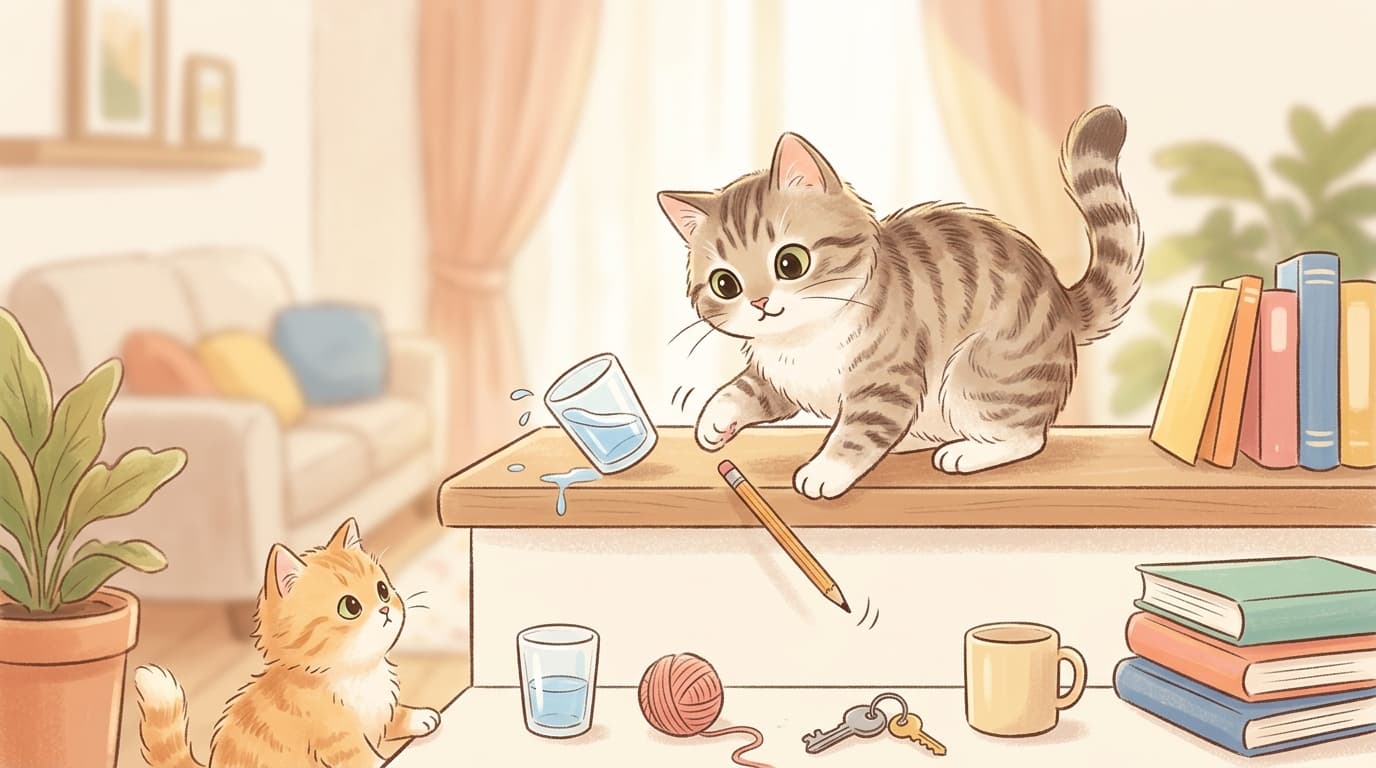
Cats interact with the world through their paws the way we use our hands. Knocking something off a surface is a quick way to learn: Does it move? Does it make noise? Does it react? And since cats are wired to notice tiny changes in their environment, that little shove can feel like an event worth repeating.
Most pet owners don’t realize that “push, watch, repeat” is a very normal feline way of gathering information—especially with new objects, wobbly items, or anything perched near an edge.
It’s a hunting instinct in disguise
Even the cuddliest house cat is still a hunter at heart. In the wild, a cat might tap or pin something with their paw to test it before committing—think of it as a safety check and a strategy move.
When your cat nudges your keys, a pen, or a small figurine, they’re doing a similar thing:
- Testing how the “prey” responds
- Watching for movement
- Practicing coordination and timing
If you’ve ever noticed your cat staring intensely at an object before giving it a slow, deliberate shove, that’s not random. That’s focused, hunter-style curiosity.
Curiosity + “feline physics” = chaos on your shelves
Cats love experiments. Some objects roll. Some bounce. Some crash dramatically. From your cat’s perspective, the floor is basically a sound-and-motion laboratory.
A few things make an item extra tempting to knock over:
- It wobbles when touched
- It makes an interesting noise when it falls
- It slides easily across a surface
- It’s small enough to manipulate but not so light that it feels boring
So yes, your cat may be running physics trials in your living room—especially if the results are loud.
Attention-seeking: the reason it happens more when you’re watching
This is the one that surprises people the most: sometimes your cat knocks things over because it works.
Cats are excellent at learning patterns. If your cat pushes something and you react—jump up, shout, rush over, make eye contact—they may connect the dots:
“When I do this, my human engages with me.”
And if your cat is bored, understimulated, or simply in the mood for interaction, that little shove becomes a reliable attention button. (Not the one you asked for, but the one they installed.)
How to stop your cat from knocking things over without turning your home into a museum
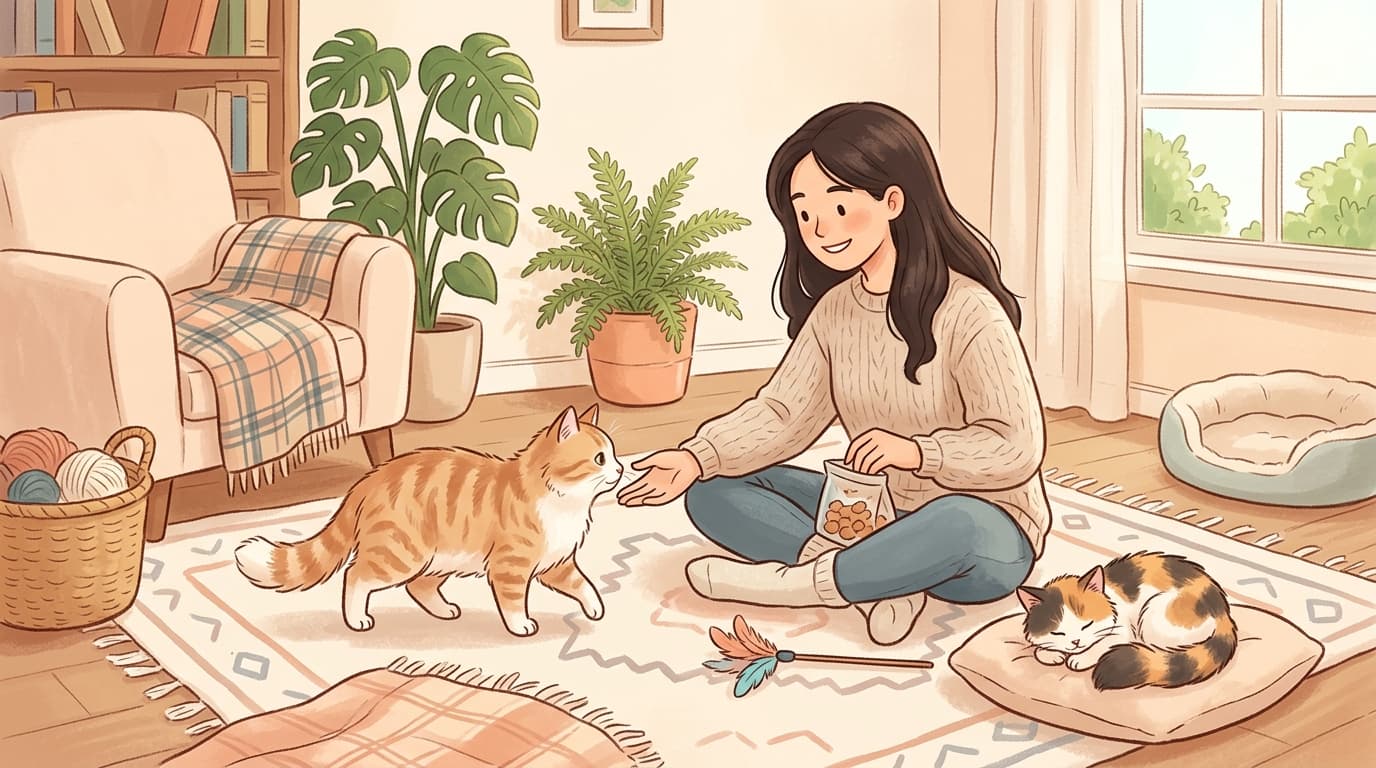
You don’t have to accept daily gravity tests as your new normal. The goal is to give your cat better outlets and make the “knock it down” option less rewarding.
Give them more stimulation (especially if boredom is the trigger)
A cat with nothing to do will invent something to do. Build in daily playtime—short, energetic sessions often work better than one long one.
Try:
- Wand toys for chasing and pouncing
- Small toys they can bat around safely
- Rotating toys every few days so they feel “new” again
Make the environment more cat-friendly
Cats love vertical spaces and “jobs.” If they’re spending a lot of time on shelves and counters, give them approved places to perch and explore.
Ideas:
- A cat tree near a window
- A cleared shelf that’s theirs
- Puzzle feeders or treat-dispensing toys for mental work
Don’t accidentally reward the behavior
If your cat has learned that knocking something over gets a big reaction, try to keep your response calm and boring. Then redirect them to an appropriate activity (like a toy or a play session) so they still get interaction—just not for the crashing.
Reduce temptation in high-risk spots
If there are a few “favorite targets,” it helps to tidy strategically:
- Move fragile items away from edges
- Store small, knockable objects in a tray or closed container
- Create a clear zone on surfaces your cat frequently visits
The takeaway
Why cats knock things over usually comes down to three things: instinct, curiosity, and getting a response from you. Once you give your cat more engaging options—and stop the behavior from paying off—those dramatic shelf swats often fade into the background.
Meta description: Cats knock things over due to hunting instincts, curiosity, and attention-seeking. Learn why it happens and how to reduce the habit.
Continue reading

15 Human Foods Cats Can Safely Enjoy (And Why They’re So Drawn to Your Plate)
Your cat isn’t being picky—instinct drives their food choices. Here are 15 cat-friendly human foods and how to offer them safely.

Why Your Cat Touches Your Face With Their Paw (And What They’re Trying to Tell You)
A paw on your face can mean affection, attention, play, scent-marking, or even “give me space.” Learn the clues to read it right.

Why Your Cat Licks You (And Why It’s Not Always About Love)
Cat licking isn’t just affection—it can be scent-marking, bonding, stress-soothing, or even checking on you. Here’s what it means.