Where Your Cat Sleeps Says a Lot About Love (7 Favorite Spots Decoded)
Waking up with a cat tail across your face (or a surprising “dead weight” on your legs) feels random—until you realize your cat is choosing that spot on purpose. Where your cat sleeps is basically their love GPS, pointing straight at how safe they feel with you.
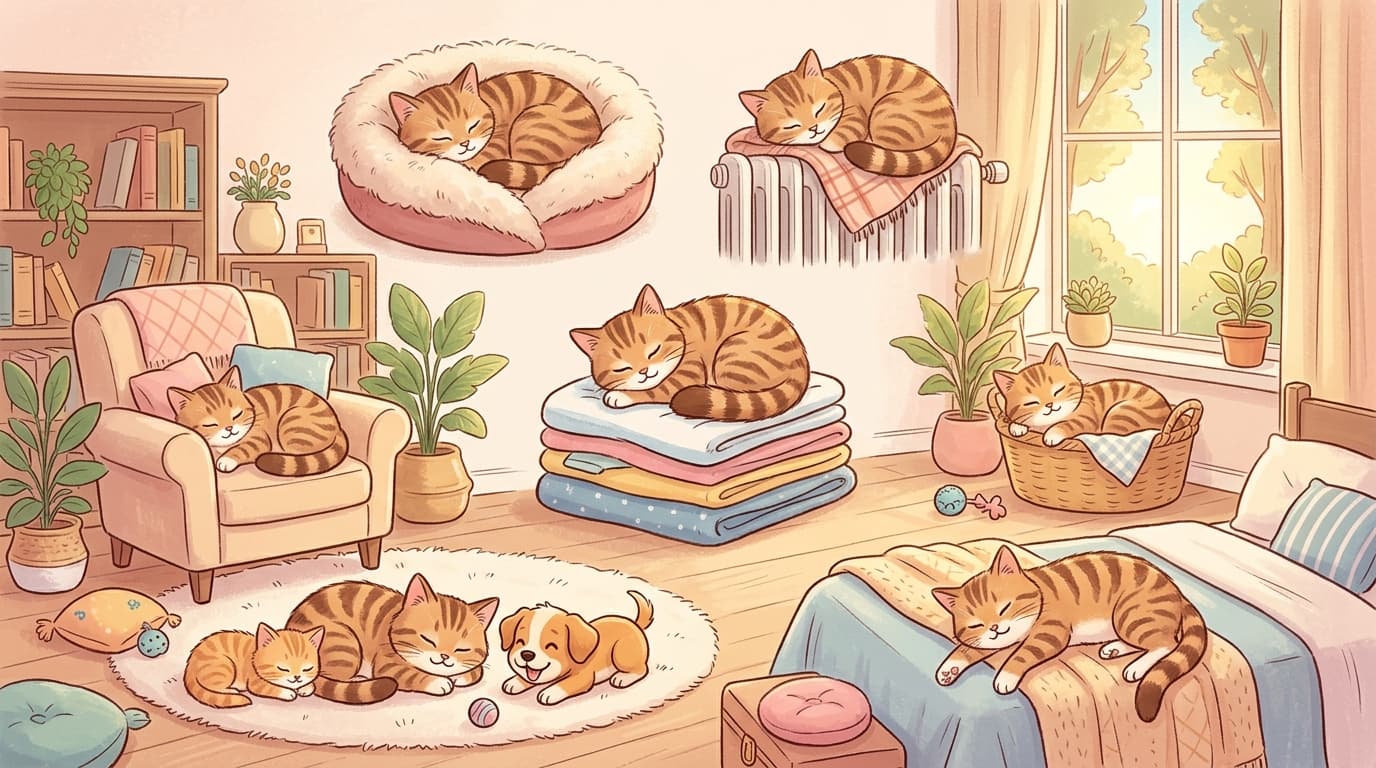
Below are seven common sleeping spots and what each one tends to say about your bond.
1) Where your cat sleeps: at the foot of the bed
If your cat parks themself at the foot of your bed like a fuzzy ornament, it’s easy to assume they’re being distant. A lot of the time, it’s the opposite.
That position is a classic “sentinel” choice. Cats are naturally alert, and in group settings they’ll often place themselves where they can monitor the space while others rest. The foot of the bed gives your cat a good view of the room (and often the doorway), which means they’ve decided you’re worth guarding.
If you’ve ever noticed your cat looking absurdly serious down there, like a tiny nightclub bouncer, you’re not imagining it.
2) Curled into the bend of your knee
This is the custom-made cuddle nook. Your cat wedges into that warm curve behind your knee because it feels like the safest little pocket in the world.
It also taps into an old comfort pattern: as kittens, cats pile together for warmth and security. Many cats keep that “body memory,” and it shows up when they’re with someone they deeply trust.
This is the spot that makes you delay getting up—even when you really need to—because moving your leg might end the moment.
3) On your chest or stomach
Few things feel as sweet as a cat carefully stepping up, doing a couple of little circles, and settling right over your heart. That weight can be weirdly soothing, and the purr vibrating through your shirt is its own kind of calm.
One reason cats like this spot is rhythm. Cats are drawn to the steady rise and fall of breathing and the gentle heartbeat sensation—it’s grounding. In early life, kittens rest against their mother’s chest to feel that “everything is okay” vibration, and some cats carry that preference into adulthood.
And yes, purring is often in the 25–50 Hz range, which has been linked in studies to relaxation for humans. Translation: you become a living mattress, and you don’t even mind.
4) Pressed against you—back-to-back
This one confuses a lot of people. A cat sleeping with their back to you can look like a snub.
But for a cat, their back is a vulnerable blind spot. Turning away and settling in close is a quiet show of bravery: they’re trusting you with the side they can’t easily protect.
So if your cat leans against you like a little furry comma and dozes off, take it as a compliment. You’ve earned “trusted security detail” status.
5) Far from you, but in the same room
Some cats don’t do bed cuddles at all. They pick a chair across the room, a shelf, or the top of a wardrobe and sleep like a lone panther.
That doesn’t automatically mean they’re cold or uninterested. For more independent (or more “in control”) personalities, having their own space helps them relax. What matters is this: they still choose to be in the same room as you.
Most pet owners don’t realize how intentional that is. Your cat could sleep anywhere, but they’re keeping you within their comfort zone. And if you’ve ever stood up only to find them suddenly waiting in the hallway, you already know—they were paying attention the whole time.
6) Under the covers
The mysterious blanket lump has a name in many homes: the “oven bun.” Your cat dives under cold and emerges warm and toasty.
Cats are both hunters and, historically, potential prey—so tight hiding spots feel safe on a deep, instinctive level. Under your covers adds another layer: your scent is concentrated in the fabric. Your cat isn’t just hiding; they’re wrapping themself in the smell that signals “home.”
This sleeping choice often shows a strong bond, especially in cats that have been through stressful situations and now cling to the security your presence provides.
7) On your pillow—or right on your head
This is the big one. Many people assume pillow sleeping is just about warmth, but it can be even more personal than that.
Your head carries a strong “you” signature—scalp oils and natural scent cues that your cat reads as identity and safety. Choosing your pillow (or your hair) is a way of staying close to that signature, especially around dawn when cats naturally become more active and socially “marking” behaviors can kick in.
In plain terms: your cat is treating you like family, not furniture.
The takeaway: your cat is choosing you, in their own language
The next time you wake up pinned in place by a purring weight or find fur all over your pillow, try to see it for what it is. Where your cat sleeps is often their simplest way of saying, “I trust you—and I’m safest near you.”
Meta description: From your feet to your pillow, your cat’s sleeping spot is a quiet love letter. Here’s what 7 common choices really mean.
Continue reading

15 Human Foods Cats Can Safely Enjoy (And Why They’re So Drawn to Your Plate)
Your cat isn’t being picky—instinct drives their food choices. Here are 15 cat-friendly human foods and how to offer them safely.

Why Your Cat Touches Your Face With Their Paw (And What They’re Trying to Tell You)
A paw on your face can mean affection, attention, play, scent-marking, or even “give me space.” Learn the clues to read it right.

Why Your Dog Licks You Every Day (And What It Really Means)
Daily dog licking isn’t about salt or snacks. It’s bonding, comfort, and pack love—plus 14 other signs your dog adores you.