Most cats don’t pull away because they “don’t like people.” They pull away because, little by little, their home stops feeling predictable, respectful, and safe.
If you’ve ever felt like your cat used to be cuddlier—or you’re doing everything “right” and still getting side-eye from across the room—these small shifts can change the entire vibe between you and your cat.
Cats don’t climb because they’re being naughty. They climb because height equals safety.
A tall cat tree near a window, a cleared shelf, or a sturdy wall perch gives your cat a place to observe without feeling exposed. And you’ll often notice a confidence boost: less hiding, fewer tense moments, more relaxed lounging.
Easy win: create one “yes spot” up high that’s truly your cat’s—safe, stable, and always available.
This one stings because we do it out of love. But for many cats, being lifted without warning feels like losing control of their own body.
Over time, repeated “surprise pickups” teach your cat a simple lesson: staying out of reach is safer than being close.
What to do instead: wait for invitations—jumping into your lap, rubbing your legs, head-butting your hand, or leaning into you. Those moments are your cat choosing you.
A bowl of food is convenient—but it skips the part your cat’s brain is built for: searching, stalking, working for it.
When cats don’t get an outlet for that drive, it often leaks into behaviors you don’t love: 3 a.m. chaos, ankle ambushes, boredom scratching, or tension with other pets.
Simple options:
Use a puzzle feeder for one meal
Scatter kibble so your cat has to forage
Hide small portions around the home
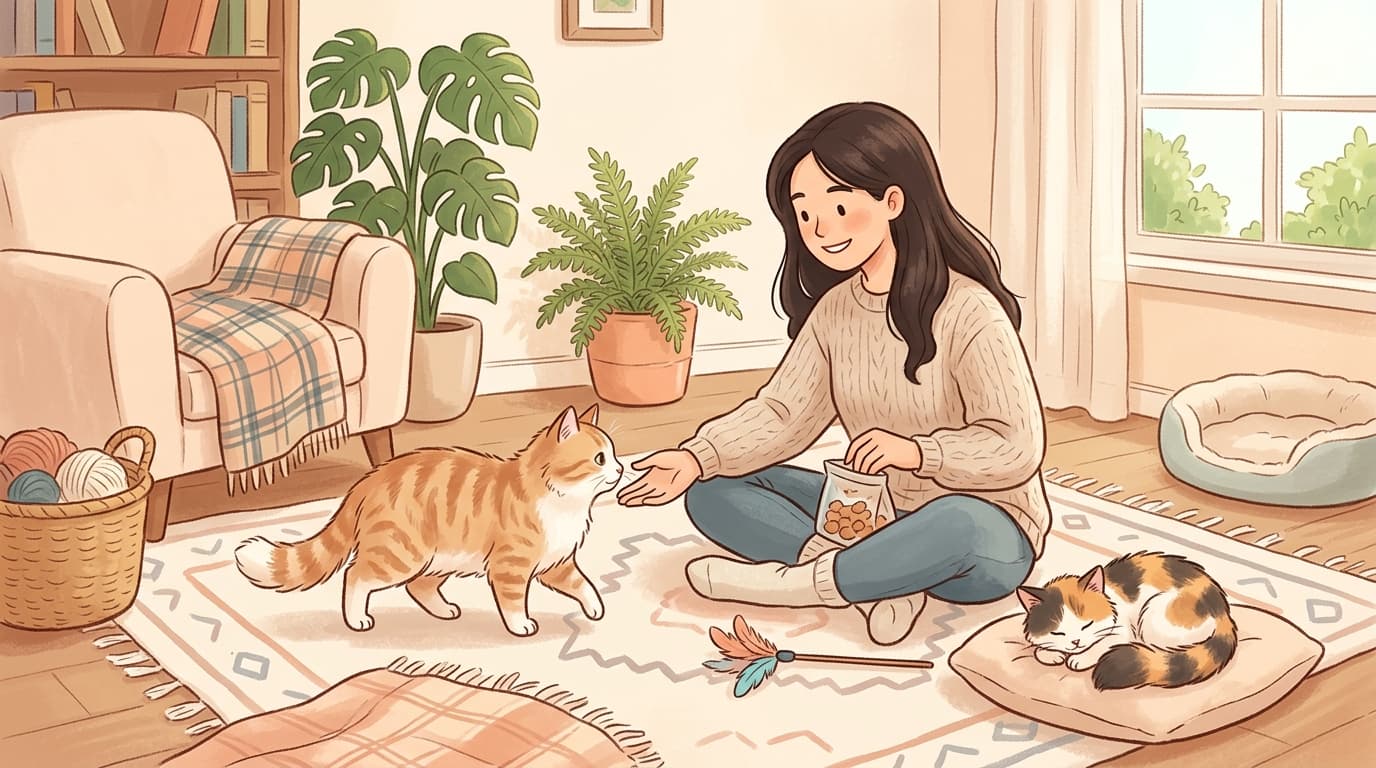
Play with a wand toy first, then serve food afterward (hunt → eat)
If you have more than one cat, sharing can look peaceful… while still being stressful.
Cats often avoid conflict quietly. One cat may wait to eat, hesitate to use the litter box, or avoid a sleeping spot simply because another cat “owns” it socially.
A common guideline is N + 1: for every cat, provide that number of key resources plus one extra, spread out around the home.
For two cats, that means (ideally):
3 litter boxes
multiple water stations
separate feeding areas
more than one good resting spot
Key detail: two litter boxes side-by-side can feel like one “shared bathroom” to a cat. Separation matters.
Tail up with a slight hook at the tip: friendly greeting
Puffed “bottlebrush” tail: fear or sudden alarm
Fast side-to-side swishing: agitation (not happiness like many dogs)
Tail gently wrapping your leg/arm: affection and social bonding
Most pet owners don’t realize how often they miss a warning. If the tail starts whipping during petting and you keep going, your cat may feel ignored—then escalate to a swat or bite.
Cats don’t experience home the way we do. We rely on visuals. Cats rely heavily on scent.
When your cat rubs their cheeks on furniture or door frames, they’re not just being cute—they’re placing comforting scent markers that make the house feel familiar and safe.
If you constantly scrub those areas with strong-smelling cleaners (or wash every blanket at once), your cat can feel like their home suddenly turned unfamiliar.
Cleaner approach:
Avoid harsh, heavily scented products where your cat face-rubs
Rotate washing bedding (don’t wash everything at once)
Leave one unwashed blanket so “home smells like home”
For new furniture, transfer scent by rubbing a soft cloth on your cat’s cheek area, then on the item
If your cat watches a feather wand for five seconds and walks off, it doesn’t always mean they hate playing. It may mean the “prey” isn’t acting like prey.
Real prey:
hides
darts and stops
moves low
disappears behind furniture
behaves unpredictably
Try dragging the toy along the floor, slipping it behind a chair leg, or letting it “peek” out from under the couch. Let your cat stalk, chase, pounce, and win.
Pro tip: end play with a small meal or treat to complete the hunt → eat cycle.
Cats thrive on patterns: food, quiet time, window-watching, sleep—repeat.
If meal times swing wildly, play happens randomly, or your evenings are unpredictable, some cats stay subtly on edge. A cat who can’t predict what comes next often struggles to fully relax.
You don’t need a rigid schedule. Just keep the big anchors consistent:
meals roughly at the same times
a predictable play session (many cats love one in the evening)
If your cat walks away, it’s rarely a personal rejection. Many cats regulate themselves through space and quiet.
Following them, calling them back, or trying to “win” their attention can backfire—your cat may start associating you with interruption instead of calm.
The funny truth is: the more you respect your cat’s ability to come and go, the more often they choose to stay.
You’re not weird for chatting with your cat. Many cats can recognize their own names and can tell when you’re speaking to them versus talking to another person.
Your cat may not respond every time (very on-brand), but your voice still becomes part of what makes home feel safe and social.
This is the bonding secret most people skip: presence without demands.
Sit in the same room. Read. Drink your tea. Don’t call your cat over. Don’t reach for them. Don’t stare.
Over time, many cats start drifting closer on their own—because you’ve become predictable, calm, and safe. If you’ve ever noticed your cat settling nearby while you’re busy and thinking, “Aww, they’re keeping me company,” this is that feeling on purpose.
Pick just two changes for the next week: one that improves your cat’s environment (like vertical territory or hunting for food), and one that improves your communication (like slow blinking or softer eye contact). Small shifts, repeated daily, are how cats learn to trust.
Your cat doesn’t need you to be perfect. They just need you to feel safe to choose you—and that’s where the real bond begins.