Why Your Cat Walks on You at Night (And What They’re Really Trying to Tell You)
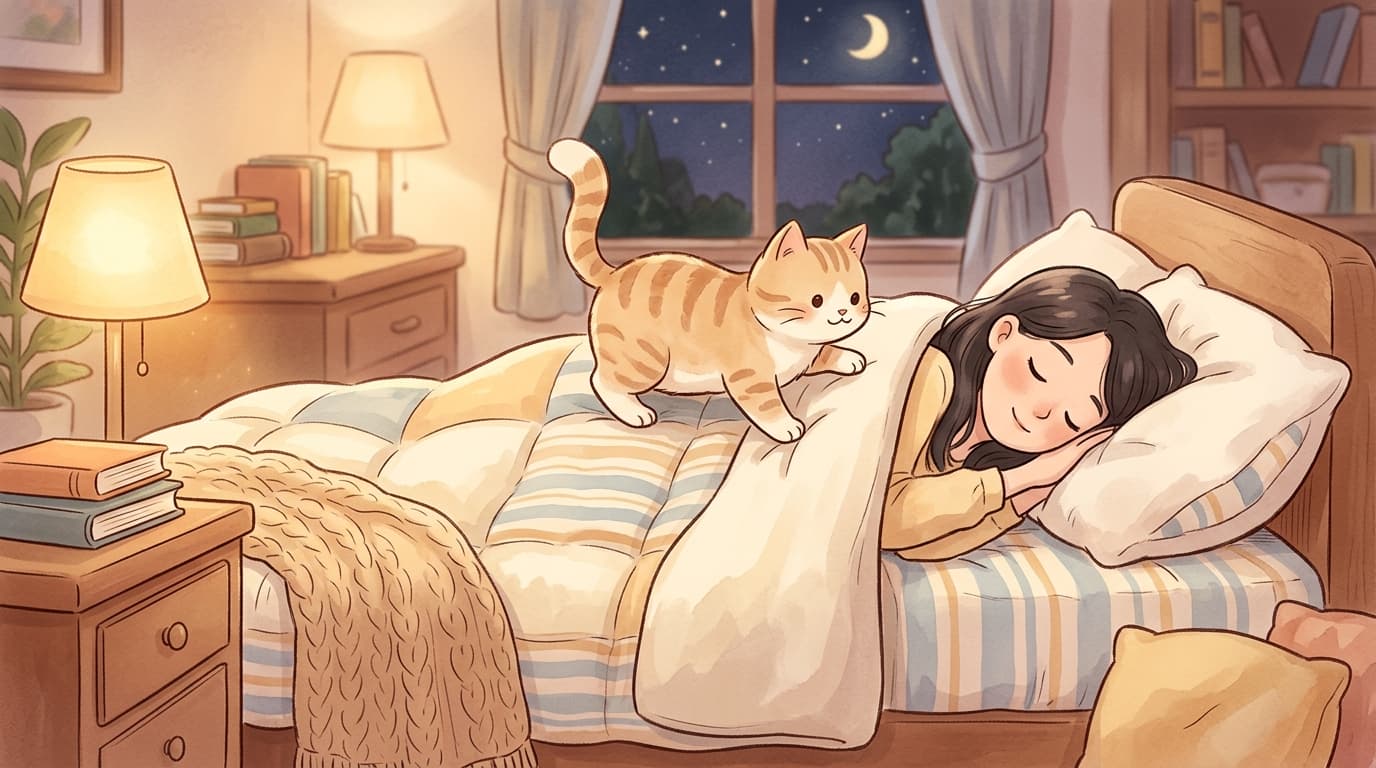
You’re dead asleep… and suddenly: tiny paws marching across your ribs like you’re a living sidewalk. Annoying, yes—but it’s rarely random. Most pet owners don’t realize your cat may be “saying” several things at once when they walk on you at night.
Your cat is doing a quick “are you okay?” check
If you’ve ever noticed your cat aiming straight for your chest, throat, or even your face, it can feel weirdly personal. But those spots make a lot of sense from a cat’s point of view: that’s where your breathing and warmth are easiest to detect.
At night, you’re quiet and still. To your cat, you’ve basically gone offline. A few deliberate steps on your chest (feeling it rise and fall) or a close hover near your mouth (catching your warm breath) can be a simple reassurance ritual: you’re there, you’re breathing, everything’s normal.
Your cat is “re-marking” you with scent from their paws
Cats don’t just rub their cheeks on things—they also leave scent with their feet. Their paw pads have scent glands, and walking across you can deposit a subtle chemical signature that other animals would definitely notice.
Think about your day: showering, changing clothes, going outside, touching other people, picking up new smells. By bedtime, yesterday’s “you belong to me” scent is faded. So your cat refreshes it the easiest way possible—by stepping on you (or pacing across your blanket like they’re signing paperwork).
Your cat heard something you didn’t—and you’re the safest lookout point
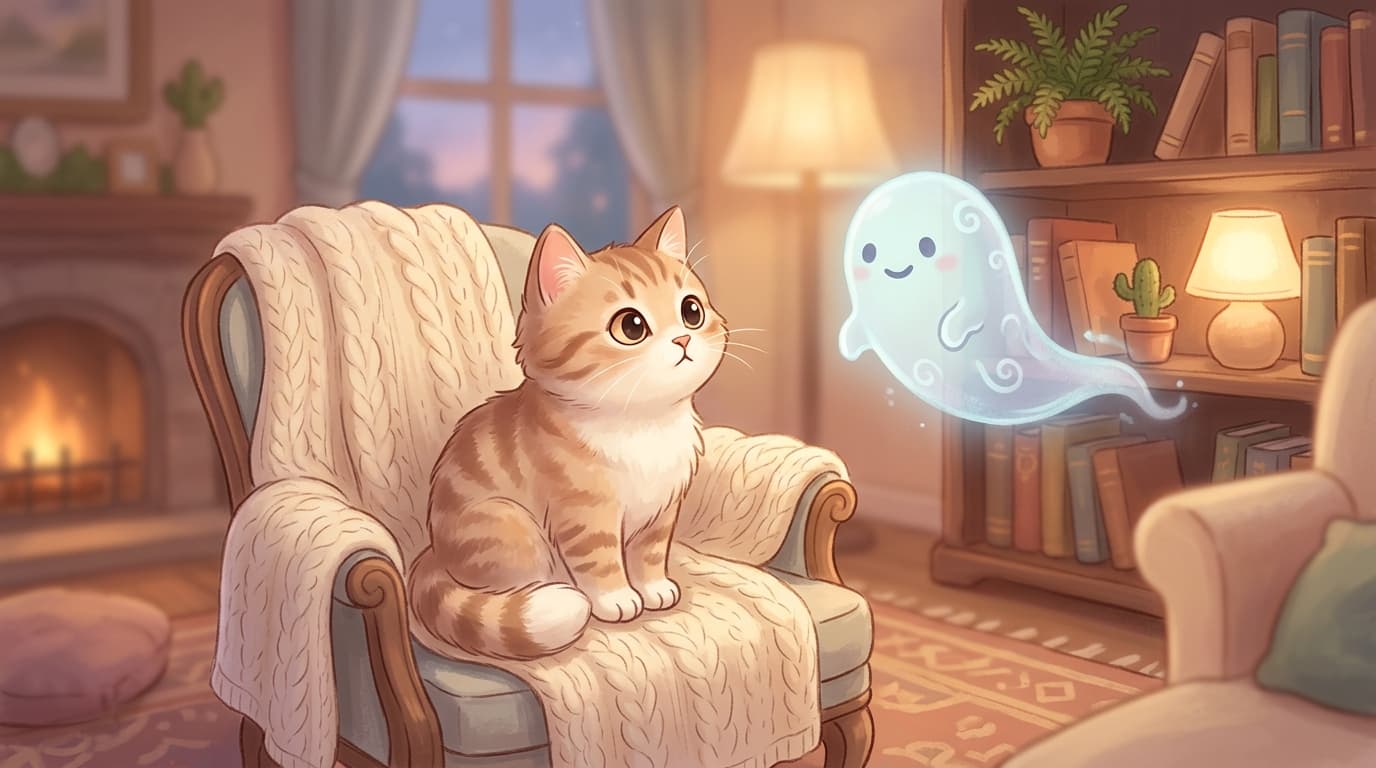
Ever had your cat suddenly freeze on top of you, wide-eyed, staring at the door or a dark corner? That’s not “seeing ghosts.” Cats can hear extremely high frequencies and tiny noises you’ll sleep through—pipes shifting, a critter outside, the refrigerator motor clicking on in another room.
When something feels off, many cats instinctively seek a higher, safer vantage point to assess the situation. In the middle of the night, the biggest familiar “high ground” around might be… you.
Your body is their favorite heater
A cat’s normal body temperature runs a bit higher than a human’s, and they can lose heat faster—especially at night when the house cools down and there’s no sunbeam to steal.
That slow, careful walk across your legs and stomach before they settle on your chest? It often isn’t aimless wandering. Your cat may be doing a little heat-map search with their paws, comparing warm spots until they find the perfect one. Your chest is a top-tier choice because your heart and lungs create steady warmth—basically the best radiator in the house.
Your cat is trying to get you up (and you might be training them)
Sometimes the message is simple: “Wake up.”
Cats tend to get a burst of energy around dawn. While you’re enjoying your deepest sleep, your cat may be entering their personal rush hour. That’s when the paw-walking can escalate into sitting on your face, purring directly into your ear, or tapping your nose like a tiny, furry alarm clock.
Usually it comes down to two things:
- Hunger: your cat knows exactly when breakfast usually happens.
- Boredom: you’re their favorite source of entertainment.
If you get up and feed them every time they do it, they learn fast: stepping on your chest at 5 a.m. works. And once a cat discovers a reliable method, they’re not exactly known for retiring it.
The sweetest reason: comfort, trust, and “kitten memories”
If your cat walks on you and then starts that rhythmic pressing motion—like they’re kneading dough—you’re seeing a deeply emotional behavior.
Kneading begins in kittenhood, when babies press on their mother to stimulate milk. The instinct never fully disappears. When your cat climbs onto your chest at 3 a.m. and starts kneading, your warmth and heartbeat can trigger those early feelings of safety.
In plain terms: your cat is choosing you as their secure place. It’s one of the biggest signs of trust they can give.
How to respond without ruining your sleep
You don’t have to choose between bonding and rest. A few practical moves can help:
- If it’s attention-seeking: avoid rewarding the behavior with immediate feeding or play.
- If it’s comfort/heat: offer a cozy alternative nearby (a plush bed, a heated pad designed for pets, or an extra blanket at the foot of the bed).
- If it’s “security patrol”: a nightlight or white noise can reduce sudden sound triggers that put your cat on alert.
A calmer way to see those midnight paw-prints
The next time your cat walks on you at night, try to read the moment: are they checking your breathing, claiming you, listening for something, warming up, demanding breakfast, or settling in for a kneading session? Once you spot the pattern, it’s much easier to respond in a way that protects your sleep and keeps your bond strong.
Meta description: If your cat steps on you at night, it’s not random. Learn the real reasons—and how to respond without encouraging early wakeups.
Continue reading

Microchipping Cats in Spain: What the Law Requires (and What Happens If You Skip It)
Spain now requires microchips for all cats. Learn what the law says, possible fines, and how microchipping works.

Why Your Cat Puts a Paw on You: 5 Real Messages Hiding in That Tiny Tap
That gentle paw tap isn’t always affection. Here are 5 common reasons cats place a paw on you—and what to watch for.

Why Your Cat Licks You (And Why It’s Not Always About Love)
Cat licking isn’t just affection—it can be scent-marking, bonding, stress-soothing, or even checking on you. Here’s what it means.