Female Dog Protective Behaviors: 11 Quiet Ways She Guards Your Home (and Your Heart)
From body-blocking at the door to sensing stress, these female dog protective behaviors show how she keeps your family safe and close.
You might think your female dog is “just sweet.” But a lot of her gentleness is actually strategy—quiet, calculated, and deeply protective. If you’ve ever noticed her posting up by the window or slipping between you and something that feels off, you’ve already seen the truth.
Female dog protective behaviors: why she protects so quietly
Many female dogs don’t default to loud, showy guarding. Instead, they tend to protect with positioning, observation, and emotional attunement—more like a steady security system than a siren.
That can look subtle: a pause on a walk, a hard stare out the front window, or a calm “I’m staying right here” choice when you’re stressed. Most pet owners don’t realize those moments are often protective behaviors, not random quirks.
1) She “body-blocks” instead of making a scene
One of the clearest female dog protective behaviors is placing herself between you and whatever she’s unsure about.
Instead of charging forward or barking nonstop, she may shift her body like a shield—quietly stepping in front of your legs, leaning her shoulder into you, or positioning herself at the doorway. It’s a practical move: she’s creating distance and buying time while she evaluates the situation.
2) She can sense stress and emotional pain faster than you expect
Ever had a brutal day and your dog suddenly turns into a silent shadow—no toys, no demands, just warm presence? Female dogs are often especially tuned in to tiny changes in your face, voice, and even your scent when stress hormones rise.
You might see her press against your side, rest a heavy paw on your knee, or bring you a favorite toy like an offering. It’s not “neediness.” It’s comfort behavior—her version of staying on duty while you’re struggling.
3) She chooses “her person” with surprising intensity
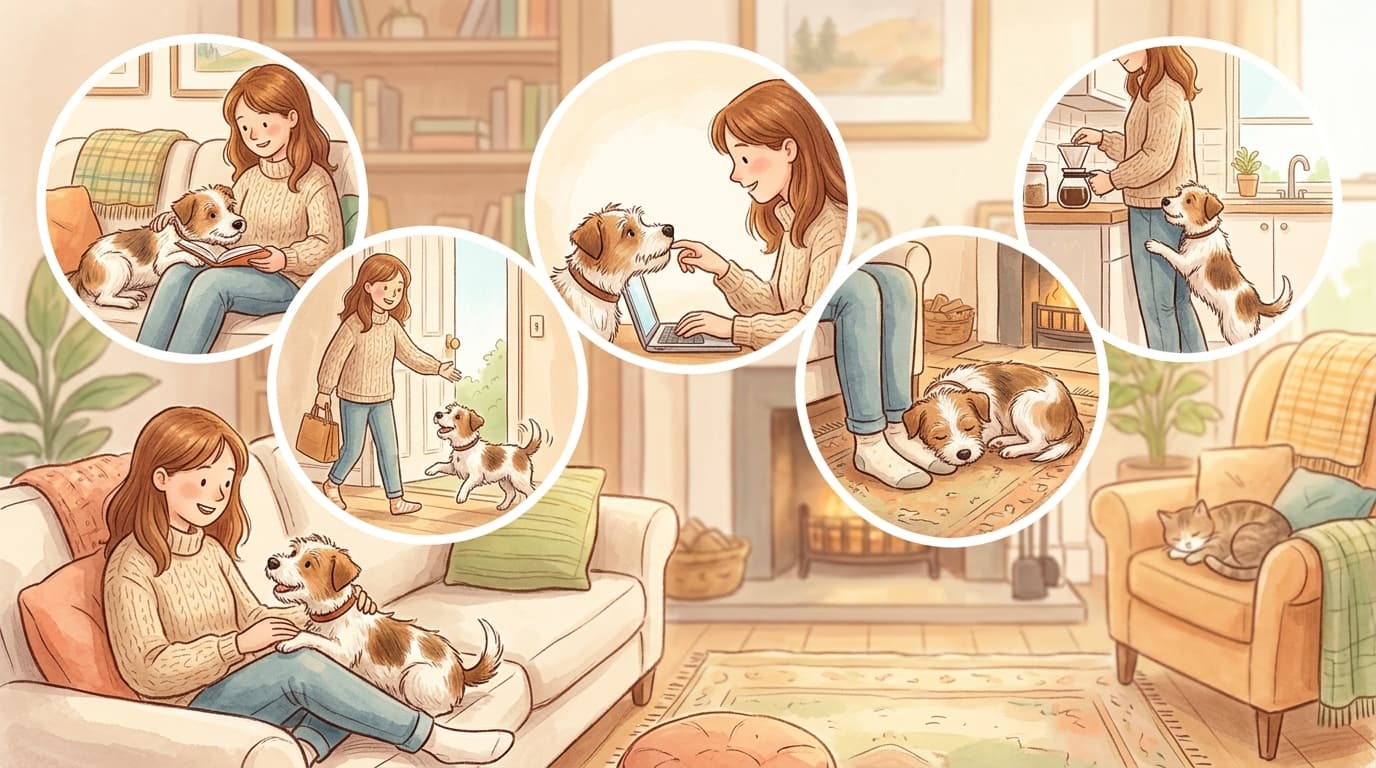
Many female dogs don’t spread their deepest attachment evenly across the household. They often pick one person and stick close—following room to room, waiting outside the bathroom door, or choosing that person’s feet as the best resting spot in the world.