When Your Dog Shows Their Belly: How to Tell “Rub Me” From “I’m Nervous” (and What to Do Instead)
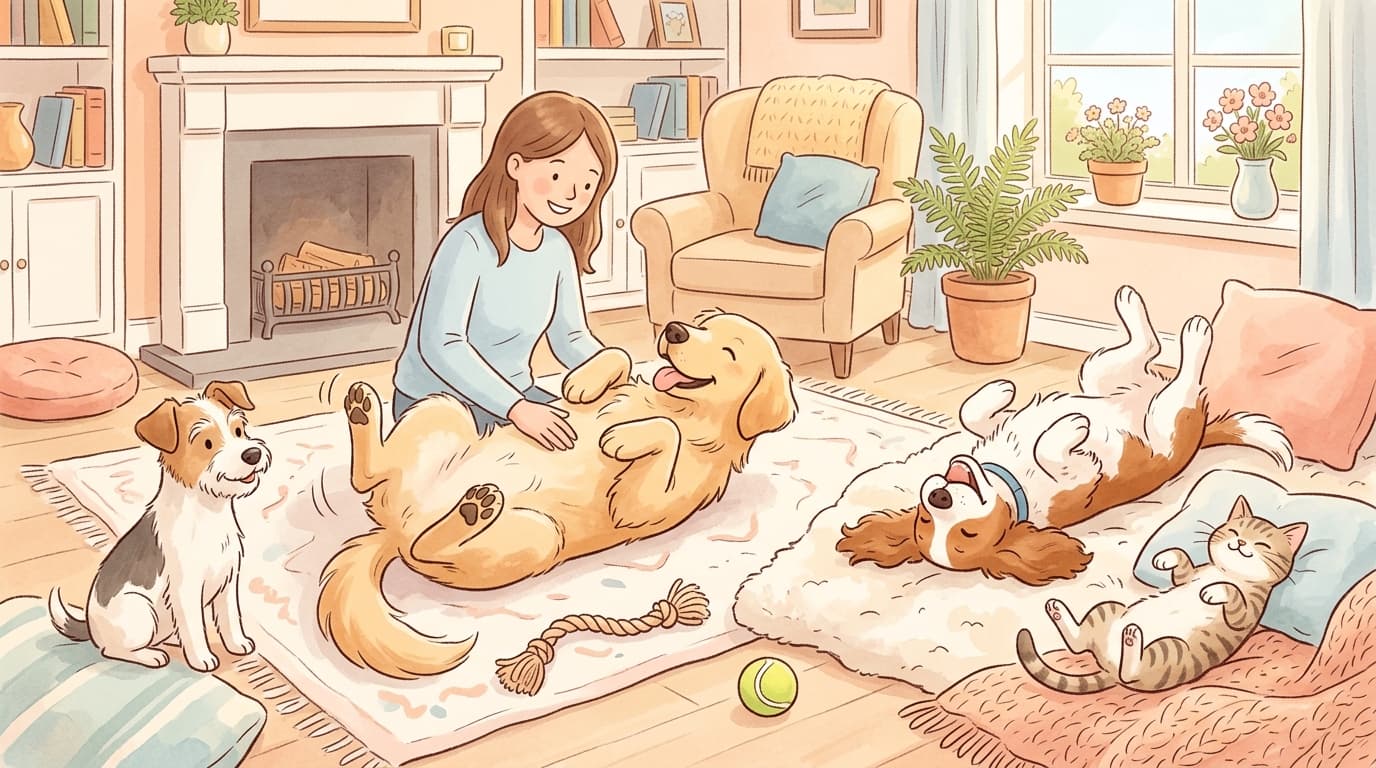
Your dog shows their belly and your hand instantly goes into belly-rub mode. Most pet owners don’t realize that belly-up can mean “yes please,” “I’m uncomfortable,” or even “I’m trying to calm you down.”
The good news is you don’t need superpowers to read it. You just need to slow down for a couple seconds and look at the rest of the dog, not just the exposed tummy.
Why a dog shows their belly (it’s not always about affection)
A belly-up moment can happen for a few very different reasons:
- They want touch. The classic “rub my belly” situation.
- They’re appeasing you because they feel nervous. Some dogs roll over to communicate that they’re not a threat.
- They’re doing something functional. Cooling off on tile, stretching their spine, or scratching an itch they can’t reach.
- They’re trying to relieve discomfort. Sometimes dogs shift, roll, or expose their belly because they’re not feeling great.
That’s why rushing in can accidentally turn a sweet moment into a confusing one.
The “happy belly” look: soft, loose, and wiggly
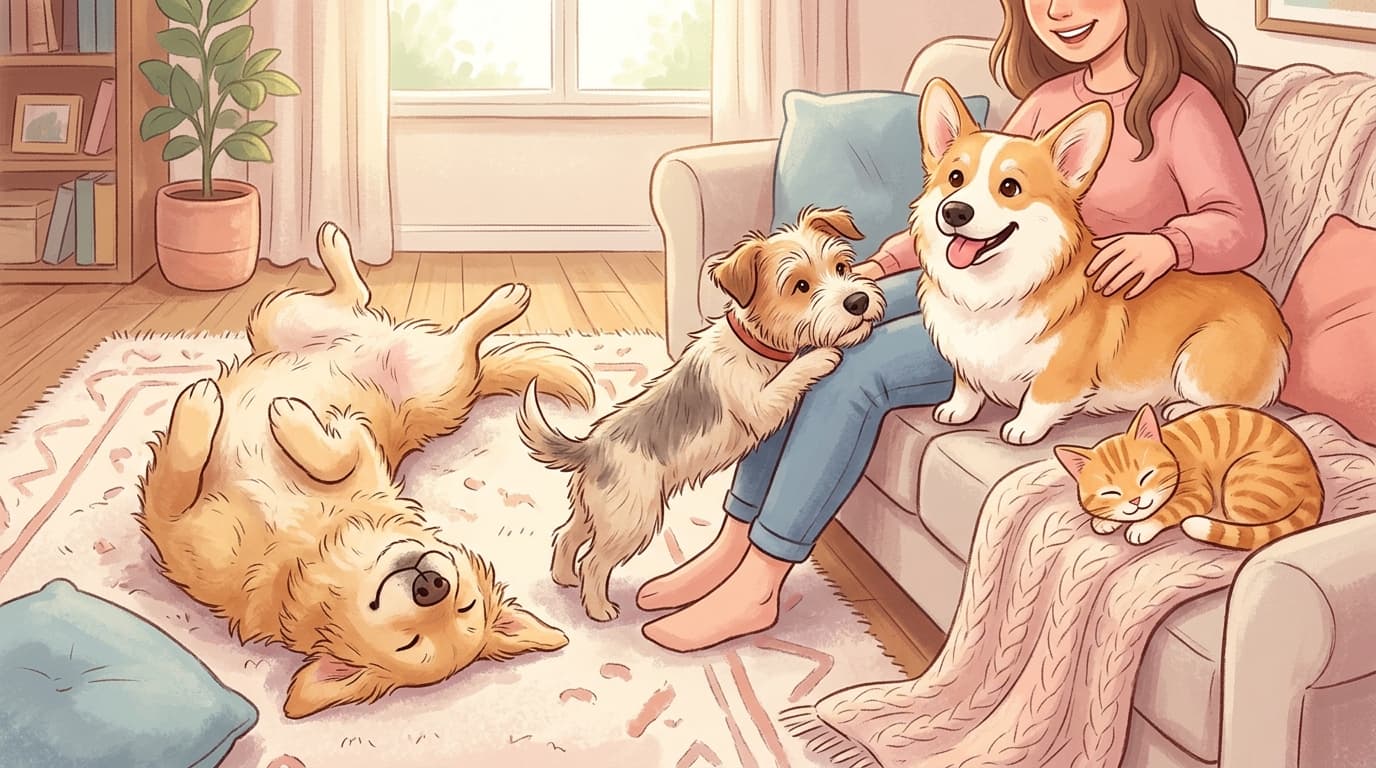
If you’ve ever noticed your dog flop over like a loose noodle and kind of melt into the floor, you’ve seen the green-light version.
Look for “softness” everywhere:
- Tail: loose and relaxed (not clamped)
- Ears: relaxed, not pinned back
- Eyes: soft, normal-shaped, not wide or darting
- Mouth: slightly open or neutral, not tight
- Body: floppy, wiggly, comfortable
- Engagement: they gently nudge toward your hand or follow it
In this version, belly rubs usually land exactly the way you intended.
The “nervous belly” look: frozen, tucked, and watchful
Here’s the tricky part: a nervous dog can also roll over and show their stomach, but the rest of the body tells a different story.
Common signs the belly display is more about appeasement than pleasure:
- Tail tucked or held very still
- Ears pinned back
- Wide eyes or visible whites
- Lip licking or repeated yawning
- Stiff, frozen body instead of loose wiggling
- Avoiding eye contact
If you pet in that moment, you can accidentally teach your dog that their “I’m not okay” signals don’t work. Over time, dogs often stop offering the small, polite signals first and jump faster to bigger ones like growling or snapping.
The “busy belly”: cooling down, stretching, or scratching
Sometimes your dog is belly-up for reasons that have nothing to do with you.
A few everyday examples:
- They’re sprawled on a cool surface to drop their body temperature.
- They’re stretching their back and enjoying the relief.
- They’ve found an itchy spot and rolling helps.
In these moments, petting can feel like being interrupted mid-task. If your dog looks focused, squirms away, or seems mildly annoyed, take that as useful information.
Don’t pet yet: the “scratch, pause, opt-in” method
If you only remember one thing, make it this: treat belly rubs like an invitation you confirm, not a right you claim.
1) Scratch somewhere safer first
Instead of going straight for the belly, start with a calm scratch on a “neutral” spot like:
- chest
- shoulder
- collarbone area
Think of it as a quick check-in.
2) Pause
Stop your hand and wait a beat. This is where your dog gets a choice.
3) Let your dog opt in
Green lights include:
- nudging your hand
- flopping even looser
- placing a paw on you
- leaning into touch
Red or yellow lights include:
- stiffening
- turning their head away
- holding their breath or going still
- moving away
If they don’t opt in, respect the answer and give them space.
If your dog seems nervous, de-escalate with your body
When you suspect the belly display is appeasement, your job is to lower pressure, not add contact.
Try these small moves:
- Turn your body slightly sideways (about 45 degrees)
- Soften your posture
- Blink slowly once or twice
- Speak quietly and gently
It’s amazing how often dogs relax just because you stopped looming and stopped reaching.
How to make belly rubs feel better (tiny details that matter)
Once your dog has clearly opted in, a few simple tweaks can keep the interaction calm and cozy.
- Warm your hands first. Cold fingers can startle a relaxed dog. Rub your palms together for a few seconds.
- Use long strokes, not fast circles. Long, steady lines from chest toward the hips often stay soothing. Tight little circles can rev some dogs up.
- Keep pressure light in sensitive areas. Inner thighs and armpits are “yellow zones” for many dogs.
Your dog has green, yellow, and red zones (make a simple map)
Most dogs don’t experience touch as “all good” or “all bad.” They have zones.
A practical way to think about it:
- Green zones: chest, shoulders, sides of ribs (often the easiest places)
- Yellow zones: base of tail, inner thigh, armpit (go slow, confirm opt-in)
- Red zones: anywhere your dog has guarded before or seems protective about
Build your map on a calm day when nobody is rushed. And update it over time—dogs change with age, seasons, and sore spots.
The kicking leg doesn’t always mean “more”
That rapid “motorcycle leg” that shows up during scratching is often a reflex. Your dog can look blissful while the leg goes wild, but it doesn’t automatically mean you should scratch harder.
If the kicking gets intense, try this:
- Slide your hand about an inch (a couple centimeters) away from the spot
- Switch from small circles to a flatter, longer stroke
You’ll often feel the reflex calm down quickly.
If a brand-new spot suddenly causes big flinches, head turns, or dramatic kicking, treat that area as a yellow zone for now and bring it up at your next checkup.
A better belly rub builds real trust
When your dog learns that you notice their signals and give them a choice, they don’t need to “shout” with bigger behaviors. You get a calmer dog, better communication, and sweeter affection that feels genuinely mutual.
Next time your dog shows their belly, take one breath, do the scratch-pause-opt-in, and let your dog tell you what they actually want.

Continue reading

How to Leave Your Dog Home Alone Without Triggering Separation Anxiety
Use these 9 simple routines to keep your dog calm, busy, and secure when you leave the house.

Everyday Habits That Hurt Your Dog’s Feelings (and What to Do Instead)
Small daily habits can quietly stress your dog. Learn what hurts your dog’s feelings—and the simple swaps that rebuild trust.

Female Dogs Aren’t Just “Smaller Males”: 8 Key Differences Every Dog Owner Should Know
Female dogs often learn faster, bond differently, and hide pain better. Here are 8 real-life differences to understand your girl.