How to Leave Your Dog Home Alone Without Triggering Separation Anxiety
Leaving the house feels like nothing to you—keys, shoes, out the door. But to your dog, that same routine can feel like a warning siren, especially if they’ve ever struggled with separation anxiety.
The good news is you can make alone time feel normal (even cozy) with a few small changes that teach your dog: you leave, and you always come back.
Start with a calm departure (your dog copies your energy)
If you’ve ever crouched down for a long, emotional goodbye, you were trying to be kind. But for many dogs, a dramatic farewell makes your exit feel like a big scary event.
Try making departures boring on purpose. Keep your voice light, your body language relaxed, and your routine quick. A casual “see you later” and a calm walk out the door helps your dog label your leaving as ordinary, not alarming.
This matters even more for dogs that are naturally clingy or sensitive—think many rescue dogs, or breeds that bond intensely with their people.
Tire your dog out before you go (even 15 minutes helps)
A dog with leftover energy is more likely to pace, bark, chew, or spiral into stress. A dog who’s pleasantly tired is much more likely to nap through your absence.
Before you leave, aim for 15–20 minutes of focused activity:
- A brisk walk
- Tug in the living room
- A quick fetch session
- Short training drills using high-value treats
Most pet owners don’t realize how far a small burst of mental + physical work goes. For high-energy breeds (Huskies, German Shepherds, Jack Russells, and plenty of mixes), this can be the difference between a peaceful house and a shredded pillow.
Create a “safe den” your dog actually wants to use
Dogs often relax best in a smaller, protected-feeling space. Wide open rooms can feel exposed, especially when the house is quiet and you’re gone.
Set up a retreat zone such as:
- A crate your dog already likes (only if they’re comfortable with it)
- A quiet corner with a bed and blanket
- A cozy spot under a desk or beside a couch
Add something that smells like you—an old t-shirt works surprisingly well. Your scent can act like a comfort anchor, the way a child clings to a familiar blanket.
Leave meaningful entertainment (boredom turns into stress)
Imagine sitting in an empty room for hours with nothing to do. That’s what “no-toys, no-chews, no activities” feels like for many dogs—and boredom often turns into anxiety or destruction.
Try setting your dog up with enrichment that lasts:
- Durable chew toys placed around the room
- A stuffed rubber toy (like a Kong) with dog-safe peanut butter, plain yogurt, or mashed banana—frozen overnight for extra time
- Puzzle feeders or treat-dispensing balls
If your dog is especially smart (Aussies, Goldens, Poodles, and other working breeds), brain work can be just as satisfying as a run.
One easy trick: rotate toys every few days so “old” toys feel new again.
Choose the right background sound (random TV can backfire)
Many people leave the TV or radio on to “keep the dog company.” The problem is unpredictable noise—sudden shouting, sirens, loud commercials—can startle a dog and kick off a stress cycle.
Instead, aim for controlled, steady audio:
- Calming dog playlists
- Soft classical music
- Gentle nature sounds
Consistent sound also helps mask outside triggers like slamming car doors or garbage trucks.
Break the power of your departure cues
Your dog doesn’t wait until the door closes to worry. For many dogs, anxiety starts the moment they hear the keys, see the shoes, or watch you grab your bag.
On purpose, practice those cues without leaving:
- Jingle your keys, then sit down
- Put on your work shoes, then make coffee
- Put on your coat, then scroll your phone
Over time, those signals stop meaning “I’m about to be alone,” and become just normal household sounds.
Manage the view (windows can turn your dog into an 8-hour security guard)
A big front window looks like entertainment, but it can be nonstop stress for dogs who feel territorial or reactive. Every passerby, dog, delivery person, or neighborhood cat can trigger barking, pacing, and adrenaline.
If your dog tends to “patrol” the window, reduce the visual stimulation:
- Close curtains or lower blinds
- Use frosted window film on the bottom portion of glass doors
Out of sight often means your dog can finally relax and sleep instead of staying on high alert.
Practice micro departures to build confidence
Dogs don’t understand time like you do. If your dog struggles with separation anxiety, even a short absence can feel endless.
Micro departures teach a simple lesson: leaving always leads to returning.
Try this progression:
- Step outside for 10 seconds, return calmly
- Later, 30 seconds
- Then 2 minutes, 5 minutes, and so on
Keep your returns low-key and repeat at random times. This gradual build helps your dog feel safe instead of shocked by long absences.
Keep the reunion calm (the most common mistake)
This is the part almost everyone messes up because it feels so natural. You get home, your dog explodes with excitement, and you match that energy with big greetings and lots of fuss.
But an over-the-top reunion can accidentally confirm your dog’s fear: that your absence was a huge ordeal.
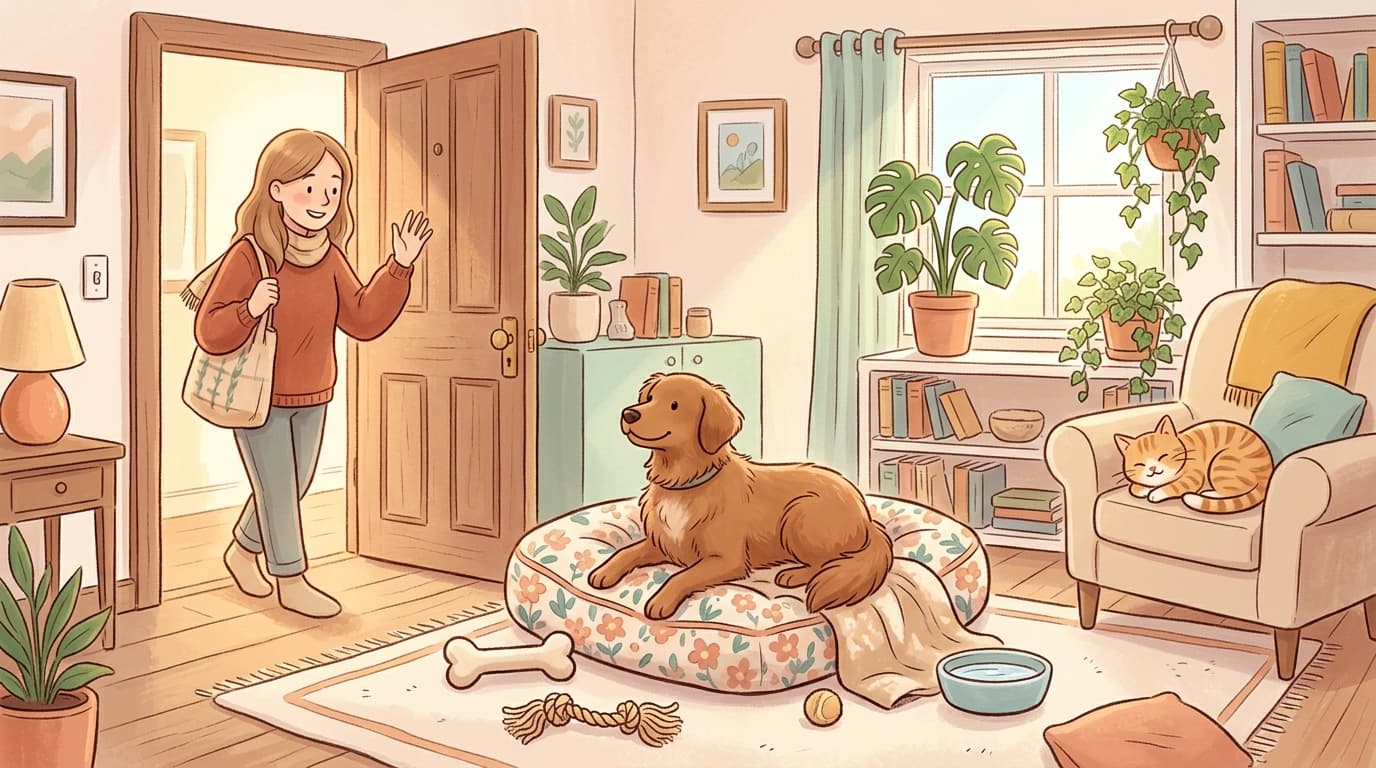
Instead, make coming home boring for the first couple of minutes. Walk in calmly, put your things down, and wait until your dog’s paws are on the floor and their body softens. Then reward that calm with affection.
You’re not being cold—you’re teaching your dog the skill of settling.
A simple takeaway for calmer alone time
Your dog doesn’t need a perfect house or an elaborate routine. They need consistency, comfort, and a clear message that departures and arrivals are normal parts of life.
If you change just two things this week—calmer exits and calmer reunions—you’ll likely notice a real shift in how your dog handles being home alone.
Meta description: Use these 9 simple routines to keep your dog calm, busy, and secure when you leave the house.
Continue reading

16 Five-Second Habits That Make Your Dog Feel Truly Loved (No Treats Required)
These 16 tiny, five-second habits help your dog feel safe, seen, and deeply loved—without extra toys, treats, or long walks.

Is Your Dog Guarding You While You Sleep? 8 Nighttime Signs They’re Watching Over You
From sleeping facing the door to silent sound checks, these nighttime habits can mean your dog is keeping watch while you rest.

Why Your Dog Licks You Every Day (And What It Really Means)
Daily dog licking isn’t about salt or snacks. It’s bonding, comfort, and pack love—plus 14 other signs your dog adores you.