15 Signs Your Dog Is Truly Happy (Not Just ‘Fine’)—From Belly-Up Sleep to Micro-Touches
Your dog can’t leave a five-star review of your home life, but they can show you—every single day. And once you know what to look for, the difference between a dog who’s merely comfortable and one who’s genuinely thriving becomes pretty obvious.
Below are some of the clearest signs your dog is living a truly happy life, based on the small habits most pet owners don’t realize are actually big emotional tells.
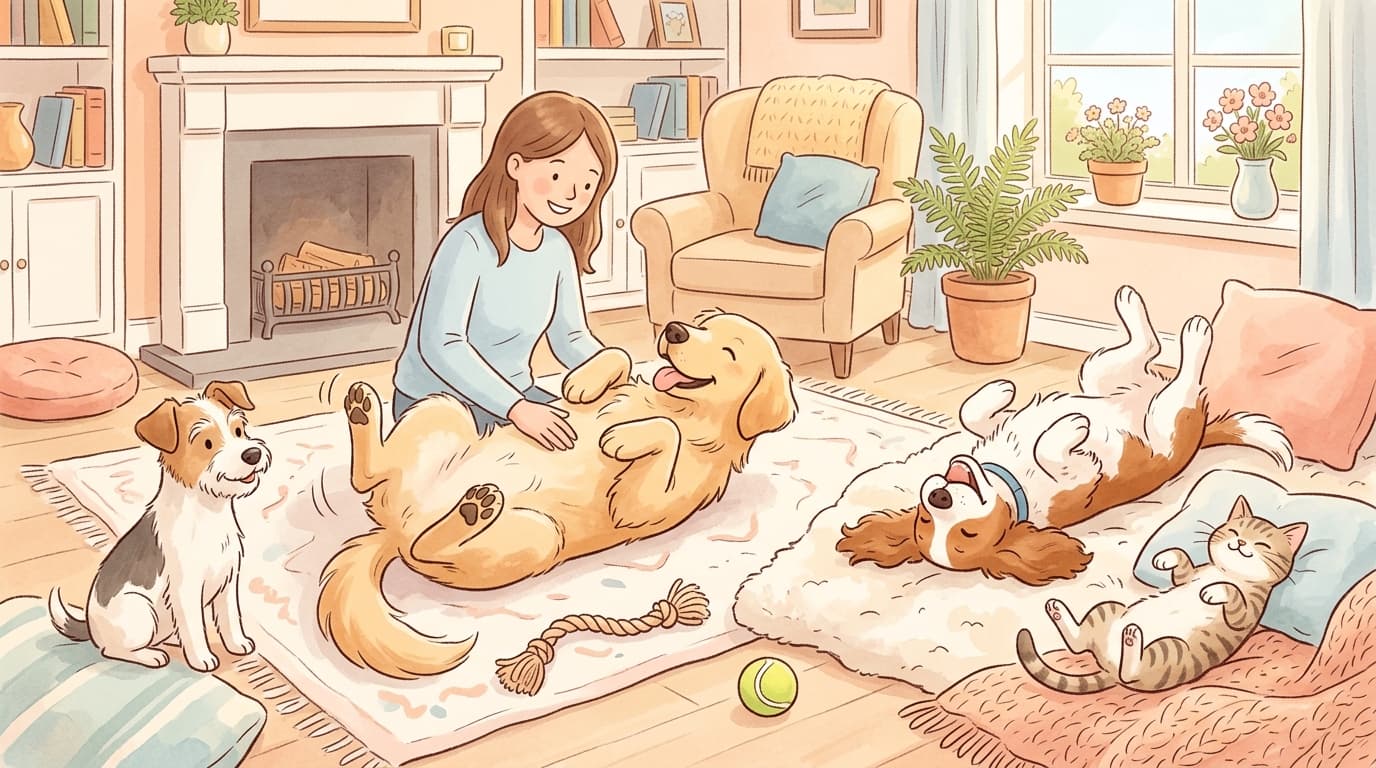
1) They sleep belly-up (or in other “ridiculously vulnerable” positions)
If your dog regularly sleeps on their back with their belly exposed, legs splayed, and zero concern for who’s walking past… that’s trust in its purest form. In nature, that posture would be a terrible survival strategy. In your living room, it’s a sign your dog feels consistently safe.
Even more telling: how deeply they sleep like that. The more relaxed the body, the more secure the nervous system.
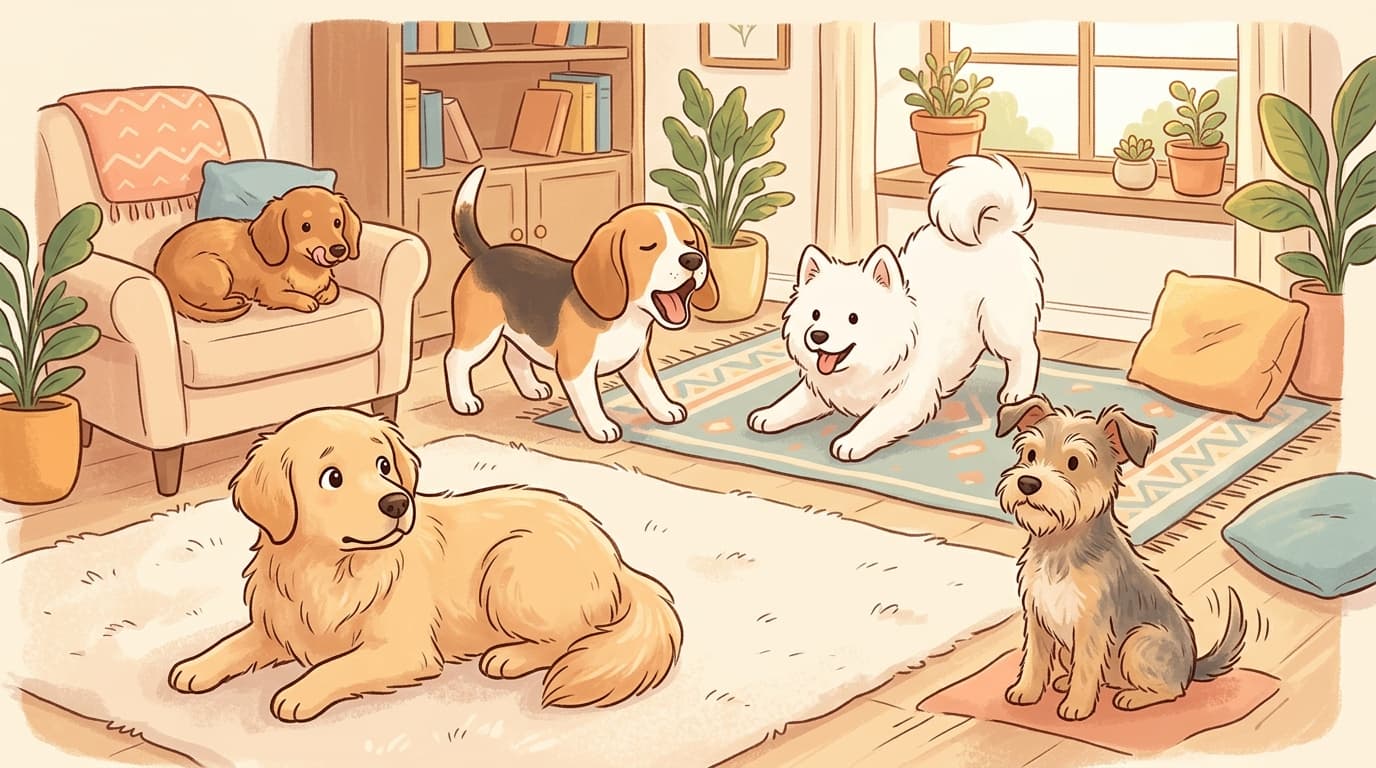
2) Their play gets creative—and a little weird
Happy dogs don’t just play fetch. They improvise.
If your dog constantly changes the “rules” mid-game (tug becomes chase, chase becomes zoomies, zoomies become “surprise, now it’s ball”), that’s not chaos. It’s joy spilling over. You’ll often see signature moves too—little spins, bows, head fakes, or rituals they only do with their favorite people.
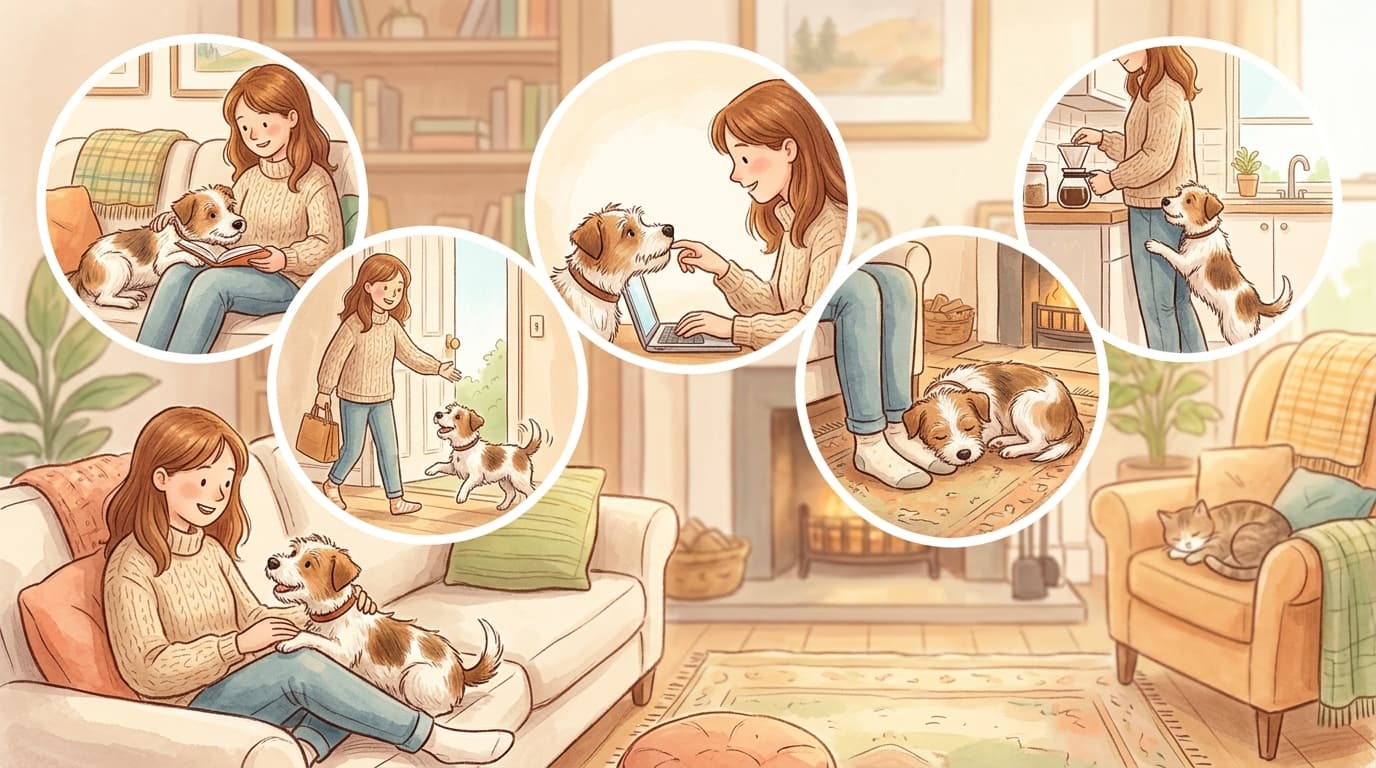
3) They give you tiny “micro-touches” all day
Not every affectionate dog is a velcro dog. Some of the most content pups show love in quick, almost casual contact:
- brushing your leg as they walk by
- lying down so their tail touches your foot
- taking the long route across the room just to lightly bump you
If you’ve ever noticed your dog doing this and thought, “That was… subtle,” you’re not imagining it. Those small touches can be a sign your dog feels emotionally full—like they don’t need to demand attention to feel connected.
4) They recover quickly after being startled
Doorbell. Thunder. A dropped pan. Most dogs react.
The happy-life clue is what happens after: a quick return to normal breathing, a softer body, maybe even a yawn that looks like a reset. Dogs who bounce back fast tend to have a strong baseline of safety in their day-to-day life.
5) They’re relaxed around food (sometimes even leaving some behind)
A dog who’s always worried about resources often eats like it’s a race.
A dog who feels secure may:
- eat a bit, wander off, come back later
- stay calm if you walk by the bowl
- take treats without acting frantic
- occasionally decline a treat because they’re simply not that hungry
This kind of ease can be a sign your dog truly trusts that good things are reliably available.
6) Alone time looks like rest time, not panic time
Some dogs spend your entire absence waiting, pacing, or monitoring the door. Others… take a nap like it’s their job.
If your dog settles quickly when you leave—sometimes even heading to their bed before you’re fully out the door—it often suggests a secure attachment. They miss you, sure, but they also trust you’ll come back.
7) They explore confidently, but “check in” with you
On walks or in new places, a thriving dog often shows a healthy pattern:
- investigate something interesting
- glance back at you briefly
- go explore again, a little braver
That check-in isn’t clinginess. It’s connection. You’re their anchor, and because you’re there, the world feels safe enough to be curious.
8) Their tail wags have a whole vocabulary
Tail wagging isn’t a single emotion. It’s more like a dial with multiple settings.
Dogs with rich, secure social lives often show different wags for different people—one for you, one for a favorite neighbor, one for their dog bestie, and a special “I can’t cope” wiggle for the best moments.
9) They do the full-body wiggle (not just a tail wag)
Some greetings are tail-only. Others are whole-dog celebrations.
That loose, wobbly, full-body wiggle tends to show up when joy is big enough that it can’t stay contained. It’s one of the clearest “social joy” signals you’ll ever see.
10) They bring you “gifts” (even if the gift is… a sock)
If your dog proudly presents a toy, a leaf, or something they absolutely should not have taken from the laundry basket, it can be more than a play invite.
Many dogs share prized items with their favorite humans as a social gesture—like, “This matters to me, so it matters to us.” It’s goofy, but it’s also sweet.
11) They trust you enough to turn their back—or show you their butt
Dogs don’t present their vulnerable side to someone they don’t trust.
If your dog sits facing away from you, backs into you, or casually plants their rear near you, it can be a quiet signal of safety: “I’m comfortable enough to not keep eyes on you.”
12) They come for cuddles… and then leave without drama
This one surprises people. A secure, happy dog often feels free to:
- seek affection when they want it
- wander off when they’re done
No sulking. No clingy escalation. Just a confident “That was nice—see you later.” It’s the canine version of a healthy relationship.
13) They melt when you pet them (side-rolls, relaxed surrender)
A dog who starts standing and slowly eases onto their side—or flops into a loose sprawl—usually isn’t just enjoying the scratches. They’re showing they feel safe enough to physically let their guard down.
14) They have little joy rituals they invented
Happy dogs often create personal traditions that aren’t about anxiety—they’re about pleasure.
Maybe your dog:
- does three spins before settling
- grabs a specific toy after dinner
- rolls on a certain patch of carpet after walks
- makes a dramatic “happy groan” before naps
The key is flexibility. If they can skip the ritual sometimes without falling apart, it’s more likely a fun expression than a coping compulsion.
15) They act like they have all the time in the world
A thriving dog tends to move through life without urgency.
They’ll take their time sniffing. Pause mid-meal to look around. Accept transitions (walk ending, bedtime starting, playtime finishing) without acting like the good stuff is gone forever. That calm patience often comes from a deep belief that more good moments are coming.
A few daily habits that quietly build a happier dog
If you want more of these “thriving” signs, a few small routines can help:
- Let them sniff you on their terms when you reunite (it’s information and comfort to them).
- Make space for soft, relaxed eye contact—not staring, just gentle connection.
- Keep one or two routines steady (a consistent morning greeting, feeding window, or bedtime wind-down).
- Try a 30-second calm-down before you interact if you’re stressed—dogs often pick up your tension faster than you think.
- Create a predictable sleep setup (wherever they sleep, consistency matters).
The takeaway
A happy dog doesn’t look “perfect.” They look safe, secure, and comfortably themselves—goofy rituals, creative play, deep naps, and all. If you’re seeing several of these signs, your dog isn’t just loved—they’re thriving.
Meta description: From belly-up sleep to weird joy rituals, these signs reveal when your dog feels safe, secure, and genuinely happy.
Continue reading

16 Five-Second Habits That Make Your Dog Feel Truly Loved (No Treats Required)
These 16 tiny, five-second habits help your dog feel safe, seen, and deeply loved—without extra toys, treats, or long walks.

Is Your Dog Guarding You While You Sleep? 8 Nighttime Signs They’re Watching Over You
From sleeping facing the door to silent sound checks, these nighttime habits can mean your dog is keeping watch while you rest.

Why Your Dog Licks You Every Day (And What It Really Means)
Daily dog licking isn’t about salt or snacks. It’s bonding, comfort, and pack love—plus 14 other signs your dog adores you.