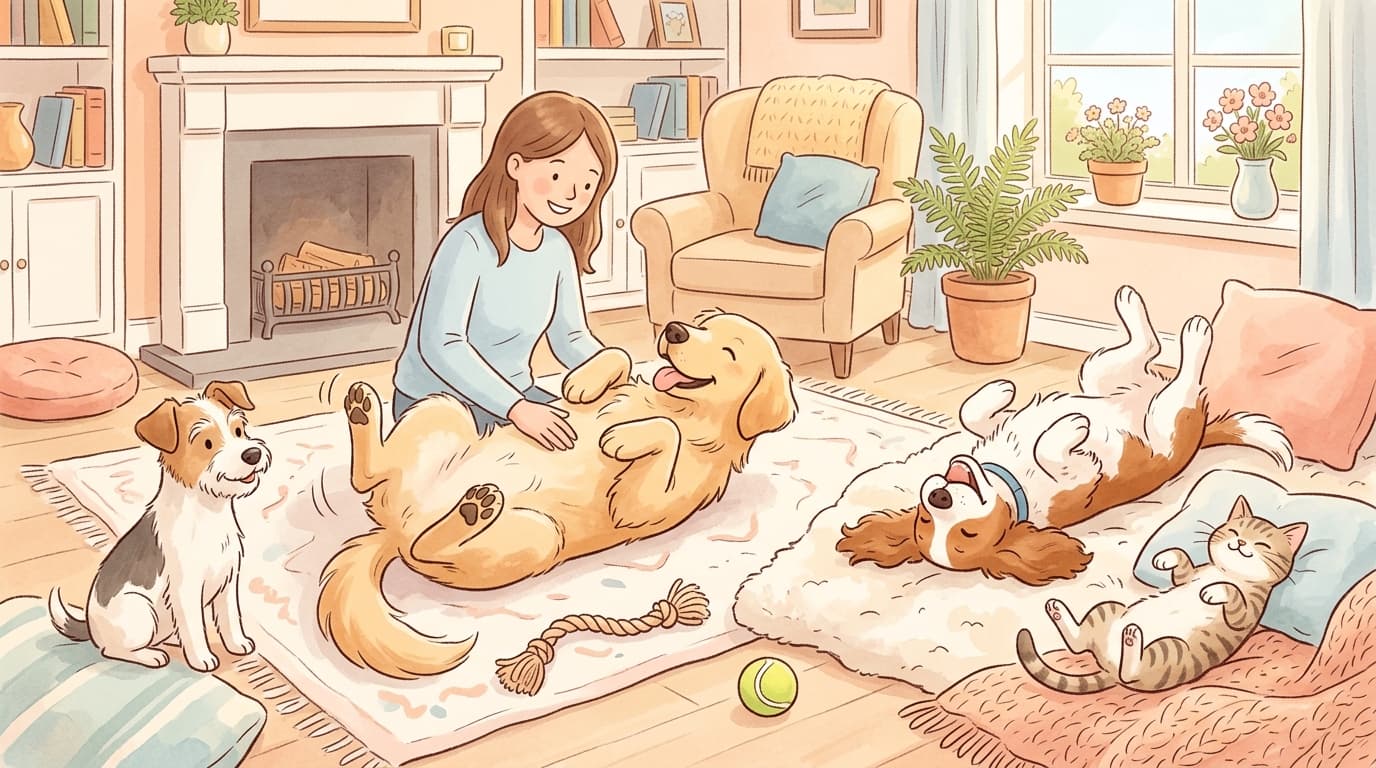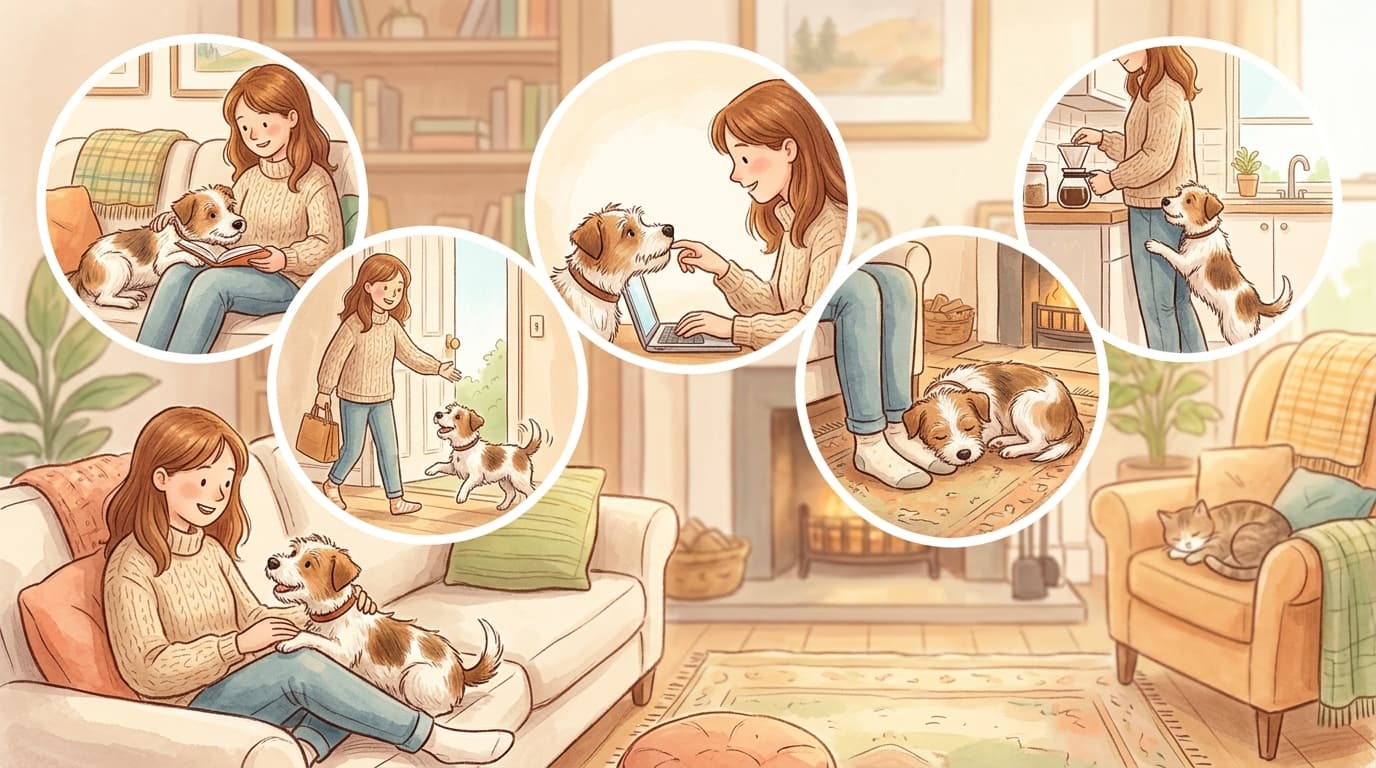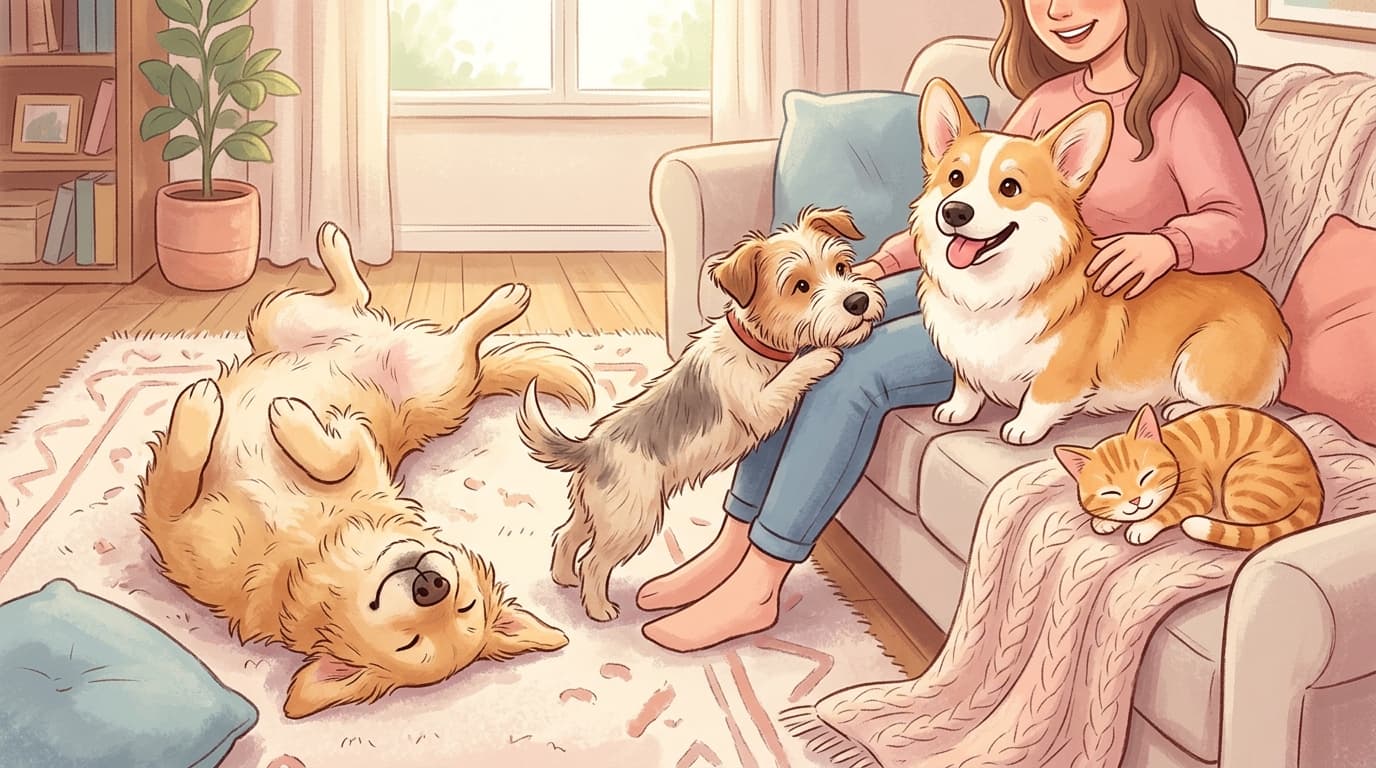
Dog Body Language Signs of Love: 7 Little Moments That Mean “You’re My Person”
You can live with a dog for years and still miss the sweetest “I love you” signals because they don’t look like affection the way humans expect. But once you learn a few dog body language signs of love, everyday moments—like you walking in the door—start to feel completely different.
1) The “stretch” at the door that’s actually a love greeting
If you’ve ever noticed your dog doing that front-legs-out, chest-down stretch the second you get home, pay closer attention next time. This isn’t always a sleepy stretch. It’s often a play bow—an invitation.
Dogs commonly pair this move with focused eye contact, and observations of play-bow behavior show it’s frequently done with a clear “I’m talking to you” intention. In plain English: your dog is choosing you as soon as you appear. They’re saying, “I’m safe with you, I’m happy you’re here, and I want connection.”
A sweet detail? Older dogs who still do this are basically keeping a tiny ritual alive—proof that you’re still their best part of the day.
2) The bathroom “bodyguard” move (it’s not just clingy)
Your dog posting up outside the bathroom door can feel a little silly… until you remember what closed doors mean to a dog. They can’t see you. They can’t read the room. And in the animal world, privacy is vulnerability.
Many dogs treat that moment like a job: “You’re separated from me, so I’m staying close.” It’s one of the most underrated dog body language signs of love because it looks like neediness, but it often reads more like loyalty and watchfulness.
3) The head tilt that says, “I’m trying to understand you”
That adorable head tilt isn’t always confusion. Research has linked head tilting (in certain dogs) with stronger memory and the ability to match words to mental images. In other words, some dogs tilt their heads more when they’re actively processing meaning—like they’re building a picture of what you want.
So when your dog tilts their head while you talk, they may be doing something surprisingly intimate: studying you. Most pet owners don’t realize how much effort dogs put into reading our voices, faces, and patterns.
4) The deep sigh that means relief, not boredom
Dogs sigh for different reasons, but there’s a particular kind that shows up when they finally settle near you—especially after you’ve been away. It’s that long, soft exhale that feels like the whole room calms down.
Think of it as your dog’s version of, “Okay. My person is here. I can relax now.” It’s a tiny sound, but it’s a big emotional tell.
5) The “gift” drop: toy, sock, or random leaf
When your dog brings you something—maybe their favorite toy, maybe a shoe they definitely weren’t supposed to grab—it’s easy to assume it’s just play.
But offering a prized object can also be a trust gesture, and sometimes it’s a way to handle huge feelings. Dogs get emotionally overloaded too. After a reunion, grabbing and delivering an item can be their way of channeling excitement into an action: “Here, take this. I’m so happy you’re back I don’t know what to do with myself.”
Even if the “gift” is a sock you’d rather not share.
6) The ultimate trust signal: turning their back to you
This one hits hard once you really think about it. In the animal world, exposing your back is risky. You can’t see what’s coming. You’re vulnerable.
So when your dog curls up beside you, turns away, and falls asleep, that’s not indifference. That’s trust on the highest level. They’re basically saying, “I believe you’ll keep me safe.”
A simple way to answer it: rest your hand gently on their back for a moment—no big petting session required. Just a quiet acknowledgment that you understand the trust they’re giving you.
7) Where (and how) your dog sleeps tells a whole story
Your dog’s sleep position is like a sentence made of posture.
- Pressed against you: you’re their safe zone.
- Facing the door or hallway: they may be “on duty,” even while resting.
- Curled tight in a ball: more guarded, possibly unsure or just naturally cozy.
- Side-by-side with a little space to see the room: closeness plus awareness—comfort and protection in one.
If your dog chooses to sleep near you night after night, that’s a daily decision. They’re picking your presence during the one time they’re most defenseless.
A small greeting ritual that strengthens your bond in seconds
Try this the next time you come home: before you drop your bags or reach for your phone, pause at the door. Get down closer to your dog’s level, make gentle eye contact for about three seconds, and then exhale slowly as you relax your shoulders.
Calm, soft connection like this is linked to oxytocin release (the bonding hormone) in both humans and dogs. It’s not training. It’s a reunion in your dog’s language.
The takeaway
Your dog doesn’t love you in speeches—they love you in patterns. If you start noticing these dog body language signs of love, you’ll feel how often your dog is choosing you, trusting you, and trying to stay close in the simplest ways.
Meta description: From the play bow at the door to sleeping pressed against you, these dog body language signs quietly prove how much your dog loves you.
Continue reading

Why Your Cat Licks You (And Why It’s Not Always About Love)
Cat licking isn’t just affection—it can be scent-marking, bonding, stress-soothing, or even checking on you. Here’s what it means.

How Cats Secretly Test You Every Day (And What They’re Really Looking For)
Cats test your patience, boundaries, and consistency daily. Learn the subtle signs—and how to earn real feline trust.

16 Five-Second Habits That Make Your Dog Feel Truly Loved (No Treats Required)
These 16 tiny, five-second habits help your dog feel safe, seen, and deeply loved—without extra toys, treats, or long walks.