Female Dog Protective Behaviors: 11 Quiet Ways She Guards Your Home (and Your Heart)
From body-blocking at the door to sensing stress, these female dog protective behaviors show how she keeps your family safe and close.
You might think your female dog is “just sweet.” But a lot of her gentleness is actually strategy—quiet, calculated, and deeply protective. If you’ve ever noticed her posting up by the window or slipping between you and something that feels off, you’ve already seen the truth.
Female dog protective behaviors: why she protects so quietly
Many female dogs don’t default to loud, showy guarding. Instead, they tend to protect with positioning, observation, and emotional attunement—more like a steady security system than a siren.
That can look subtle: a pause on a walk, a hard stare out the front window, or a calm “I’m staying right here” choice when you’re stressed. Most pet owners don’t realize those moments are often protective behaviors, not random quirks.
1) She “body-blocks” instead of making a scene
One of the clearest female dog protective behaviors is placing herself between you and whatever she’s unsure about.
Instead of charging forward or barking nonstop, she may shift her body like a shield—quietly stepping in front of your legs, leaning her shoulder into you, or positioning herself at the doorway. It’s a practical move: she’s creating distance and buying time while she evaluates the situation.
2) She can sense stress and emotional pain faster than you expect
Ever had a brutal day and your dog suddenly turns into a silent shadow—no toys, no demands, just warm presence? Female dogs are often especially tuned in to tiny changes in your face, voice, and even your scent when stress hormones rise.
You might see her press against your side, rest a heavy paw on your knee, or bring you a favorite toy like an offering. It’s not “neediness.” It’s comfort behavior—her version of staying on duty while you’re struggling.
3) She chooses “her person” with surprising intensity
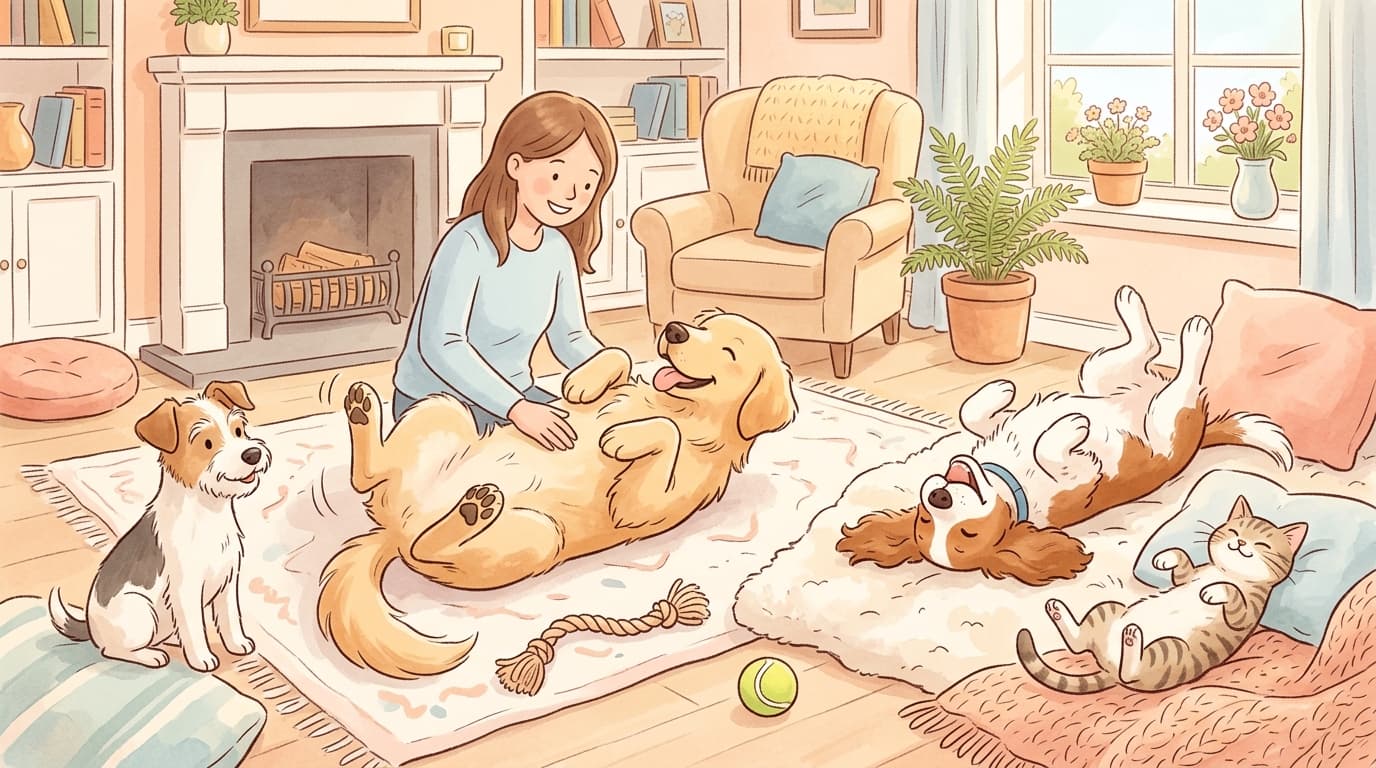
Many female dogs don’t spread their deepest attachment evenly across the household. They often pick one person and stick close—following room to room, waiting outside the bathroom door, or choosing that person’s feet as the best resting spot in the world.
And it isn’t always the one who fills the food bowl. For a lot of female dogs, the strongest bond forms around emotional safety: the person whose tone, energy, and routines feel most steady.
4) She becomes gentle and watchful around babies and kids
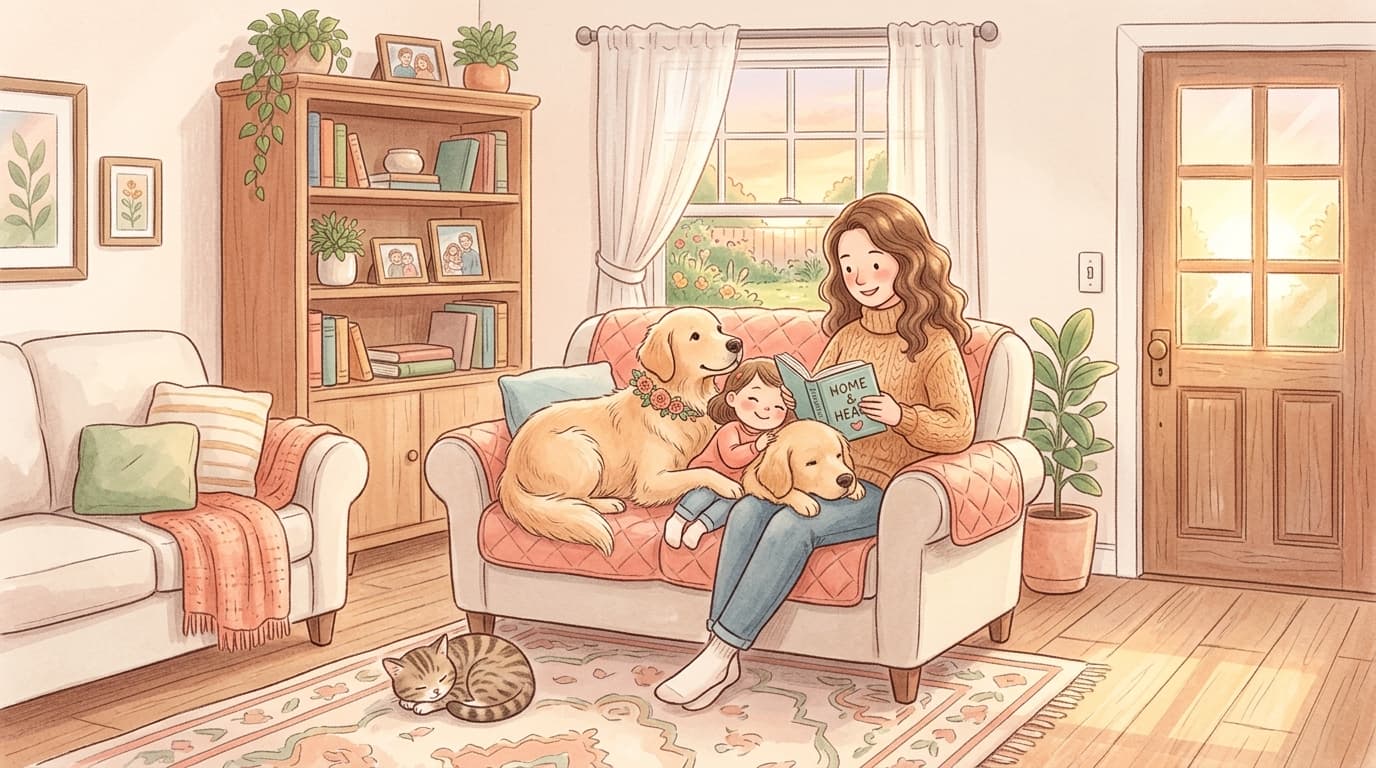
Female dogs frequently show a special kind of tenderness with small children—even if they’ve never had puppies. You may notice extra patience with clumsy toddler hands, a calm presence during crying, or a habit of settling nearby like a quiet sentry.
If you’ve ever seen your dog plant herself near a crib or lie close while a baby crawls, that’s not just “cute.” It’s nurturing plus supervision.
5) She pauses to assess risk (and it’s not cowardice)
A lot of owners misread this: the stop-and-stare on walks, the hesitation at a new doorway, the refusal to rush into a chaotic space.
Often, that’s a female dog running a quick mental checklist. She’s gathering information—sounds, movement, unfamiliar smells—before she decides what to do. That careful evaluation can also make training interesting: she may not be “disobedient,” she may be thinking.
6) She gravitates toward whoever is most vulnerable
In many homes, the female dog becomes the built-in nurse. If someone is sick, exhausted, injured, or emotionally worn down, she may attach herself to them like Velcro.
Dogs can detect subtle physical changes through scent—shifts tied to stress, blood sugar changes, and other internal cues. Female dogs often respond to that information with increased closeness and watchfulness, especially toward the person who seems least steady in that moment.
7) She reacts strongly to calming music and steady rhythms
Some dogs genuinely “use” music. Softer genres—gentle classical and laid-back, rhythmic tracks—can help lower arousal and encourage rest.
You might notice your female dog staying in the room longer when calm music is on, lying closer to the speaker, or settling into deeper, slower breathing. If your house gets noisy during the day, a peaceful playlist can be a simple way to support her nervous system.
8) Her protective instinct can tip into self-sacrifice
History is full of stories of female dogs putting themselves between danger and the vulnerable—especially children or smaller animals.
The pattern behind those stories is worth noticing: female dogs often respond intensely to “small and helpless” signals. That’s why you’ll sometimes see them adopt kittens, guard tiny puppies that aren’t theirs, or hover over a frightened child like a furry shield.
9) Phantom pregnancy: when mothering instincts overflow
Some unspayed female dogs go through a false (phantom) pregnancy after a heat cycle. It can look like nest-building, collecting toys, guarding them, moodiness, and even physical changes like swollen mammary glands.
What’s emotional—and strangely sweet—is how devoted she can seem to her “babies,” even when they’re squeaky toys or a stuffed bear. In her mind, she’s doing a job she was built to do: protect and nurture.
10) She plays peacemaker during conflict
If your home has multiple dogs—or even just loud humans—watch what your female dog does when tension rises.
Many females try to defuse conflict by stepping between the “argument,” using calming signals like yawning, lip-licking, or stillness. It can feel almost human, like she’s saying, “Enough. Everyone breathe.” In a lot of families, she becomes the emotional thermostat.
11) She remembers threats for a long time
Some female dogs don’t “reset” easily after a bad experience. If a person, dog, or place once felt unsafe, she may remember and react the same way months—or years—later.
That long memory can look like a grudge, but it’s often protective patterning: she’s keeping a mental file of what didn’t feel right so she doesn’t let it happen again.
Bonus: she tries to keep the whole family together
On hikes, in big yards, or in busy parks, you may notice your female dog doing a subtle headcount—running ahead, stopping to look back, pacing between the group and the person who wandered off.
Even if she’s not a herding breed, that “gather and regroup” behavior is a classic pack-management move. She relaxes most when her people are in one safe cluster.
The takeaway: notice the quiet ways she loves you
A female dog doesn’t always protect with noise. Often, she protects with presence—standing in the right spot, choosing the most vulnerable person, and staying close when your life feels heavy. If you start paying attention to her small decisions, you’ll see how often she’s been looking out for you all along.
Continue reading

7 Dog Body Language Signals Most Owners Miss (And What Your Dog Is Really Saying)
From play bows to doorway guarding, learn the dog body language signals that reveal trust, comfort, and connection.

Why Your Cat Climbs on You: It’s Not “Just Love” (And What They’re Really Saying)
From lap-sitting to cheek rubs, your cat’s “cute” habits are secret messages about safety, scent, and trust.

Dog Body Language Signs of Love: 7 Little Moments That Mean “You’re My Person”
From the play bow at the door to sleeping pressed against you, these dog body language signs quietly prove how much your dog loves you.