Do Cats Grieve? What Really Changes When a Housemate Disappears
Cats may not understand death, but they feel the loss of routines, scents, and “their” system at home. Here’s what grief can look like.
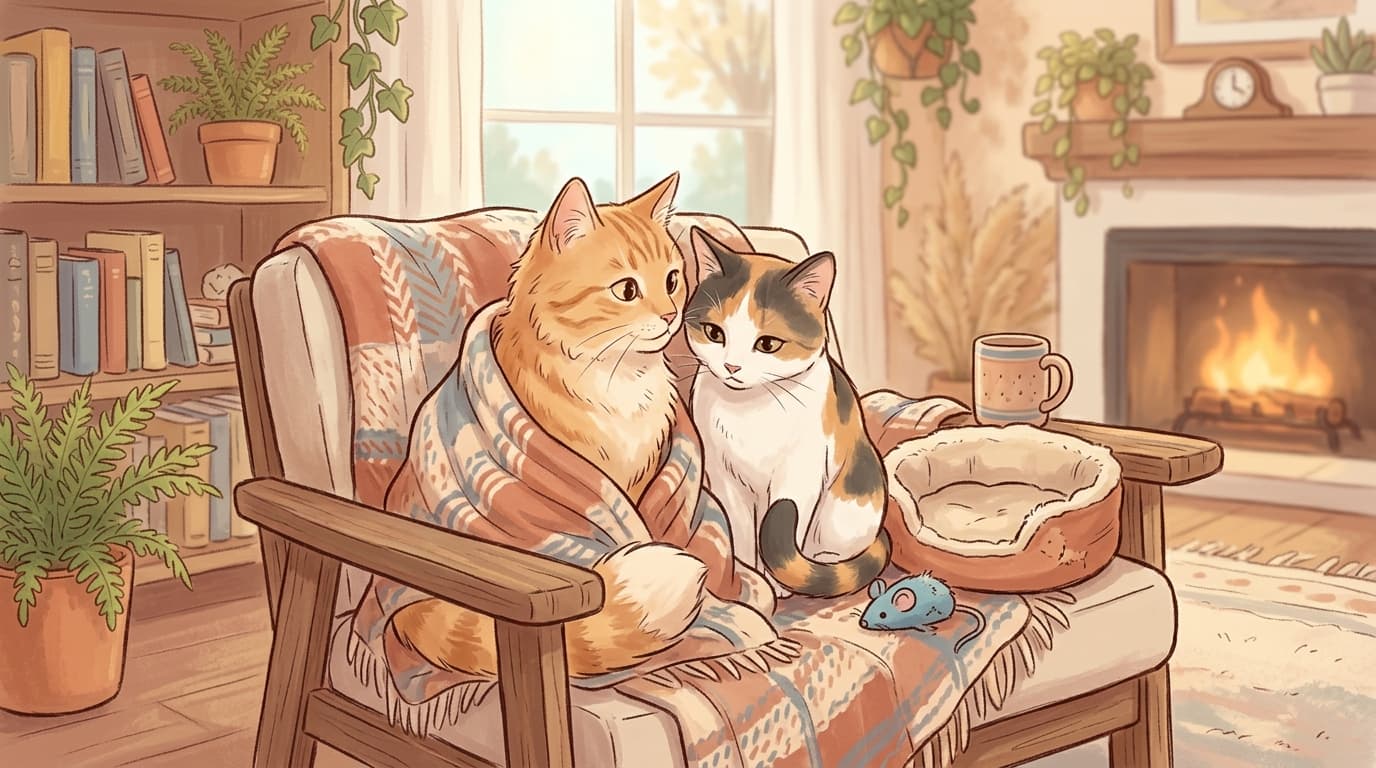
Your cat might not “know” what happened, but they absolutely notice that the home feels wrong. A familiar scent is missing. The usual footsteps never come. Even the daily rhythm—quiet mornings, couch time, feeding cues—suddenly has gaps.
What many pet owners don’t realize is that this kind of disruption can look a lot like grief, even if your cat isn’t mourning the way humans do.
Do cats grieve, or do they react to a broken routine?
Cats don’t sit around reflecting on loss the way we might. They don’t build stories about death or try to make meaning out of it.
But cats are intensely pattern-driven. Their world is built from repeat signals: voices, smells, movements, sounds, and the predictable order of the day. A “housemate” (human or animal) isn’t just a social relationship—it’s a reliable bundle of cues that tells your cat what normal looks like.
So when someone disappears, your cat isn’t reacting to an abstract idea. They’re reacting to a home system that suddenly doesn’t add up.
The first stage often looks like searching, not sadness
One of the most common early reactions after a loss is search behavior.
If a person or another pet dies away from home—or simply moves out—your cat may have no clear “proof” that they’re gone. To your cat, the housemate is just… not here right now. That uncertainty can kick off a very specific response:
- Checking the spots where the missing housemate usually rested
- Pausing and listening more intensely than usual
- Reacting to sounds that vaguely resemble the person or pet
- Hanging around doorways or hallways as if waiting
If you’ve ever noticed your cat repeatedly visiting one particular room or staring at a familiar sleeping spot, it can be part of that attempt to restore the old order.
What cat grief can look like after the searching fades
Once the “search” phase quiets down, you might see broader changes in everyday behavior. Cats tend to show this subtly—more like a shift in their baseline than a dramatic breakdown.
Common patterns include:
- More sleep and less activity: Some cats get noticeably quieter and move around less.
- Extra clinginess: Others become more attached, following you more or asking for more contact.
- Restlessness or irritability: Some pace, seem unsettled, or act a little “off,” like they can’t fully relax.
- Seeming disoriented: You may see more wandering or aimless movement, especially in the first stretch.
These differences often come down to the role the missing housemate played. Was that other cat a play partner? A calming presence? The “leader” your cat took cues from? Was the human the main source of feeding routines, voice cues, and movement in the home? The bigger the role in the daily pattern, the bigger the disruption.
When another pet is gone: why it can hit harder than you expect
In multi-pet homes, cats often form stable arrangements—even if it doesn’t look like human-style friendship.
They might:
- Sleep near each other
- Share space in predictable ways
- Use each other as reference points (who goes where, when the room is “safe,” how the day flows)
When that relationship disappears, it’s not just loneliness. It’s a system collapse. Some cats look for their companion for days. Others avoid places strongly associated with the missing pet. Some seem to “wait,” even when nothing is coming back.
When a person moves out or dies: the cat loses a daily anchor
A cat’s bond with a human can be deeply routine-based. Your voice, your scent, your footsteps, the way you open cabinets, the time you sit on the couch—those things become part of your cat’s map of reality.
If that human is suddenly gone, your cat may respond in smaller, easy-to-miss ways:
- A little more hiding
- A little more shadowing you around the home
- A low-grade nervous energy you can’t quite name
And if you’re grieving too, it’s incredibly easy to miss your cat’s version of it because it doesn’t look like ours.
The biggest misconception: “They’re acting normal, so they’re fine”
After a while, most cats do adapt. The searching slows down. The home stops feeling as “wrong.” New routines form.
But adaptation isn’t the same as “nothing happened.” Cats often reorganize quietly. The shift can be slow, and sometimes it leaves lasting changes in how your cat uses space, seeks attention, or settles.
In other words: your cat may look normal again, but their inner map of the household has been redrawn.
Helping your cat feel secure again (without overthinking it)
Because your cat is responding to missing patterns, the most helpful thing you can do is rebuild a sense of predictability.
Try focusing on:
- Steady daily rhythms: Keep feeding, play, and quiet time as consistent as possible.
- Familiar “anchors” in the home: Let your cat keep access to preferred resting spots and safe zones.
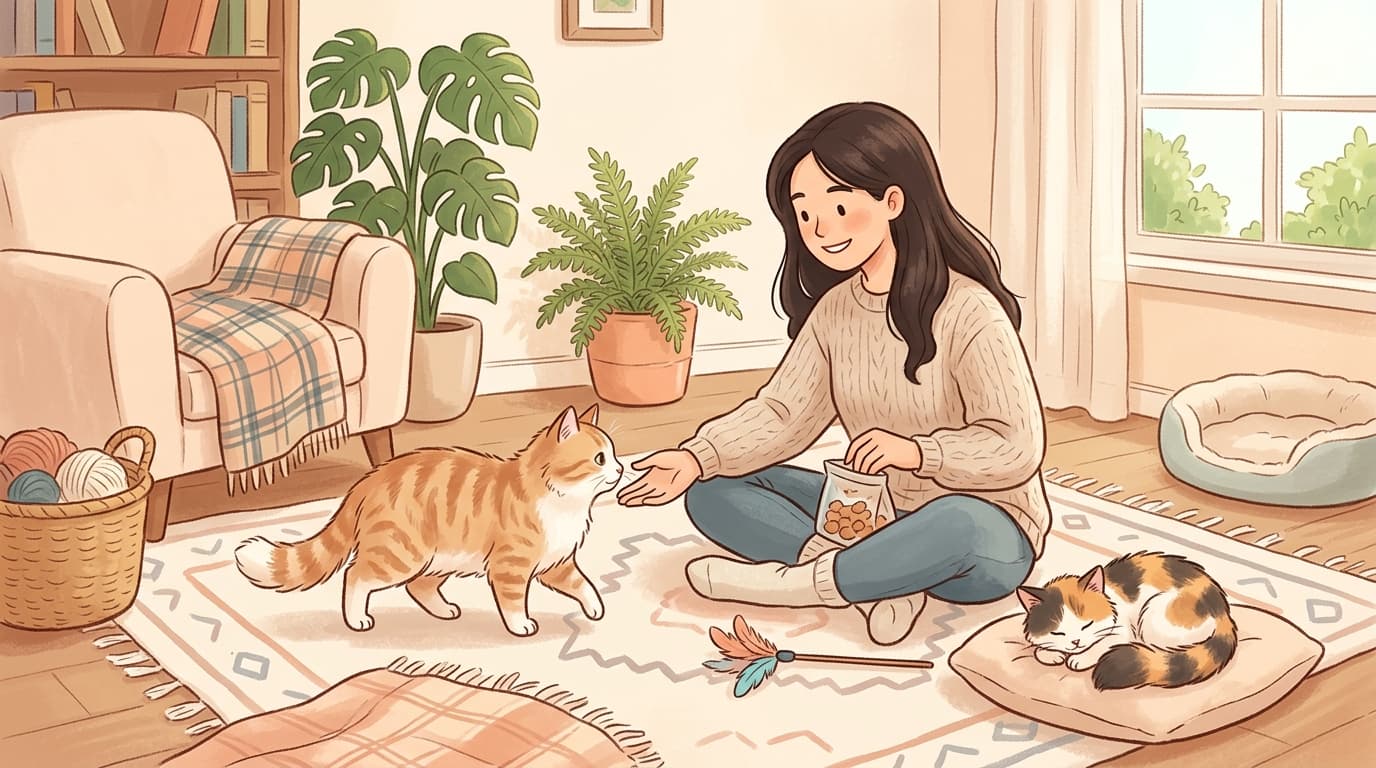
- Gentle connection: If your cat wants closeness, offer it. If they want space, respect it—but stay present and calm.
- Small, repeatable activities: A short play session at the same time each day can do more than big one-off efforts.
A small takeaway for anyone missing someone
Cats are more social than their reputation suggests, just in a different way than we’re used to. They bond through repetition, shared space, and the comfort of the familiar.
So if your home has changed and your cat seems different, trust what you’re seeing. You’re not imagining it—your cat is adjusting to a world that no longer matches yesterday.
Continue reading

Why Your Cat Walks on You at Night (And What They’re Really Trying to Tell You)
If your cat steps on your chest at night, it’s not random. Here are the real reasons—and how to respond without encouraging 5 a.m. wakeups.

Choosing a Cat by Coat Color: What You Should Know Before You Adopt
Your cat’s coat color can hint at temperament and care needs. Here’s how orange, black, white, tabby, tuxedo and more often differ.

Burmilla Cats: 5 Traits That Make This Shimmery Breed So Easy to Love
Meet the Burmilla cat: a shimmering coat, emerald eyes, a gentle voice, and a perfect mix of playful and calm.