Dog Bed Mistakes That Quietly Stress Your Dog (and How to Fix Them)
A too-small bed, the wrong spot, and over-washing can keep your dog tense. Fix these dog bed mistakes for deeper, calmer sleep.
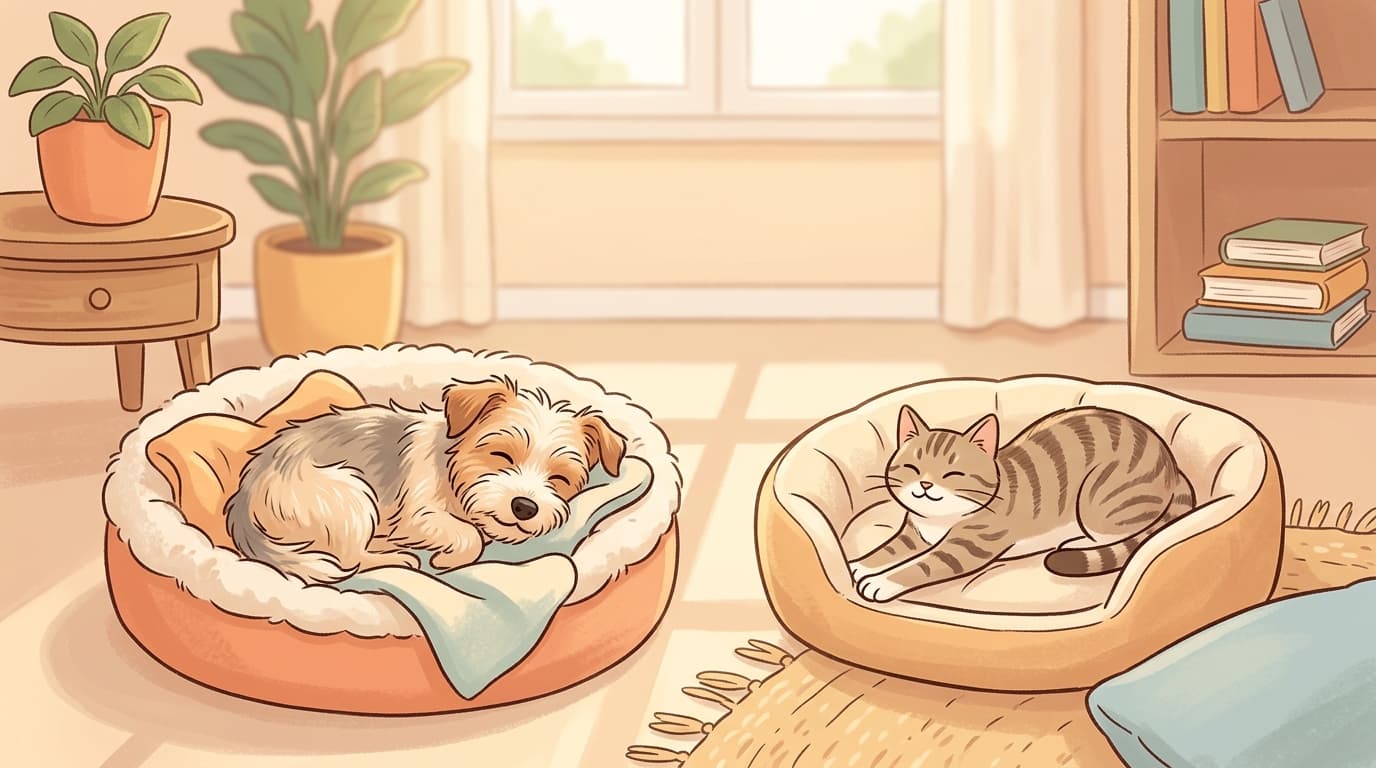
Your dog can look perfectly “settled” in their bed and still not be truly resting. Small setup choices—size, placement, scent, even who’s allowed on it—can keep their body slightly tense and their brain on alert. The good news is that a few simple tweaks can make your dog’s bed feel like the safest, sleepiest place in the house.
The #1 dog bed mistake: choosing a bed that only works for curling up
Most pet owners buy a bed that technically fits: the dog can lie down, the bed looks cozy, done. But deep, restorative sleep requires something specific—your dog needs to fully relax their muscles, let their spine decompress, and stretch their legs out without bumping into bolsters or the edge.
If your dog always has to stay curled to “fit,” their body may never fully switch off. You might notice more position changes, lighter sleep, or that half-awake look where they’re resting but still tracking what’s happening.
A better setup:
- Keep the cozy donut/bolster bed if your dog loves it.
- Add a second option: a flatter, more open bed (or a mattress-style pad) that allows full sprawl.
If you’ve ever noticed your dog sleeping like a starfish on the floor instead of in their bed, that’s often a clue they’re craving stretch-out space.
Stop scrubbing away the scent that makes the bed feel safe
That “doggy” smell in your dog’s bed might be unpleasant to you, but to your dog it can be deeply comforting. Dogs respond strongly to familiar human scent—studies using brain imaging have shown that a dog’s reward centers light up with the smell of their person.
When a bed is washed very frequently or cleaned with heavily scented detergent, it can come back smelling “wrong.” To you it’s fresh. To your dog it can feel unfamiliar, like their safe spot got replaced overnight.
A better setup:
- Wash the cover as needed, but avoid overpowering fragrances.
- If your dog seems unsure after washing, tuck a worn T-shirt or small blanket that smells like you into (or near) the bed for a smoother transition.
Don’t put the bed where your dog has to stay on duty
You might place the bed where it’s convenient: near the front door, in a hallway, or right in the middle of the action. But dogs relax best when they don’t have to monitor constant foot traffic, sudden sounds, and people passing close by.
A bed in a busy zone can lead to lighter sleep—your dog may startle at footsteps, keep their eyes partially open, or quietly relocate the bed toward a wall when you’re not looking. That “dragging the bed” behavior is your dog voting for a safer layout.
A better setup:
- Choose a quieter spot with at least one side protected (a corner or against a wall).
- Watch where your dog naturally tries to rest—behind furniture, under a table, near a wall—and use that as your clue.
Moving the bed around can reset your dog’s sense of security
Dogs build a mental map of the home: sightlines, sounds, who passes where, what feels safe. When the bed stays put, the location itself becomes a relaxation cue. When the bed keeps moving, your dog has to reassess the whole setup again and again.
This matters even more for anxious dogs, who rely heavily on routine and predictability.
A better setup:
- Pick a “home base” spot for the main bed and keep it consistent.
- If you need a bed elsewhere, add another one rather than relocating the original.
The floor under the bed might be the real comfort problem
Floors don’t feel the same as the air. Tile and hardwood can pull warmth from your dog in winter, and in summer some areas hold heat long after sunset. Even if your thermostat is comfortable, the surface under the bed might not be.
Many dogs will tell you what they need: choosing cool bathroom tile in summer, hovering near a vent in winter, or repeatedly circling and digging as if they can’t “get it right.”
A better setup:
- Lift the bed slightly off cold floors if needed, or add an insulating layer underneath.
- Avoid drafty doors in winter and heat-trapping sunny corners in summer.
- Notice patterns: if your dog keeps abandoning the bed for the kitchen floor, they may be solving a temperature issue you didn’t realize existed.
One bed isn’t enough if your dog follows you everywhere
If your dog only has one comfortable rest spot—and it’s in the room you keep leaving—they may trail after you simply because they don’t have another good place to land.
Behavior experts often suggest placing beds in multiple rooms so your dog learns that resting is possible even when you’re not right beside them. Over time, this can reduce the need to shadow you from room to room because comfort doesn’t require constant proximity.
A better setup:
- Put a bed (or mat) in the rooms you actually use: living room, bedroom, office corner, kitchen.
- Keep each spot consistent so your dog starts to recognize them as “approved” resting zones.
A “shared” bed can create low-grade tension (even if no one means to)
In some homes, the dog bed becomes communal space: another pet curls up, a child sits on it, or someone claims it the moment your dog gets up for a drink. That can turn the bed from a relief zone into shared territory—and shared territory requires vigilance.
Most people think of resource guarding as a food-bowl issue, but rest can be a resource too. Dogs even mark beds with scent from their paws, which is part of why they scratch and circle before lying down. If their scent marker keeps getting overridden, they may choose a new “private” spot under a desk or behind the couch.
A better setup:
- Treat the bed as your dog’s space, not general seating.
- If you have multiple pets, consider separate beds in separate zones to reduce competition.
The takeaway: make the bed feel like a true off-duty zone
A great dog bed isn’t just soft—it’s spacious enough to stretch, familiar-smelling, placed where your dog feels sheltered, stable in location, comfortable in temperature, available in more than one room, and respected as “theirs.” Make those changes and you’ll often see it fast: deeper sighs, fewer startles, and a dog who finally sleeps like they mean it.
Continue reading

When Your Dog Shows Their Belly: How to Tell “Rub Me” From “I’m Nervous” (and What to Do Instead)
A belly-up dog isn’t always asking for rubs. Learn the body language cues and a simple “scratch, pause, opt-in” method.

5 Things Your Dog Does Only for You (And You Might Be Missing Them Daily)
Five subtle behaviors that show your dog has chosen you as their safe place, comfort person, and favorite human.

15 Signs Your Dog Is Truly Happy (Not Just ‘Fine’)—From Belly-Up Sleep to Micro-Touches
From belly-up sleep to weird joy rituals, these signs reveal when your dog feels safe, secure, and genuinely happy.