Dog Body Language Decoded: 10 Subtle Behaviors That Show What Your Dog Really Feels
Most people think dog body language is easy: tail wag equals happy, growl equals mad. But your dog is running a whole second conversation under the obvious stuff—one that shows trust, stress, excitement, and attachment in surprisingly specific ways.
Below are 10 behaviors you’ve probably seen a hundred times, plus what they tend to mean in real life.
1) The play bow: “I’m choosing you”
That classic pose—front legs down, butt up—often gets labeled as a cute stretch. In reality, it’s one of the clearest “this is friendly” signals dogs use, especially during play.
What makes it special is how intentional it is. Dogs use the play bow like punctuation: it can restart play after a pause, smooth over a moment that got too intense, or clearly say, “Whatever happens next is still play.”
If your adult dog does it to you, it’s not just an invitation—it’s a trust statement. They’re putting themselves in a vulnerable position and saying, “I feel safe with you.”
2) The bathroom shadow: secure base behavior
If you’ve ever noticed your dog following you down the hall and then waiting outside the bathroom door like it’s their job, you’re not alone. This isn’t automatically “clingy” behavior. It’s often attachment in action.
Researchers describe dogs using their people as a “secure base,” similar to how kids use parents: your presence helps their nervous system settle. When you disappear behind a door, their brain doesn’t think, “She’ll be back in three minutes.” It thinks, “My safe person moved—track them.”
Some dogs wait quietly. Others pace or whine softly. Either way, it’s usually more about safety than drama.
3) The head tilt: your dog’s brain working in real time
Head tilts are one of those moments that make you feel like your dog is truly listening—because they are. Studies suggest head tilting can be linked to processing familiar words and concentrating on meaning.
If you say something your dog knows (“ball,” “walk,” “toy”), and you get a tilt, it may be your dog searching memory, building a mental picture, and checking your tone for clues. If you’ve ever watched your dog tilt and then sprint to the right room like they suddenly remembered where the good stuff lives… that’s the magic.
4) The big sigh: “My body can relax now”
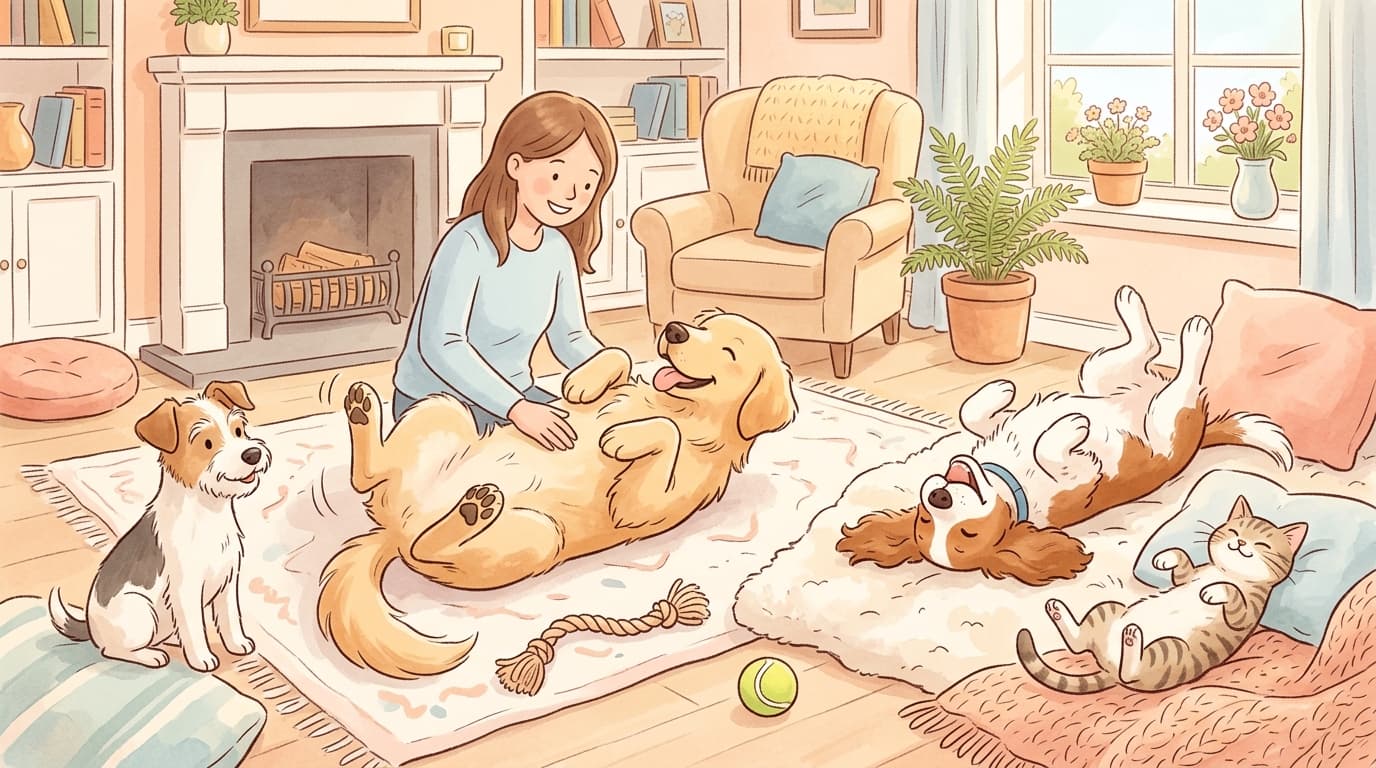
That long, dramatic exhale your dog does while flopping down near you is more than a mood. A sigh is often a sign their system is shifting into rest mode.
If you’ve ever come home after being gone and your dog greets you… then sighs like the world finally makes sense again, that can be a real “reset” moment. It’s your dog’s body saying, “Okay. We’re safe.”
5) The “gift” at the door: emotional self-regulation
Some dogs greet you with a toy in their mouth. Others grab a sock, a shoe, or whatever they can find and parade it around like a proud little weirdo.
This is often displacement behavior—your dog’s way of handling a surge of excitement. Greeting you spikes arousal (in the good way), and carrying something gives that energy a job. It turns chaotic excitement into organized action.
And yes, it can also be bonding. Sharing or presenting an object is a social gesture in canids, and it’s one reason it can feel so oddly emotional when an older dog, moving slowly, still makes the effort to bring you a toy.
6) The stolen shoe specifically: “Your scent helps me”
When your dog chooses your shoe over their own toy, it’s rarely about fashion.
Your clothes carry your scent signature, and many dogs find that scent calming. Some dogs seek out worn items when they’re stressed or when you’re gone, because it’s the closest thing to having you nearby.
So if your dog grabs your sock and trots over like they’ve delivered a sacred artifact, it may be part comfort object, part greeting ritual.
7) Turning their back to you: a surprising trust signal
This one throws people off. A dog turns away and you think, “Are you ignoring me?” Sometimes, sure. But often, turning their back is a calming, trust-based move.
It’s vulnerable for a dog to expose their back and stop monitoring you. In many situations, that posture can mean, “I don’t need to keep an eye on you. I feel safe.” If you’ve ever had your dog sit with their back against your legs, they may be using you like a safety wall.
8) Leaning or pressing into you: “Stay close”
That gentle lean—shoulder into your knee, body pressed against your shin—can be your dog seeking connection and reassurance.
Most pet owners don’t realize how often dogs “check in” with touch. It’s not always fear-based. Sometimes it’s just your dog topping up closeness the way humans do with a hand on a shoulder.
9) Sleeping positions: how safe your dog feels at night
Where your dog sleeps (and how) can say a lot about their comfort level.
Common patterns:
- Pressed against you: contact-seeking and comfort—your presence helps them settle.
- Facing the door: a light “on duty” posture, often seen in dogs who stay a bit more alert.
- Back to you: one of the biggest trust positions—your dog is choosing vulnerability near you.
- Head near your pillow: intense closeness; many dogs do this when they feel deeply bonded.
If your dog changes positions over time—especially becoming more relaxed as they age—that can reflect growing security.
10) The 3-second soft gaze: a tiny habit that deepens connection
You can “speak dog body language” back in a simple way.
When you come home, before the excited chaos fully kicks off, pause and get to your dog’s level. Offer soft, warm eye contact for about three seconds, then exhale slowly. Research on dog-human bonding has linked gentle mutual gaze with an oxytocin boost in both dogs and people.
This isn’t a staring contest. Think of it like a quiet, calm check-in that says, “I’m here. You’re safe.” If you’ve ever noticed your dog’s whole body soften after you finally slow down and really look at them, you’ve seen this effect firsthand.
The takeaway
Dog body language isn’t just cute quirks—it’s your dog telling you where their nervous system is: playful, overwhelmed, soothed, or deeply secure. Once you start noticing these signals, you’ll respond differently without even trying.
Tonight, watch for one thing: where your dog chooses to be vulnerable. That spot is usually the clearest love letter they can write.
Continue reading

16 Five-Second Habits That Make Your Dog Feel Truly Loved (No Treats Required)
These 16 tiny, five-second habits help your dog feel safe, seen, and deeply loved—without extra toys, treats, or long walks.

Is Your Dog Guarding You While You Sleep? 8 Nighttime Signs They’re Watching Over You
From sleeping facing the door to silent sound checks, these nighttime habits can mean your dog is keeping watch while you rest.

Why Your Dog Licks You Every Day (And What It Really Means)
Daily dog licking isn’t about salt or snacks. It’s bonding, comfort, and pack love—plus 14 other signs your dog adores you.