5 Everyday Habits That Can Stress Your Cat (And What to Do Instead)
Small daily habits—like yelling, no play, and dry-only food—can quietly stress your cat. Fix them with simple swaps.
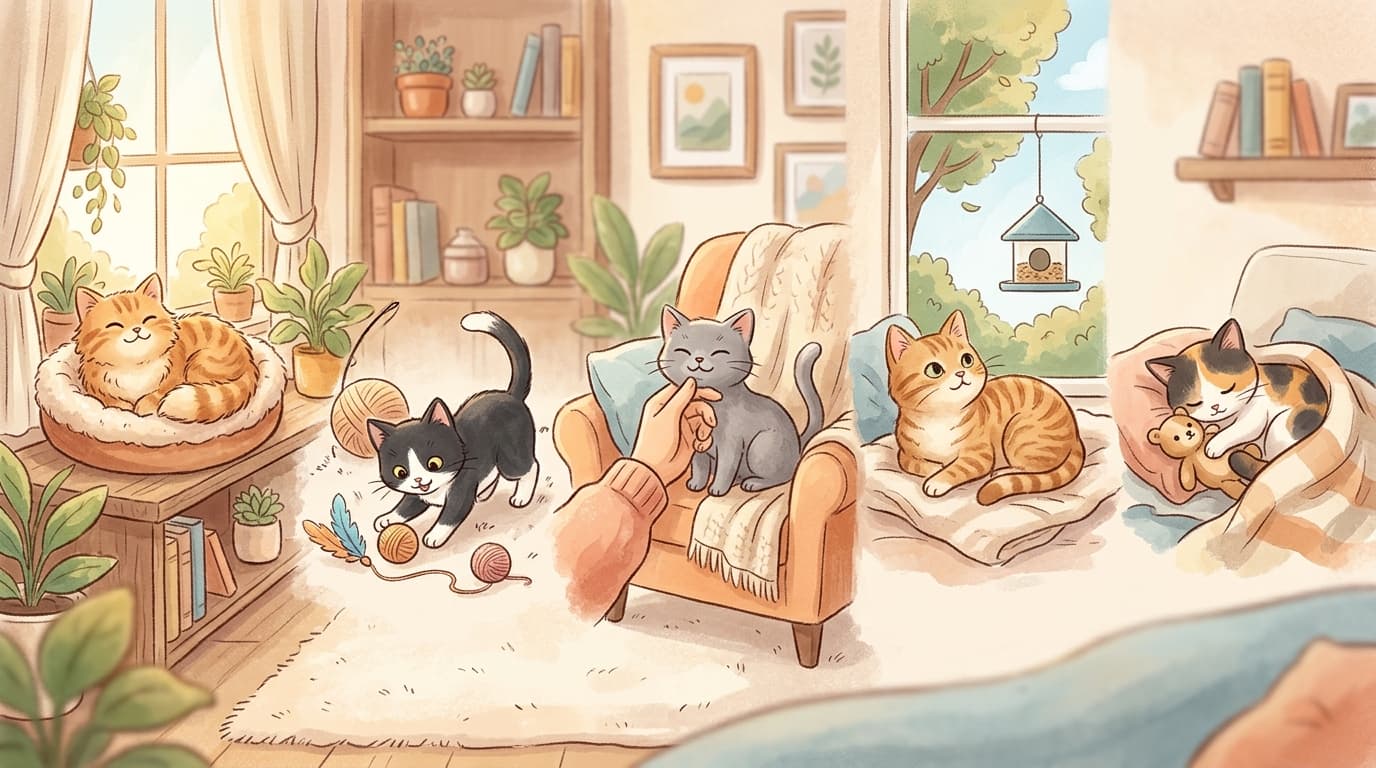
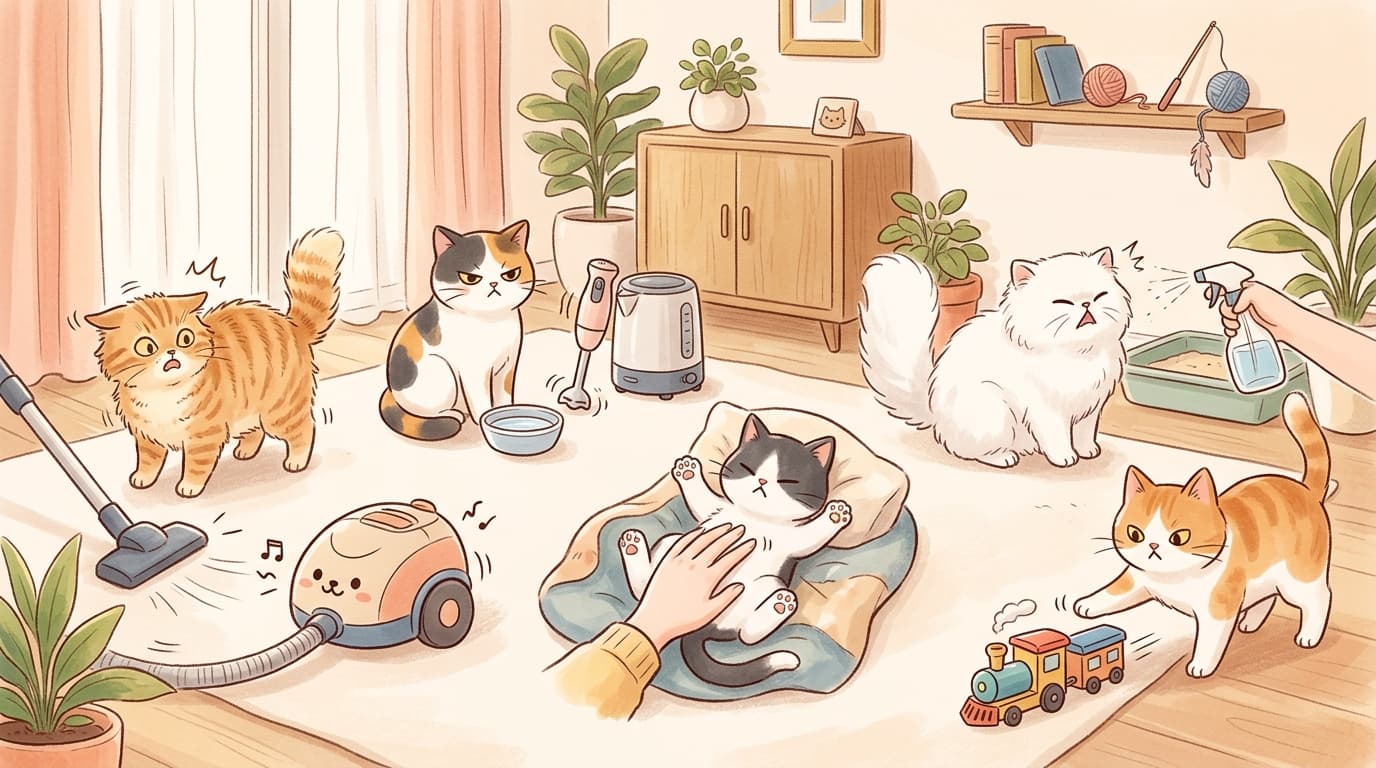
Most cat problems don’t start with big, obvious neglect. They start with tiny daily moments—things you might even do out of love—that slowly push your cat into stress, boredom, or discomfort.
If you’ve ever wondered why your cat seems more distant lately, or why “random” issues like litter box accidents pop up, these five everyday habits are worth a closer look.
1) Yelling at your cat for “bad behavior”
It feels natural: your cat knocks a glass off the table, scratches the new couch, or jumps on the counter again, and you raise your voice. From a human perspective, it’s a clear message.
But your cat doesn’t process it as “I did X, so my person is upset about X.” What lands is the volume, the sharp tone, and the emotional charge in the room. Over time, frequent yelling can teach your cat one main lesson: you’re unpredictable.
Cats under chronic stress often don’t look “dramatic.” They get quieter. You might notice:
- More hiding (under the bed, behind furniture)
- Avoiding the litter box or peeing outside it
- Sudden swats or bites that seem to come out of nowhere
That’s not your cat being spiteful. It’s a nervous system running in survival mode.
Try this instead: make the environment do the teaching. Block access to problem areas, provide a scratching post where your cat already wants to scratch, and reward the behaviors you want to see. Calm, consistent responses work better than loud ones.
2) Never giving your cat real “hunt-style” play
A cat’s brain is built around a hunting sequence: notice, stalk, chase, pounce, catch. Indoor life can remove that entire rhythm—especially if toys only come out once in a while, or play is too predictable.
A cat who sleeps all day and doesn’t “ask” to play can look easygoing. But often, that’s not calm—it’s resignation. Many cats without regular stimulation drift toward weight gain, compulsive behaviors (like over-grooming), and a flat, withdrawn mood.
Try this instead: commit to 10 minutes a day of prey-like play. Use a wand toy or something that:
- Stops suddenly
- Changes direction
- “Hides” and reappears
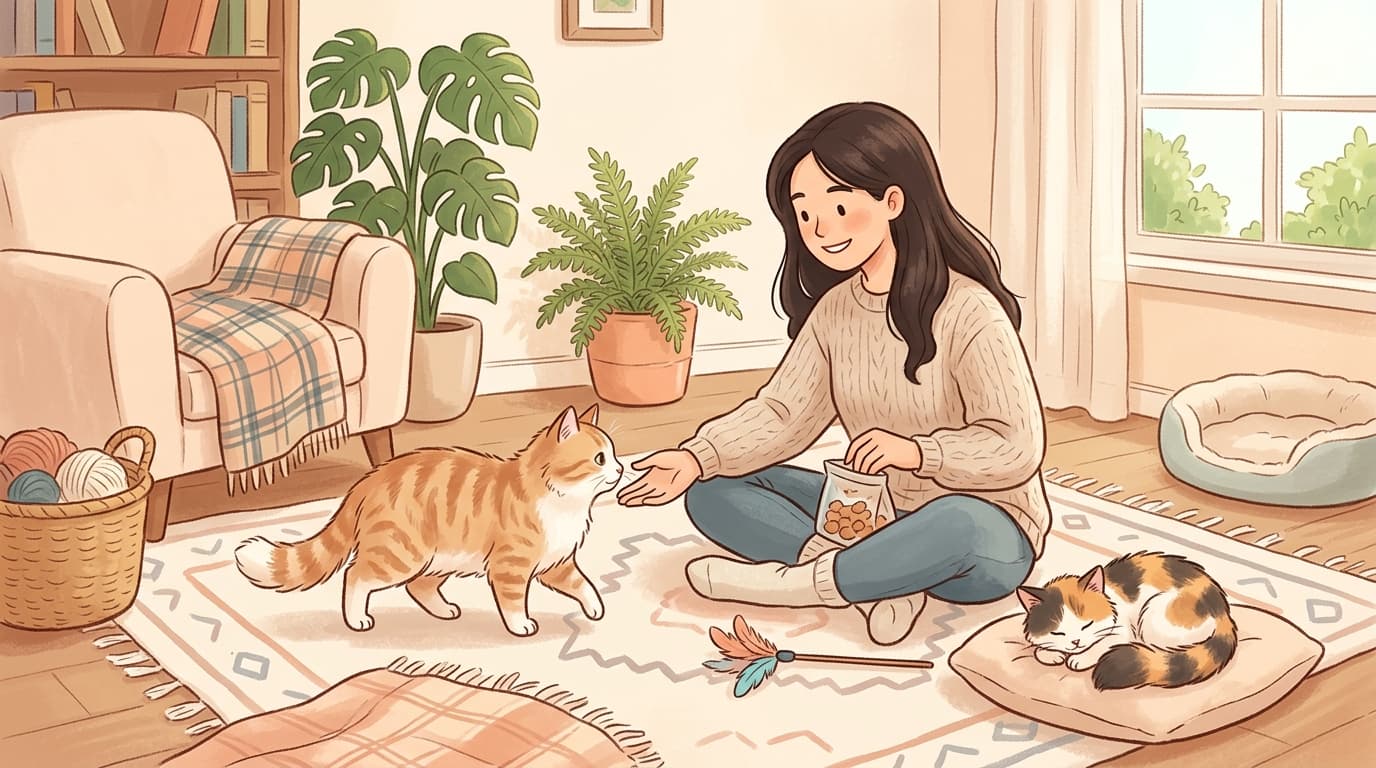
After a few days, many cats become more alert, curious, and yes—often more affectionate, because they finally got to use the instincts their body expects to use.
3) Feeding only dry kibble
Cats evolved to get most of their water from food. In nature, prey contains a lot of moisture—roughly 65–80% water. Dry kibble, by comparison, is around 10% moisture.
Even if your cat drinks from a bowl, many cats aren’t wired to “make up” for a low-moisture diet by drinking enough water. Over years, that can quietly strain the urinary tract and kidneys. Chronic kidney disease is one of the leading causes of death in older cats, and it can build for a long time before it’s obvious.
Try this instead: you don’t have to ban kibble. Adding wet food a few times a week can meaningfully improve overall hydration over the long run. Small change, big payoff.
4) Petting the “wrong” spots (then getting bitten)
Your cat is curled up beside you, purring, looking relaxed—so you rub the belly, and suddenly you get teeth. It feels confusing because the moment seemed sweet.
Cats have very sensitive skin, and the line between “pleasant” and “too much” can be crossed quickly. Areas that often trigger sensory overload include:
- The belly
- The base of the tail
- The lower back
Safer, more cat-approved zones tend to be:
- Cheeks
- Behind the ears
- Under the chin
Those areas also connect to scent glands—so when you pet there, it can feel more like friendly social bonding in “cat language.”
Watch for early warning signs before a bite happens:
- Tail flicking harder or faster
- Ears angling slightly back
- Skin twitching along the back
Stop while you’re still winning. Your cat will usually stay near you longer when they don’t have to escalate to make the touch stop.
5) Leaving your cat alone for too many hours, too often
A lot of people assume cats prefer solitude. Some cats do enjoy their space—but regular, long stretches alone can still take a toll.
Cats can develop separation-related stress, sleep disruption, compulsive behaviors, and litter box issues. The tricky part is they may not act out like a dog. Many cats become more discreet: quieter, more distant, more “independent.” That silence can fool you.
Try this instead: set your cat up with something mentally filling before you leave:
- Rotate toys so one feels “new” again
- Give access to a window view or a high perch near outdoor activity
And when you return, give your cat five minutes of real presence—no phone, no multitasking. Just sit nearby and let them reconnect on their terms.
A small shift can change your cat’s whole mood
You don’t need to overhaul your life to improve your cat’s life. Pick one habit from this list and adjust it this week.
Cats rarely announce what’s wrong in a way humans instantly understand. But when you respond to their instincts—play, touch preferences, hydration needs, and social comfort—you’ll often see a softer, more confident cat right beside you.
Continue reading

Why Your Cat Walks on You at Night (And What They’re Really Trying to Tell You)
If your cat steps on your chest at night, it’s not random. Here are the real reasons—and how to respond without encouraging 5 a.m. wakeups.

Choosing a Cat by Coat Color: What You Should Know Before You Adopt
Your cat’s coat color can hint at temperament and care needs. Here’s how orange, black, white, tabby, tuxedo and more often differ.

Burmilla Cats: 5 Traits That Make This Shimmery Breed So Easy to Love
Meet the Burmilla cat: a shimmering coat, emerald eyes, a gentle voice, and a perfect mix of playful and calm.