Your cat can have a full bowl, a warm bed, and plenty of petting—and still feel like something is missing. Not sadness, not obvious stress… more like a quiet emptiness that shows up as extra sleeping, random zoomies, or a flat, uninterested mood.
Most pet owners don’t realize this because indoor life looks perfect by human standards. But cats don’t measure “a good day” the way we do.
The hidden need is a life with challenge, variety, and purpose—the kind that taps into your cat’s built-in hunter brain.
Cats aren’t designed to simply exist in a calm, predictable space. They’re the result of millions of years of evolution shaped around one main job: hunting. And not just the pounce at the end—the whole process:
- noticing tiny sounds and movements
- focusing on a target
- stalking slowly
- building tension
- chasing and catching
That sequence is deeply wired in. When indoor life removes most of it, your cat may be “fine”… but not truly fulfilled.
From your perspective, a tidy apartment and a steady routine equals comfort. From your cat’s perspective, it can equal monotony.
Food arrives with zero effort. Sounds are familiar. Days feel the same. There aren’t many surprises, new smells, or moments that demand attention. And that’s the core issue: the problem often isn’t that your cat has too little—it’s that your cat experiences too little.
If you’ve ever noticed your cat sitting at the window for ages, staring like they’re watching a movie, it’s often because that’s where the “real world” still happens: movement, birds, voices, weather, life.
Cats are incredibly good at adapting. That’s why this can go unnoticed for so long. The signs often disguise themselves as everyday cat behavior:
- Sleeping all day: not always relaxation—sometimes it’s simply that there’s nothing worth staying awake for.
- Sudden zoomies: those frantic sprints can be a pressure release for instincts that rarely get an outlet.
- Seeming apathetic: physically healthy, but mentally under-stimulated.
- Ignoring toys: not necessarily laziness—some cats never learned that play is rewarding, or the play style doesn’t match “hunt mode.”
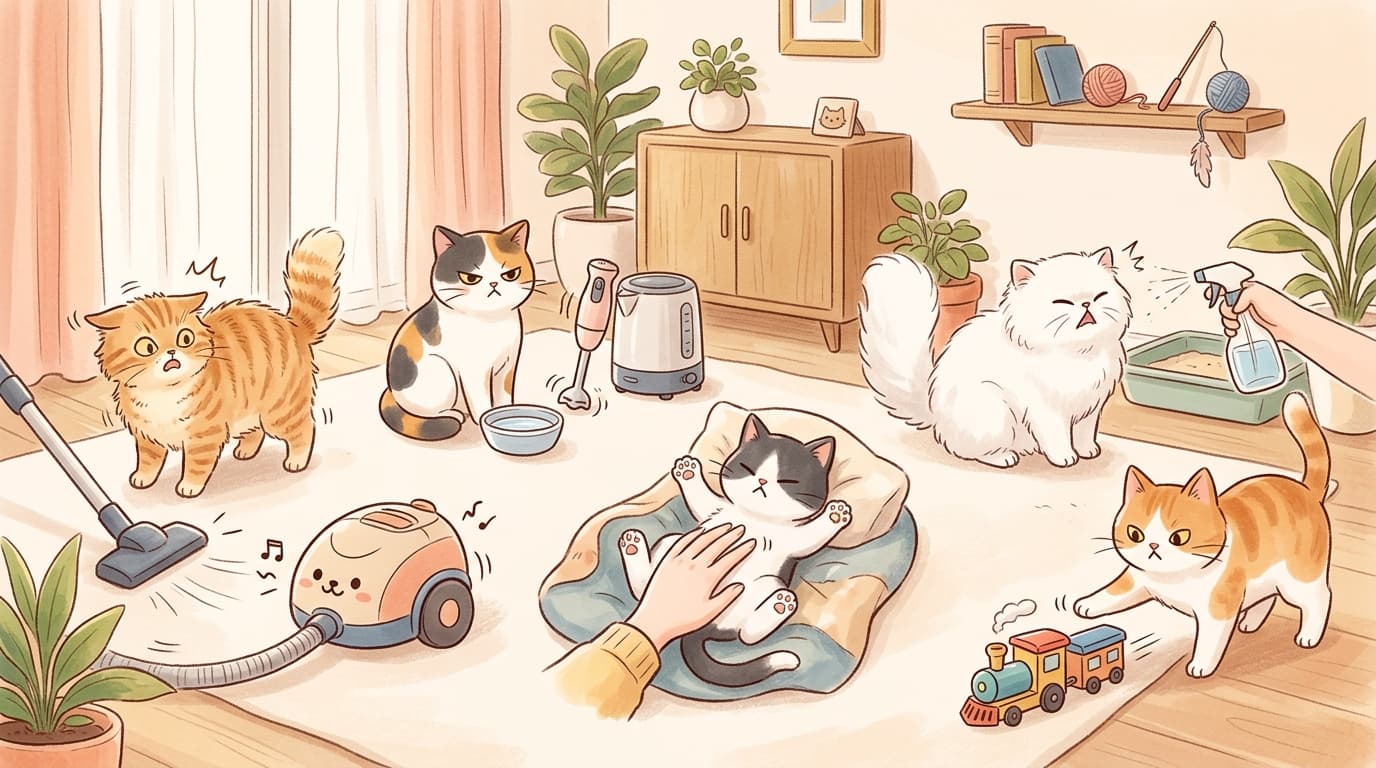
- Overreacting to small noises or movements: a bored brain can latch onto tiny triggers because it’s starved for real engagement.
None of this automatically means you have a “problem cat.” Often it’s a cat doing their best in an environment that doesn’t ask much of them.
A meaningful cat life isn’t just about safety and supplies. It’s about giving your cat:
- mental work (things to figure out)
- a sense of control (choices that matter)
- fresh sensory input (new smells, sights, textures, and little changes)
The good news: you don’t need a bigger home or expensive gear. You mainly need to make daily life feel less predictable.
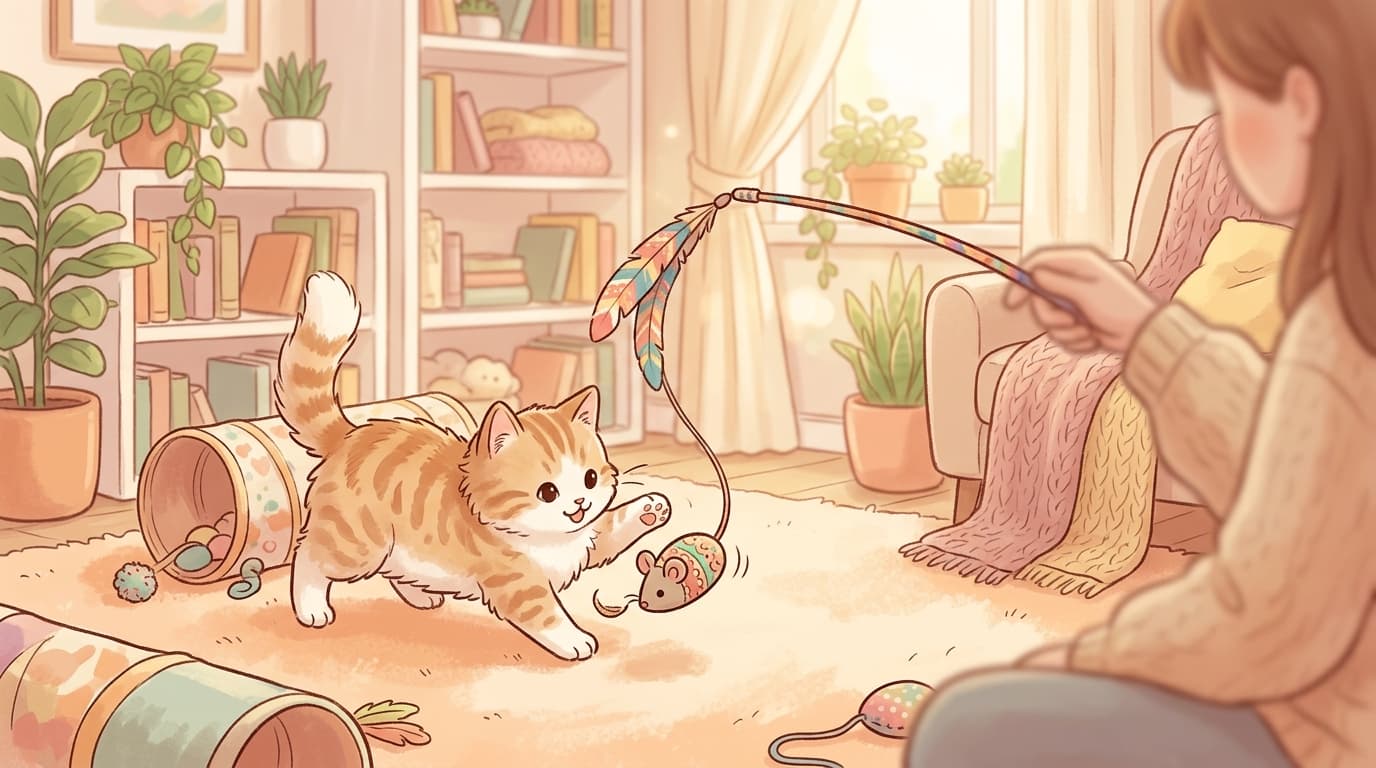
Instead of simply offering a toy, build a tiny hunting story.
Try this during play sessions:
- Move unpredictably: mimic prey that darts, hides, pauses.
- Use pauses on purpose: stillness builds tension, and tension is the fun part.
- Let your cat stalk: don’t constantly wave the toy in their face.
- End with a “catch”: your cat should be allowed to grab it and win.
It’s not the toy that creates satisfaction—it’s the feeling of a successful hunt.
Indoor cats thrive on tiny bursts of novelty. Simple ideas that often work better than buying another mouse toy:
- bring in a safe “outside” smell (like a branch or leaf from outdoors)
- rotate objects: a new cardboard box each week can be thrilling
- create a basic “catwalk” route (chairs, shelves, or a cleared window ledge)
- occasionally leave out a new texture (paper bag, blanket, even a laundry pile)
- open a window safely (fresh air plus new sounds)
Your goal isn’t chaos. It’s gentle, frequent reminders that the world changes.
In nature, food is earned. Indoors, it’s delivered.
You can bring back that sense of purpose by making your cat “work” a little:
- scatter a portion of kibble for a mini search
- use simple puzzle feeders
- hide small treats in a few predictable spots, then slowly change the locations
The point is to transform eating from a routine into an activity that engages the brain.
One of the deepest needs many cats have is the feeling that they can influence their world.
That can look like:
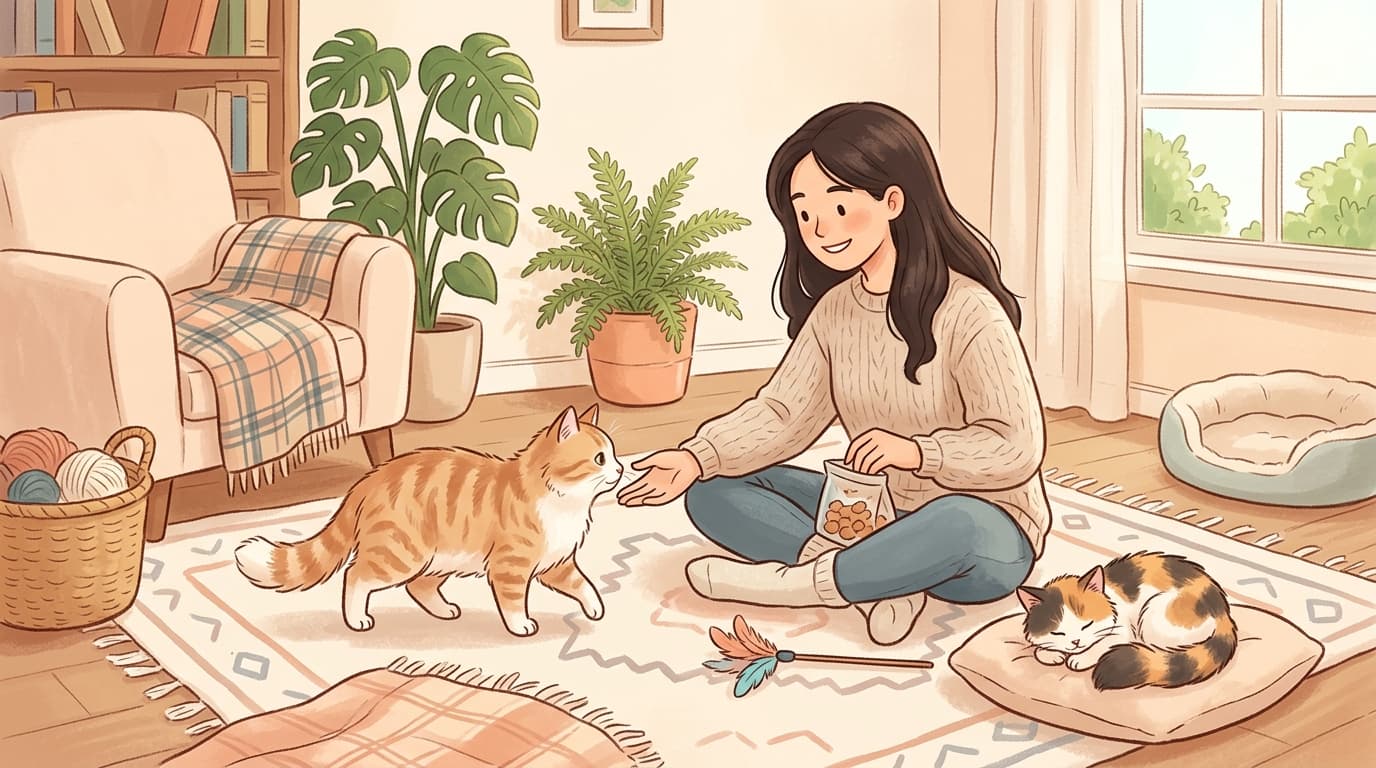
- letting your cat choose when to approach (instead of always initiating)
- offering two resting spots in different areas so they can decide
- setting up spaces where they can observe from above or retreat below
- allowing them to start the interaction sometimes—then responding
A cat doesn’t need to run the household, but they do need moments where they’re not just a passenger in someone else’s schedule.
You don’t have to overhaul your home to give your cat a richer life. Add a little hunt, a little novelty, and a little choice—every day—and you’ll often see a calmer, brighter, more “present” cat.
Your cat isn’t just a cuddle buddy. They’re a tiny predator with a big, busy brain—and you get to help that brain feel at home.