Hypoallergenic Cat Breeds: 5 Cats That May Be Easier on Allergies
Cat allergies can feel painfully unfair: you want the cuddles, but your nose (and eyes) have other plans. The surprising part is that cat fur isn’t usually the main problem—it's a protein that ends up on the fur.
Why “hypoallergenic cat breeds” can help (and why fur isn’t the culprit)
Most pet owners don’t realize this, but the biggest trigger for many cat allergies is a protein called Fel d1. It’s found in a cat’s saliva, skin (dander), and even tears.
If you’ve ever noticed your cat doing a long grooming session, that’s when a lot of Fel d1 gets spread around: saliva transfers onto the coat, dries, and then tiny particles can end up in your home environment.
That’s why hypoallergenic cat breeds aren’t really “allergen-free cats.” They’re simply breeds that may produce less Fel d1 and/or spread fewer allergens around your house.
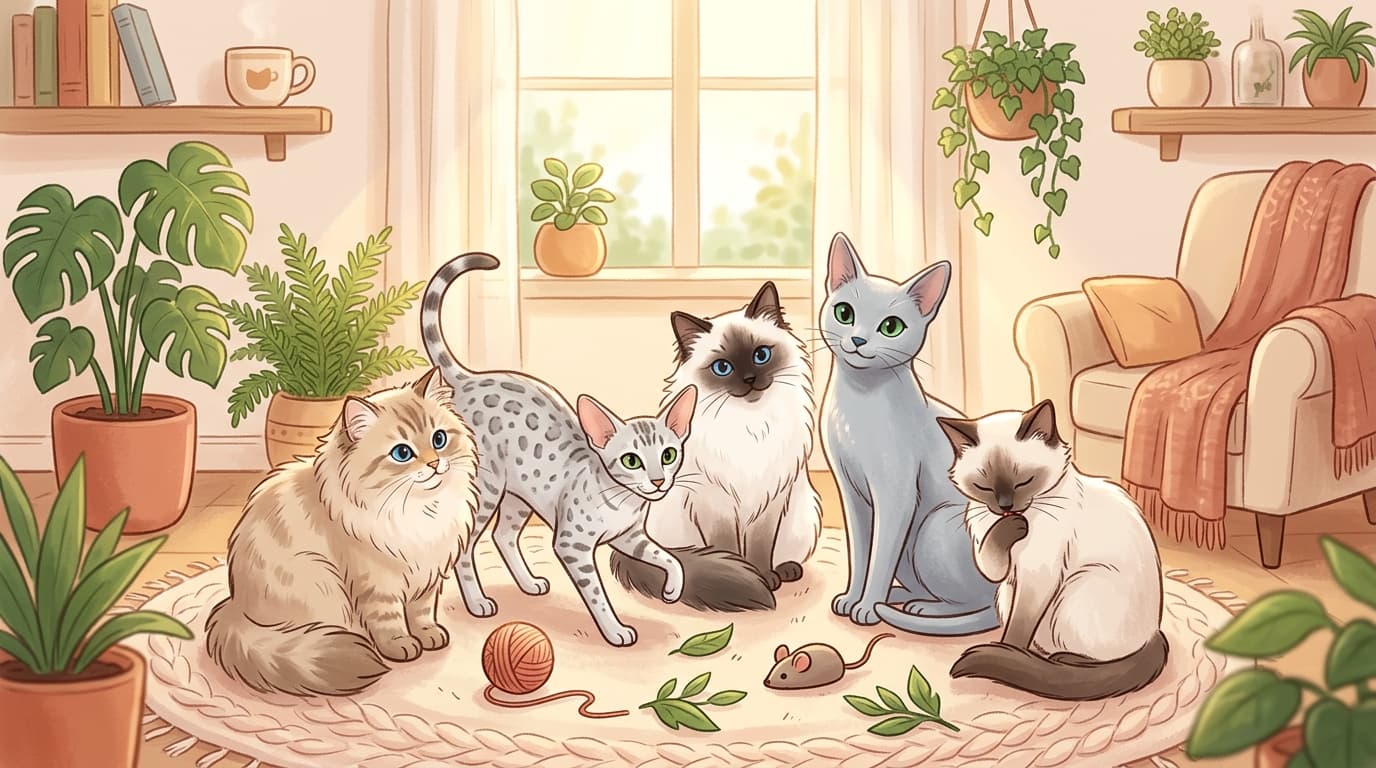
Siberian: lots of fluff, surprisingly lower Fel d1
The Siberian is the breed that confuses people the most. It’s big, gorgeous, and famously fluffy—so you’d assume it would be an allergy nightmare.
Yet many allergy-sensitive cat lovers find Siberians easier to live with because some Siberians appear to produce lower levels of Fel d1. It’s a good reminder that coat length alone doesn’t tell the whole allergy story.
Balinese: the “long-haired Siamese” that can be gentler on allergies
The Balinese is often described as a long-haired version of the Siamese, with a sleek build and a silky coat. What makes it a frequent recommendation for allergy sufferers is its reputation for lower allergen levels compared to many other breeds.
If you love talkative, people-focused cats, this one is often on the short list.
Oriental Shorthair: less hair can mean less allergen spread
The Oriental Shorthair is elegant, social, and typically has a very short coat. While short hair doesn’t eliminate allergens (Fel d1 still exists), having less hair can help reduce how much allergen gets carried and dispersed around the home.
Think of it as fewer “places” for dried saliva proteins to hitch a ride.
Devon Rex: fine, curly coat and minimal shedding
The Devon Rex is known for a soft, wavy coat that many owners describe as almost suede-like. One reason it can be more tolerable for some allergy sufferers is that it tends to shed less than many cats, which may reduce how much allergen-laced hair ends up on your couch, clothes, and bedding.
Cornish Rex: another low-shed Rex with a unique coat
Like the Devon Rex, the Cornish Rex has a distinctive curly coat, but the texture and pattern can differ. Cornish Rex cats also tend to shed very little, which can help limit allergen spread in your space—especially if you’re the kind of person who keeps finding pet hair in places that make no sense.
The honest truth: no cat is completely allergy-free
Even the most allergy-friendly breeds still produce allergens, and your reaction can vary from cat to cat. But if you have mild to moderate cat allergies, these five hypoallergenic cat breeds are often considered a more comfortable starting point—especially if you pair the right breed with good cleaning habits and a home setup that keeps allergens from building up.
Living with allergies doesn’t have to mean giving up on cats. With a bit of strategy (and the right feline roommate), you may still get to enjoy the purrs, head bumps, and sleepy lap naps.
Continue reading

Which Cat Breed Is “Best”? A Real-World Comparison of Personalities, Care, and Ethics
A practical cat breed comparison—from mixed-breed house cats to Persians, Bengals, and Scottish Folds—plus what “best” really means.

Burmilla Cats: 5 Traits That Make This Shimmery Breed So Easy to Love
Meet the Burmilla cat: a shimmering coat, emerald eyes, a gentle voice, and a perfect mix of playful and calm.

Bengal vs Savannah Cat: Personality, Size, and Care Differences That Actually Matter
Bengal vs Savannah cats: compare size, personality, energy, and care needs so you can pick the breed that fits your home.