Most people can name a handful of cat breeds, tops. But the truth is more interesting—and a little uncomfortable—because “best” isn’t about looks or bragging rights. It’s about the kind of life your cat will actually have (and the kind of life you want at home).
Below is a cat breed comparison that skips the boring checklist and focuses on what it feels like to live with these cats—plus the trade-offs most pet owners don’t realize until the cat is already on the couch.
If you’ve ever had a cat who just… appeared in your life (a neighbor’s litter, a stray who decided your kitchen was home), you’ve met the domestic shorthair. Technically it’s not a “breed” in the strict pedigree sense. It’s nature doing its thing: a huge mix of genetics, endless coat patterns, and personalities that don’t come from a designer plan.
That genetic variety is a big reason mixed-breed cats often have fewer inherited issues than tightly bred lines. And in day-to-day life, they’re usually the champions of adaptability: they can handle busy households, small apartments, kids who don’t always understand personal space, and even dogs who get a little too friendly.
Personality-wise, this is the cat-world sweet spot. Not clingy, not cold. They’ll hang out when invited, vanish when they want quiet, and come back when they miss you.
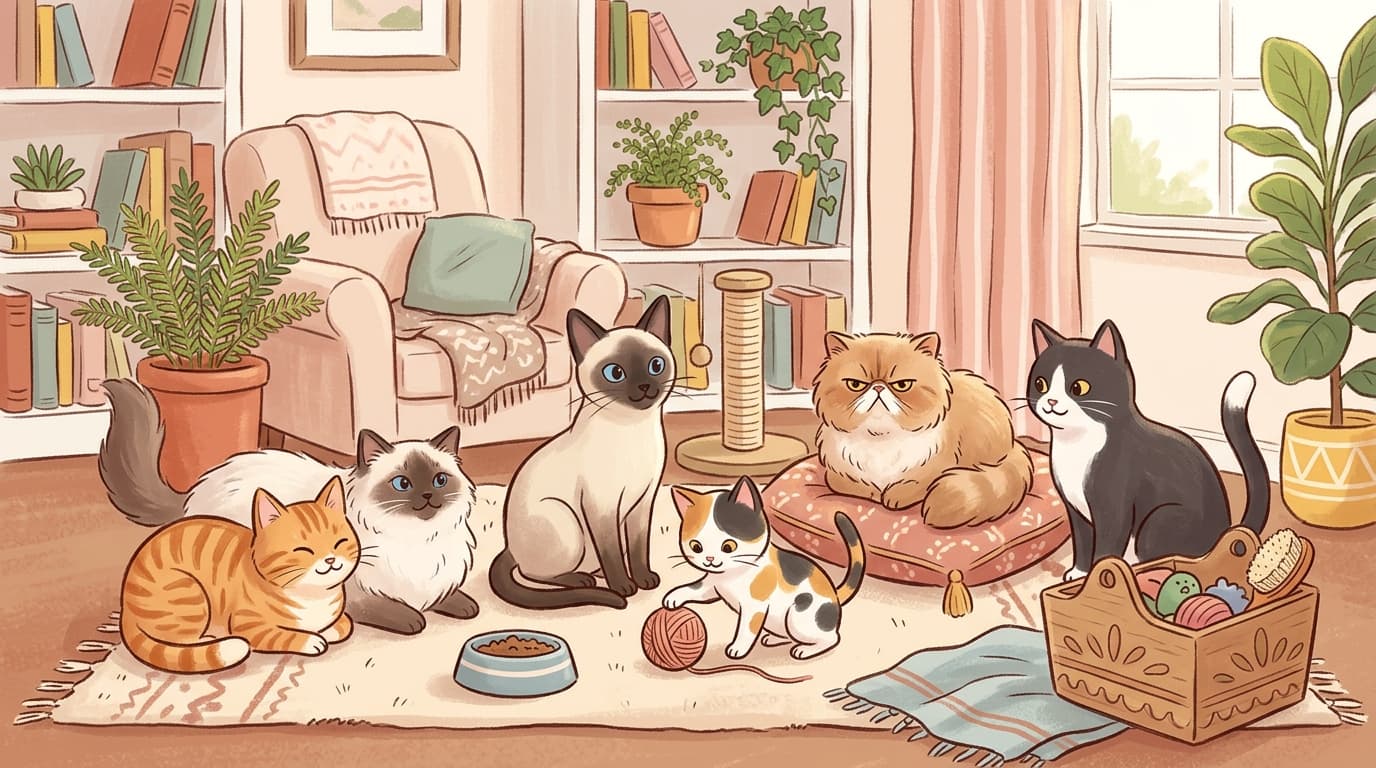
Persian cats are the living definition of luxury: long coat, slow movements, and that famously flat face that looks permanently unimpressed. They’re typically calm, quiet, and very routine-oriented—more “peaceful roommate” than “parkour athlete.”
Persians tend to prefer stable homes and gentle handling. They’re affectionate, but often in a low-key way: nearby, not necessarily on top of you.
The catch is that the look people love can come with real downsides. That flattened face can make breathing harder than it should be. Eye issues can be common because tear drainage doesn’t always work efficiently. And dental crowding can happen when shortened jaws don’t leave enough room.
This is what “best cat breed” arguments often ignore: sometimes a cute aesthetic is also a biological compromise.
If someone asked, “What if we made a cat huge?” the Maine Coon is the answer. They’re among the largest domestic cats and can reach truly impressive weights, with long bodies, tufted ears, thick weather-ready fur, and that massive tail they can curl around themselves like built-in winter gear.
Unlike some “designed” traits, their size and coat are tied to natural adaptation to cold environments. And despite the power-package body, their personality is famously mellow. Many Maine Coons are social, tolerant of handling, and likely to follow you from room to room like a fluffy shadow.
One charming detail: instead of constant loud meowing, they often make chirps and trills—sounds that can be surprisingly sweet the first time you hear them.
Siamese cats don’t do “background character.” They’re sleek, athletic, and intense—especially emotionally. If you want a cat who truly bonds, who notices everything you do, and who has strong opinions about it, this breed comparison basically points to Siamese as the poster child.
They’re famously vocal, and not just for food. Siamese cats can sound like they’re holding full conversations: protesting, announcing moods, and debating your choices at impressive volume.
They also tend to dislike closed doors and solitude. A bored or lonely Siamese won’t quietly nap all day. They’ll find entertainment—often involving drawers, countertops, and anything fragile you were foolish enough to leave within reach.
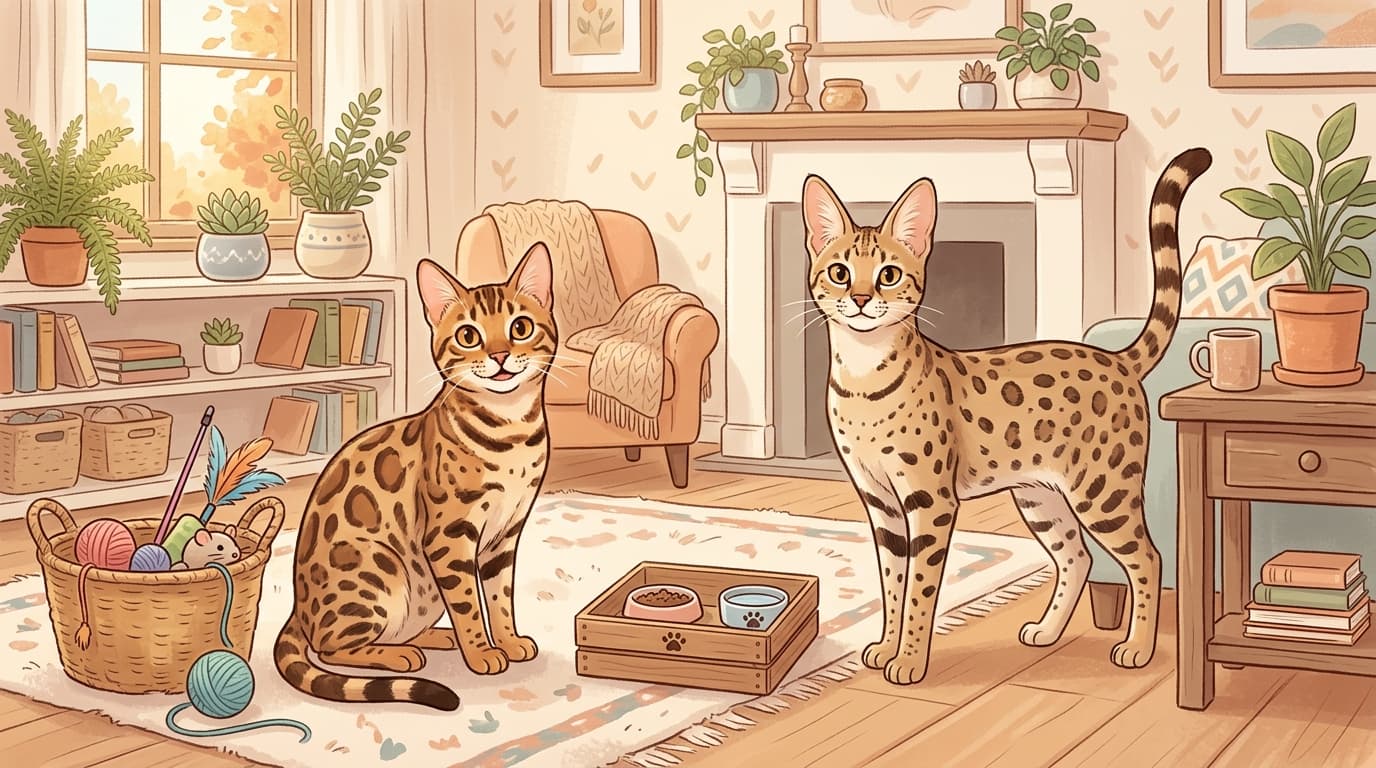
Bengals look like they walked out of a wildlife documentary: muscular bodies, striking spotted coats, and eyes that seem like they’re calculating something. That’s not just a vibe. Bengals were developed by crossing domestic cats with the Asian leopard cat, and a lot of that wild energy shows up in daily life.
They’re fast, athletic, and relentlessly curious. Many Bengals learn to open doors. Some will experiment with faucets just to see what happens. They treat your home like an obstacle course that exists for their personal conquest.
Bengals can be friendly and confident with people, but they’re not typically “lap cats.” Think of them more like a clever housemate with claws who needs stimulation and engagement—daily.
If you choose a Bengal for the exotic look, you need to want the lifestyle that comes with it.
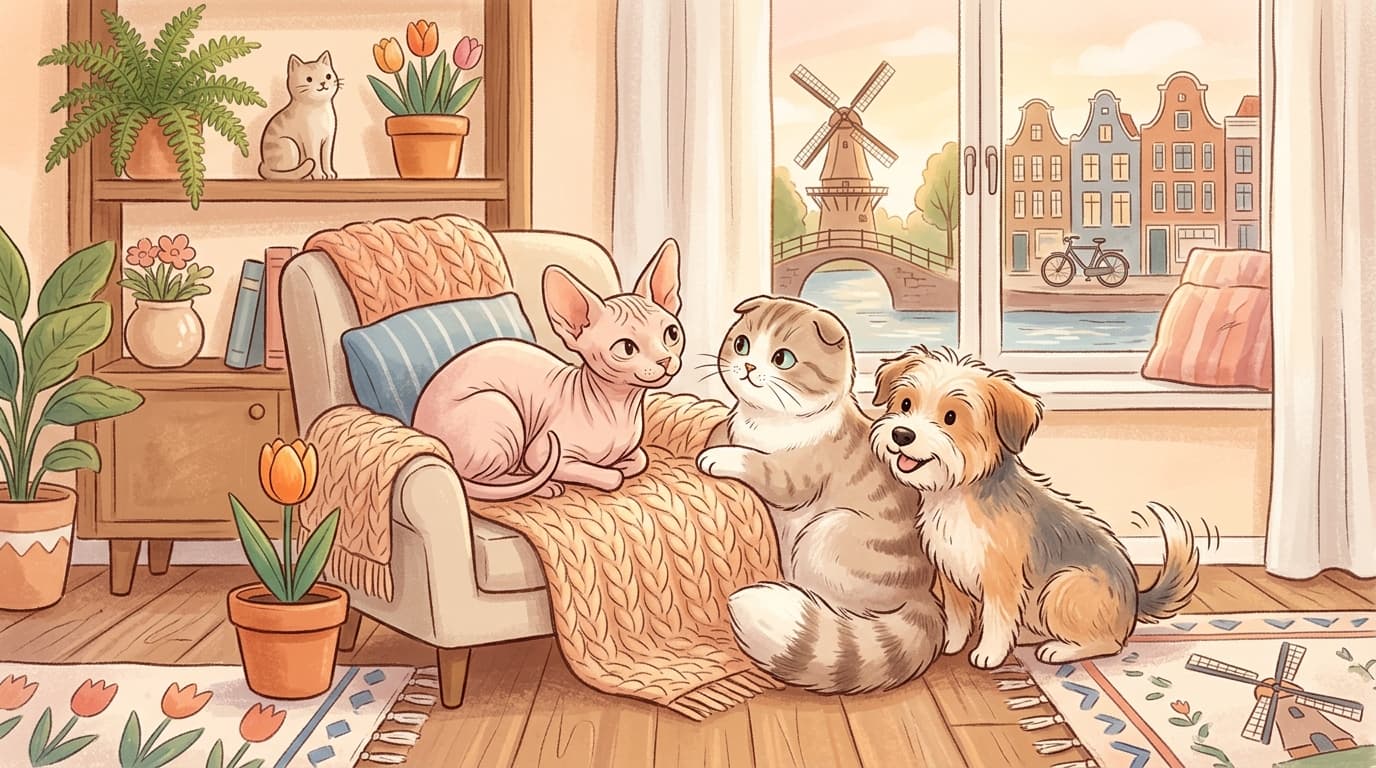
The Sphynx is unforgettable: hairless, wrinkled, big-eared, and warm to the touch. Their appearance can surprise people, but their personality is often the real shock—in the best way.
Many Sphynx cats are extremely people-oriented. They follow you everywhere. They insert themselves into whatever you’re doing: your laptop, your book, your dinner, your face at 3 a.m. And a lot of that closeness isn’t just affection—it’s practical. Without fur, they crave warmth and will happily borrow yours.
Because they burn more energy regulating body temperature, they can have big appetites and high activity levels. They’re playful, expressive, and emotionally “present” all the time. If you want an independent cat, this breed comparison puts the Sphynx near the bottom of that list.
After high-energy breeds, the Ragdoll feels like the opposite setting on the dial. They’re known for extreme gentleness and a tendency to relax completely when held—like a plush toy that suddenly gained a heartbeat.
Ragdolls are often large, soft-coated, and very tolerant of touch. Many bond deeply with their people, follow them around, and actively seek physical contact. Aggression is uncommon, and they tend to be steady and predictable—traits that can make them wonderful in calmer homes and with respectful kids.
But there’s a quiet question hiding inside that sweetness: when we breed for extreme docility, where’s the line between genuine affection and a temperament shaped to be almost defenseless?
Scottish Folds are famous for their folded ears and round, teddy-bear vibe. That signature look isn’t a harmless quirk—it comes from a cartilage mutation.
And cartilage isn’t only in the ears. In Scottish Folds, that same underlying issue can affect joints, bones, tails—basically the system that lets a cat move comfortably. Over time, many develop stiffness and degenerative joint problems, sometimes at a very young age. Some may show pain-related mobility changes early in life.
Here’s the uncomfortable part of any honest cat breed comparison: a cat can seem calm and tolerant partly because movement hurts. When a “cute” trait is tied to chronic discomfort, it forces you to ask what love really looks like—because choosing the look may also be choosing the cost your cat pays every day.
The best cat breed is the one that fits your home and respects the cat’s quality of life, not just your aesthetic. If you want adaptable and resilient, mixed-breed domestic cats are hard to beat. If you want a devoted shadow, Siamese and Sphynx will happily run your schedule. If you want calm, predictable companionship, a Maine Coon or Ragdoll can feel like a soft landing.
And if you’ve ever noticed yourself falling for a “cute feature,” it’s worth pausing to ask one simple thing: is that trait comfortable for the cat—or just appealing to us?