Netherlands Bans Scottish Fold and Sphynx Cats: What the 2026 Rule Means for Pet Owners
Cute ears and a “hairless” look have helped certain cat breeds go viral for years. But in the Netherlands, those signature features are now being treated as red flags—not style points. Starting in 2026, Scottish Fold and Sphynx cats will be restricted because the traits people pay for can come with lifelong suffering.
The Netherlands’ 2026 ban on Scottish Fold and Sphynx cats
The Netherlands has announced that from 2026, keeping cats with folded ears and cats without hair will be prohibited. In everyday terms, this targets breeds like the Scottish Fold and the Sphynx, because the very features that define them are tied to inherited problems that can seriously reduce quality of life.
The focus isn’t “some cats might get sick.” The idea is that these traits are linked to avoidable suffering—meaning the harm is baked into the look.
Why Scottish Fold cats are in the spotlight
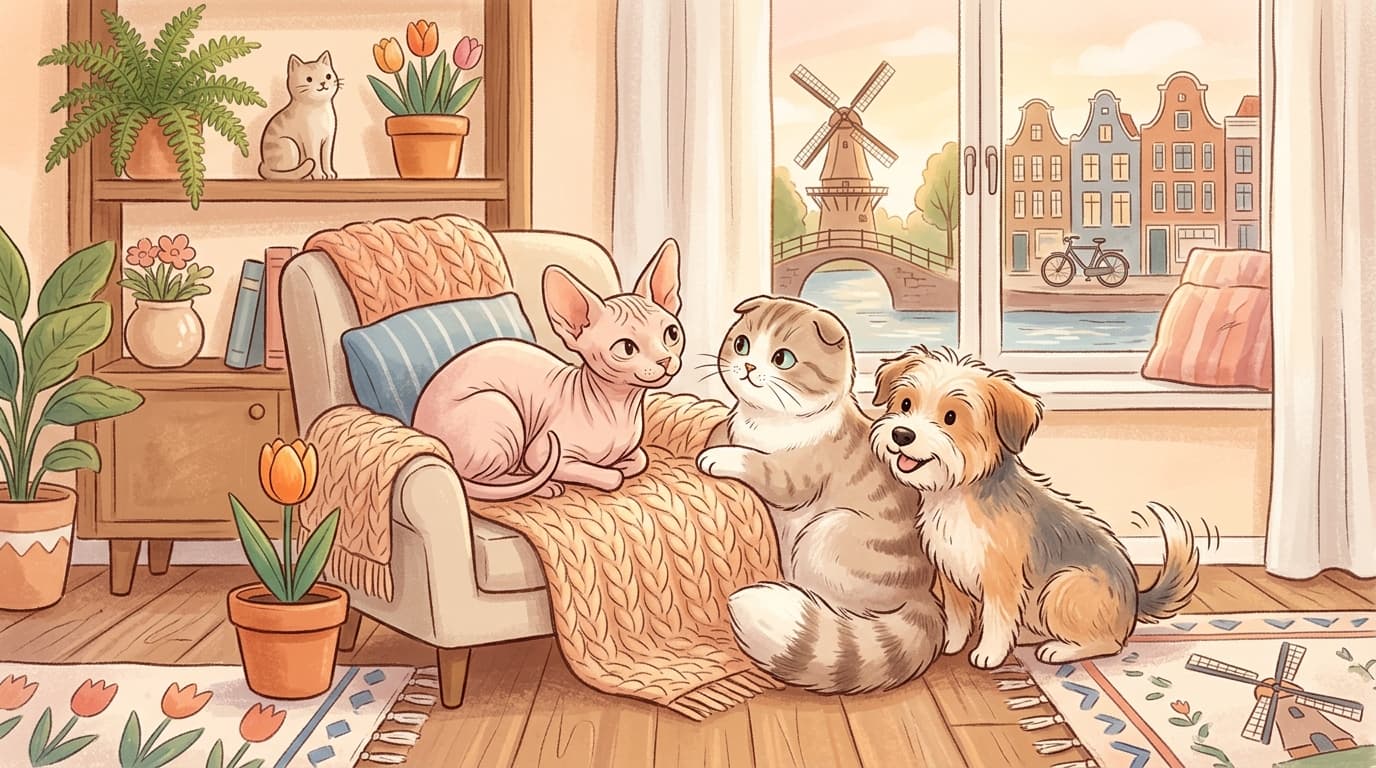
If you’ve ever seen a Scottish Fold in photos, you know the appeal: those soft, folded ears make them look permanently sweet and gentle. The issue is that the folded ear isn’t just an ear “style.” It comes from a mutation affecting cartilage.
And cartilage isn’t only in the ears. That same genetic change can impact the body more broadly, especially bones and joints. The condition is known as osteochondrodysplasia, and it can lead to:
- Chronic pain
- Stiffness and reduced mobility
- Limping
- Early-onset arthritis
- Severe joint deterioration, sometimes progressing to paralysis
Most pet owners don’t realize this until they notice a cat moving less, avoiding jumps, or seeming “lazy” in a way that’s actually discomfort.
Research has found that even one copy of the mutation can be enough to cause deformities and progressive osteoarthritis. In other words, it’s not a rare complication—it’s a risk tied to the defining trait.
Why Sphynx cats are included, too
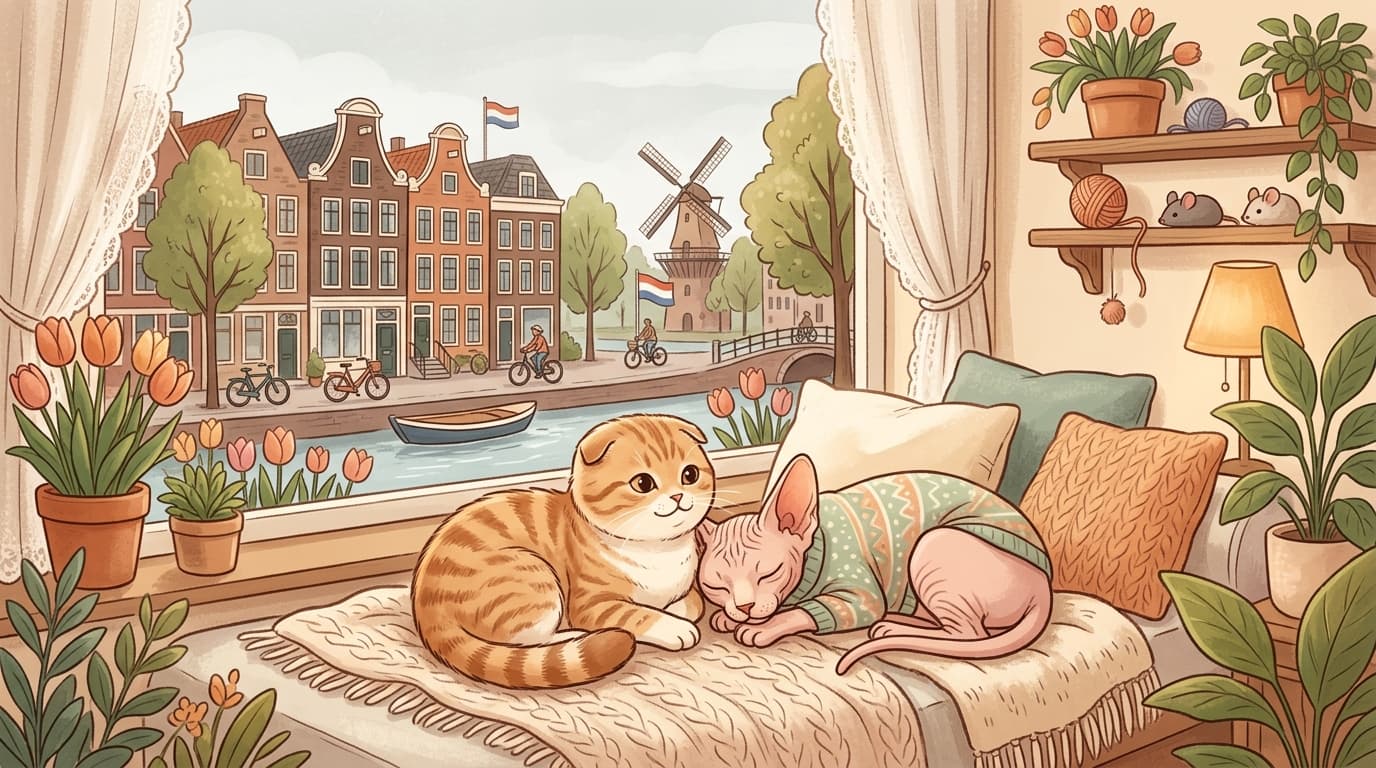
Sphynx cats are often described as elegant and “low-shedding,” and many people love how warm and people-focused they seem. But the lack of a coat (and reduced whiskers) can come with real downsides in daily life.
Without normal fur coverage and typical whisker function, Sphynx cats may be more prone to:
- Skin and ear infections
- Trouble regulating body temperature
- Higher vulnerability to sun exposure (burns) and cold
- Sensory disadvantages linked to missing whiskers
Living in a body that struggles with temperature and skin protection can raise stress and lower overall comfort—especially in climates where indoor warmth, drafts, and sun exposure vary throughout the day.
What exactly is prohibited—and what happens to cats already in homes?
The rule draws a clear line around January 1, 2026.
- Cats born before that date can remain with their families, as long as they are microchipped before the deadline.
- Cats born after that date (or cats not properly identified) fall under the ban.
On top of ownership restrictions, these cats will also be blocked from competitions and shows in the Netherlands. Authorities have also discussed limiting their use in advertising and social media promotions, with the goal of reducing commercial demand fueled by cute photos and trends.
A bigger shift in Europe: less “extreme looks,” more welfare
This isn’t happening in a vacuum. Across Europe, there’s growing scrutiny of breeding that exaggerates features—whether that means flatter faces, shorter legs, unusual coats, or other traits that can compromise normal comfort and function.
The message is pretty simple: a Scottish Fold isn’t “just adorable” if the look is linked to lifelong joint pain. A Sphynx isn’t “just sophisticated” if staying comfortable means constant management of cold, sun, and recurring infections.
What you can do if you love these breeds
If you’re drawn to the look of a Scottish Fold or Sphynx, it helps to shift the goal from “find that aesthetic” to “find that personality in a healthy body.” Consider:
- Looking for cats with similar temperaments through shelters and rescues
- Choosing breeds (or mixed-breed cats) without extreme physical traits
- Supporting breeders and organizations that prioritize robust health over novelty
The takeaway
Trends come and go, but your cat has to live in its body every single day. The Netherlands’ Scottish Fold and Sphynx restrictions are a clear sign that animal welfare is starting to outweigh aesthetics.
Continue reading

Which Cat Breed Is “Best”? A Real-World Comparison of Personalities, Care, and Ethics
A practical cat breed comparison—from mixed-breed house cats to Persians, Bengals, and Scottish Folds—plus what “best” really means.

Netherlands Bans Scottish Fold and Sphynx Cats: What the 2026 Rule Means for Pet Owners
From 2026, the Netherlands bans Scottish Fold and Sphynx cats due to health concerns. Here’s what it means and why it matters.

Dog Poop DNA Testing: How Cities Identify Owners Who Don’t Pick Up
Some cities match dog poop DNA to a registry and fine owners who don’t scoop. Here’s how it works, costs, and limits.