Bengal vs Savannah Cat: Personality, Size, and Care Differences That Actually Matter
Choosing between a Bengal vs Savannah cat can feel simple because both have that wild, spotted look. But living with one is a totally different experience than admiring photos online. The best choice isn’t about which breed is “better”—it’s about which one fits your space, schedule, and energy.
Bengal vs Savannah cat at a glance
Both breeds are athletic, smart, and attention-grabbing. The big differences show up in three places: body size, how they connect with people, and how much daily enrichment they need to stay happy.
Size and appearance: compact leopard vs tall serval look
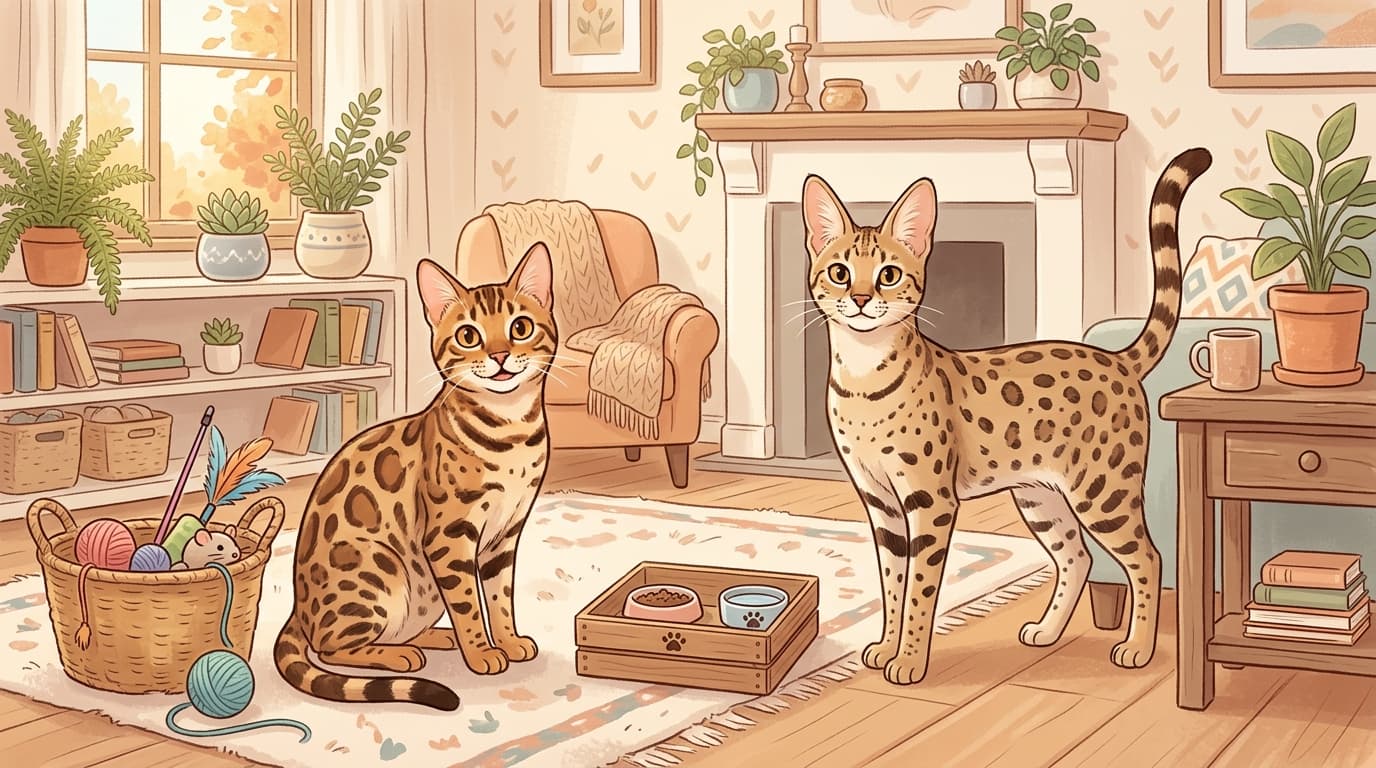
Bengals tend to look like a mini leopard: muscular, compact, and sturdy. Their coats are dense and often have dramatic rosettes or marbled patterns, with a smoother, silkier feel.
Savannah cats usually read “taller” the second you see them. They’re leaner and more leggy, with big ears and a more rugged, wild vibe that comes from their serval ancestry.
- Typical Bengal weight: about 8–17 lb
- Typical Savannah weight: about 12–25 lb, depending on generation
In real life, this affects your home setup. Bengals usually fit comfortably in most living spaces as long as they have a good cat tree and things to do. Savannahs often do best with more room and lots of vertical territory—think tall climbing areas, shelves, and spaces where they can perch and move.
Personality and energy: playful explorer vs dog-like shadow
If you’ve ever noticed your cat getting bored five minutes after you buy a new toy, you’ll appreciate how engaged both of these breeds can be.
Bengal personality Bengals are high-energy, curious, and playful. They love interactive toys and climbing, and many of them are fascinated by water (some will paw at it, play near it, or even hop in when you least expect it). They’re affectionate, but often have a slightly more independent streak—happy to play hard, then go do their own thing for a bit.
Savannah personality Savannahs are often described as more “dog-like” in how social they can be. Many will follow you from room to room, bond intensely, and want to be included in whatever you’re doing. They may enjoy leash walks or outdoor play more readily than the average cat. The flip side is that they can be more demanding of attention and enrichment—especially the early generations.
Daily care and enrichment: both need stimulation, but Savannahs usually need more
A Bengal vs Savannah cat comparison really comes down to your daily routine.
Bengals thrive with:
- Regular interactive play sessions
- Puzzle toys and rotating toy options
- Climbing trees and high perches
- A home that can handle a curious, busy cat
They’re typically fine if you have quieter moments during the day, as long as you make up for it with quality play and mental stimulation.
Savannahs thrive with:
- More space to move and climb
- Daily, active engagement (not just passive toys)
- Lots of vertical territory and exploration options
- A household that enjoys a very interactive cat
Most pet owners don’t realize how much “not enough to do” can turn into mischief with a Savannah. If you want a cat who’s deeply involved in your life, that can be amazing. If you want a cat who’s more content entertaining themselves between cuddle sessions, a Bengal may feel easier.
Health considerations: generally healthy, but know the common concerns
With responsible breeding and good routine care, both breeds are often healthy overall.
Bengals can be prone to certain genetic issues such as hypertrophic cardiomyopathy (HCM), and some have digestive sensitivity. Staying consistent with routine checkups helps catch problems early.
Savannahs, especially early generation (F1/F2) cats, may come with more specialized needs tied to their serval ancestry—some individuals may require extra attention to diet or joint care, and their energy demands can be intense.
In both cases, where the cat comes from matters a lot. A reputable, responsible breeder can reduce the odds of inherited health and temperament problems.
Which breed fits your lifestyle best?
A simple way to decide is to picture a normal weekday in your home.
Choose a Bengal if you want…
- A compact, muscular, exotic-looking cat
- A high-energy companion without huge space requirements
- A playful cat who can also handle some independent downtime
Choose a Savannah if you want…
- A tall, athletic, striking cat with a more “wild” outline
- A very social, dog-like companion who sticks close
- A cat that thrives with space, daily activity, and lots of attention
The takeaway
The best Bengal vs Savannah cat choice is the one that matches your home, not your mood board. Pick the cat whose energy level you can genuinely meet, and you’ll end up with a companion that’s not just beautiful—but a joy to live with.
Continue reading

Microchipping Cats in Spain: What the Law Requires (and What Happens If You Skip It)
Spain now requires microchips for all cats. Learn what the law says, possible fines, and how microchipping works.

How Cats Secretly Test You Every Day (And What They’re Really Looking For)
Cats test your patience, boundaries, and consistency daily. Learn the subtle signs—and how to earn real feline trust.

Which Cat Breed Is “Best”? A Real-World Comparison of Personalities, Care, and Ethics
A practical cat breed comparison—from mixed-breed house cats to Persians, Bengals, and Scottish Folds—plus what “best” really means.