Is Your Cat Jealous of a New Cat? What’s Really Happening (and How to Fix It)
Your cat isn’t “jealous” of a new cat—usually they’re scared. Learn a calm, step-by-step introduction plan that actually works.
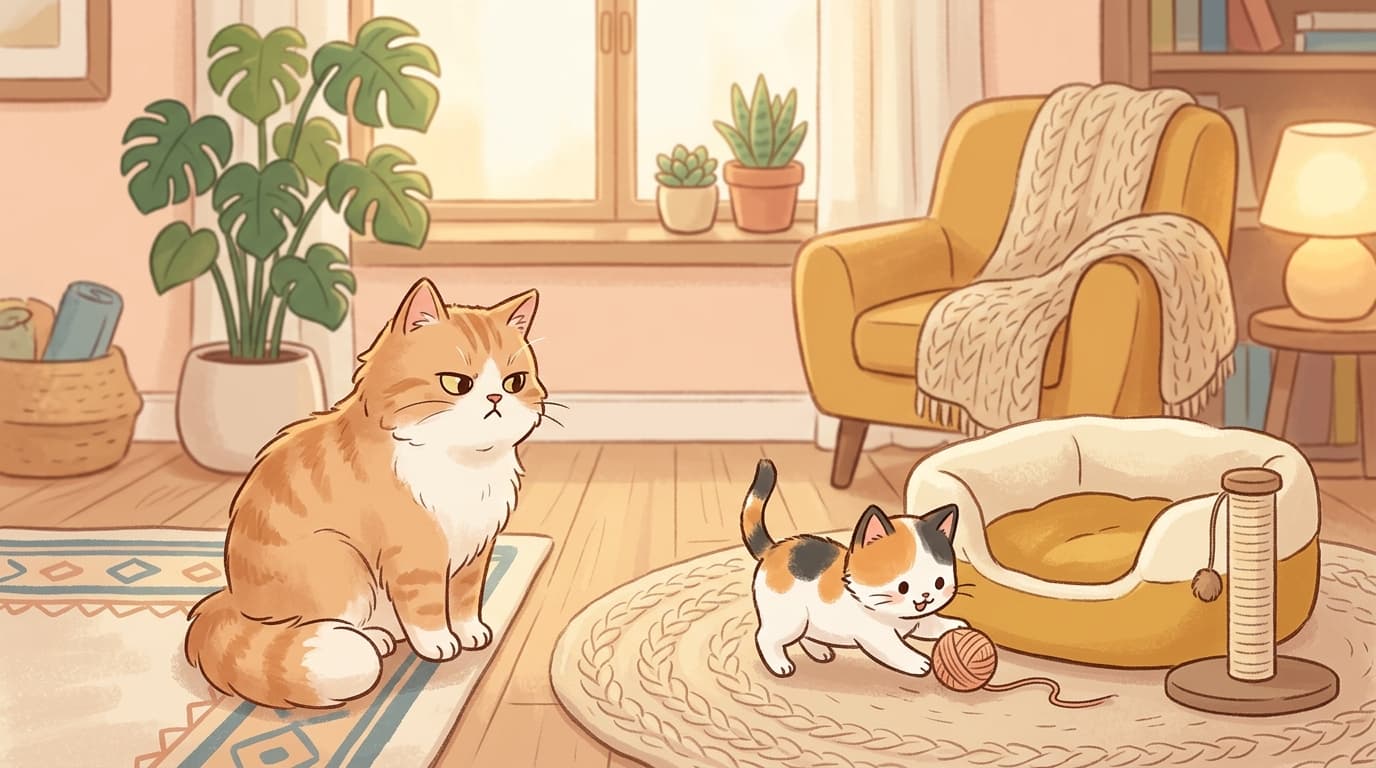
Bringing home a second cat feels like a kind idea—until your original cat starts hiding, skipping meals, and acting like you’ve ruined their life. Most pet owners call it jealousy, but what you’re seeing is usually something else: a survival response to a sudden change.
Is your cat jealous, or just stressed?
Cats don’t typically experience jealousy the way humans do. If your cat seems “mad” after a new cat arrives—hiding under the bed, isolating, refusing to play, eating less—it’s often fear and uncertainty.
From your cat’s point of view, a stranger has appeared in their territory. They don’t know if that newcomer is safe, whether resources will disappear, or if they’ll be chased away from favorite spots. If you’ve ever noticed your cat getting jumpy over a new piece of furniture or a suitcase in the hallway, imagine how big a deal a whole new cat feels.
Why the first days can look so dramatic
A new cat changes the entire rhythm of the home: different smells, different sounds, different movement patterns. Your resident cat may respond by:
- Avoiding shared spaces
- Becoming unusually quiet or withdrawn
- Eating less or refusing food for a bit
- Watching from a distance, tense and alert
This doesn’t mean they’ll “never accept” another cat. It usually means the introduction moved faster than their comfort level.
The best way to introduce cats: scent first, sight later
The key to preventing “cat jealousy” (really: fear) is a gradual, step-by-step introduction that starts with smell.
Step 1: Let your resident cat meet the new cat’s scent
Before they see each other, let them learn each other’s smell in a low-pressure way.
- Rub a towel gently over the new cat’s body.
- Place that towel near your resident cat’s space for a few days.
If the new cat is already home and you can’t do this ahead of time, you can still swap scents by trading bedding or gently rubbing each cat with separate cloths and switching them.
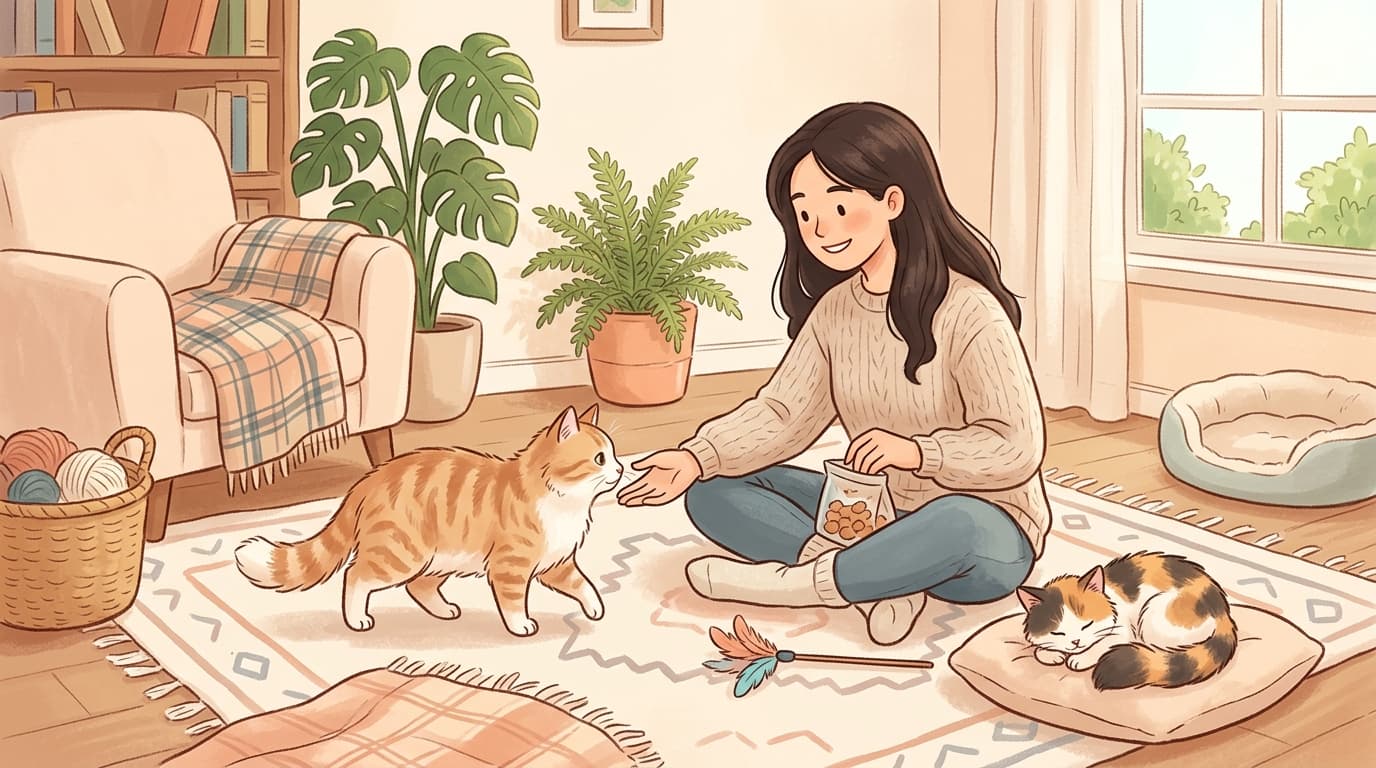
Step 2: Separate rooms at first (this is not “mean,” it’s smart)
Start with the cats in different rooms so nobody feels ambushed. This gives both cats time to settle and helps your resident cat realize the newcomer isn’t immediately taking over the whole house.
While they’re separated, keep exchanging scents (blankets, towels, beds) so “new cat smell” becomes part of normal life.
Controlled visual introductions: use a barrier
Once both cats seem calm with the scent routine, let them see each other—but not touch.
Use a safe barrier like:
- A glass door
- A baby gate or pet gate
This stage is about “I can see you and nothing bad happens.” Short, calm sessions beat long, stressful ones.
Make the other cat predict good things (food helps)
Over the next several days, place their food bowls near the barrier (one on each side). The goal is simple: your cats start associating the other cat’s presence with something positive.
If either cat won’t eat near the barrier, move the bowls farther away and slowly inch them closer over time. Don’t rush this part.
Short, supervised time together—only when both are relaxed
When you consistently see loose body language (not stiff, not frozen, not stalking), you can try brief, supervised meetups in the same space.
Keep it short. End on a calm note. Then separate them again.
This stage can take days or weeks. Every cat has their own pace, and forcing it usually backfires.
What not to do during “cat jealousy” moments
If your resident cat is hiding or acting sad, it’s tempting to push them to “get used to it.” Try to avoid:
- Forcing face-to-face meetings
- Cornering either cat to “make them interact”
- Punishing hissing or growling (it’s communication)
- Moving too fast because you feel guilty
Patience is not passive here—it’s the strategy.
When to get extra help
If several days pass with no improvement, or your cat is barely eating, it’s worth checking in with your veterinarian to rule out pain or illness. Stress can also make small issues look bigger, and you’ll feel better knowing you’re not missing something.
The takeaway
Your cat isn’t being petty—they’re trying to feel safe in a home that suddenly changed. Go slow, start with scent, use a barrier for first meetings, and let food create positive associations. With time and a thoughtful introduction, that “jealousy” usually fades and your home can become peaceful again.
Continue reading

Why Your Cat Walks on You at Night (And What They’re Really Trying to Tell You)
If your cat steps on your chest at night, it’s not random. Here are the real reasons—and how to respond without encouraging 5 a.m. wakeups.

Choosing a Cat by Coat Color: What You Should Know Before You Adopt
Your cat’s coat color can hint at temperament and care needs. Here’s how orange, black, white, tabby, tuxedo and more often differ.

Burmilla Cats: 5 Traits That Make This Shimmery Breed So Easy to Love
Meet the Burmilla cat: a shimmering coat, emerald eyes, a gentle voice, and a perfect mix of playful and calm.