What It Really Means When You and Your Dog Lock Eyes (and How to Respond)
Locking eyes with your dog boosts bonding chemicals, shapes their stress levels, and even affects brain health. Here’s what their stare is telling you.
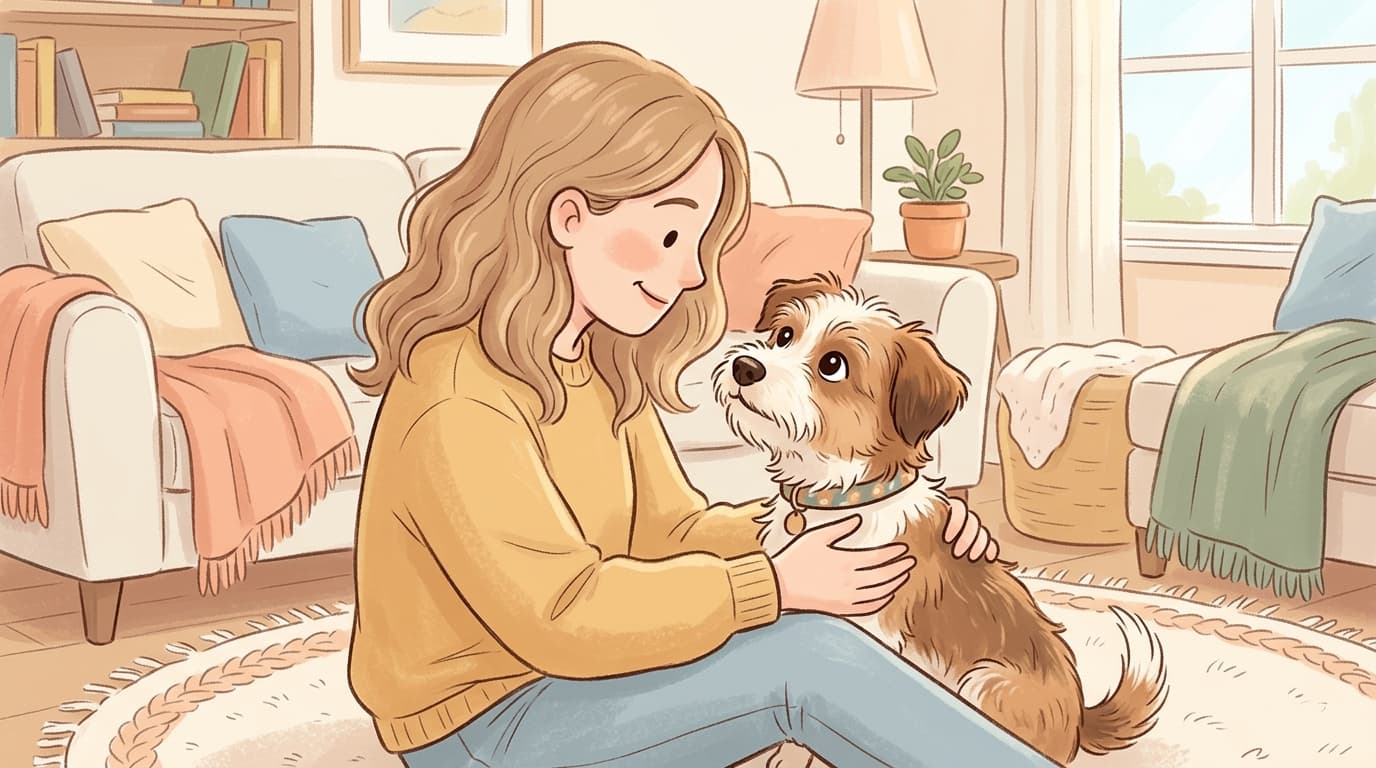
Locking eyes with your dog isn’t just a sweet moment you happen to catch on the couch. It can trigger a real chemical cascade in both of you—one that’s unusually similar to the bonding loop between a parent and a baby.
If you’ve ever noticed your dog staring like they’re trying to read your mind, you’re not imagining it. In many cases, they’re doing something much more specific than “looking.”
Locking eyes with your dog can trigger a bonding chemical high
When your eyes meet and you hold that gaze for a few seconds, both of your bodies can respond with a spike in oxytocin (the bonding hormone). In research observations, dogs can show a dramatic jump in oxytocin after just a few seconds of steady eye contact, and humans can spike even higher.
What’s wild is what can happen next: your stress response can ease at the same time. Heart rhythms may start to sync up, cortisol can drop together, and some dogs even begin matching your breathing rate without meaning to. It’s like your nervous systems are quietly negotiating, “We’re safe. We’re together.”
That said, not every dog can tolerate long, intense eye contact. Dogs with anxiety, past trauma, or certain temperaments may break eye contact quickly (often after a second or two) and choose a different kind of closeness instead—like looking at your chin, glancing from the side, or leaning their body against you.
The “distance rule”: why your dog watches you from across the room
Most pet owners don’t realize their dog often chooses specific distances for staring.
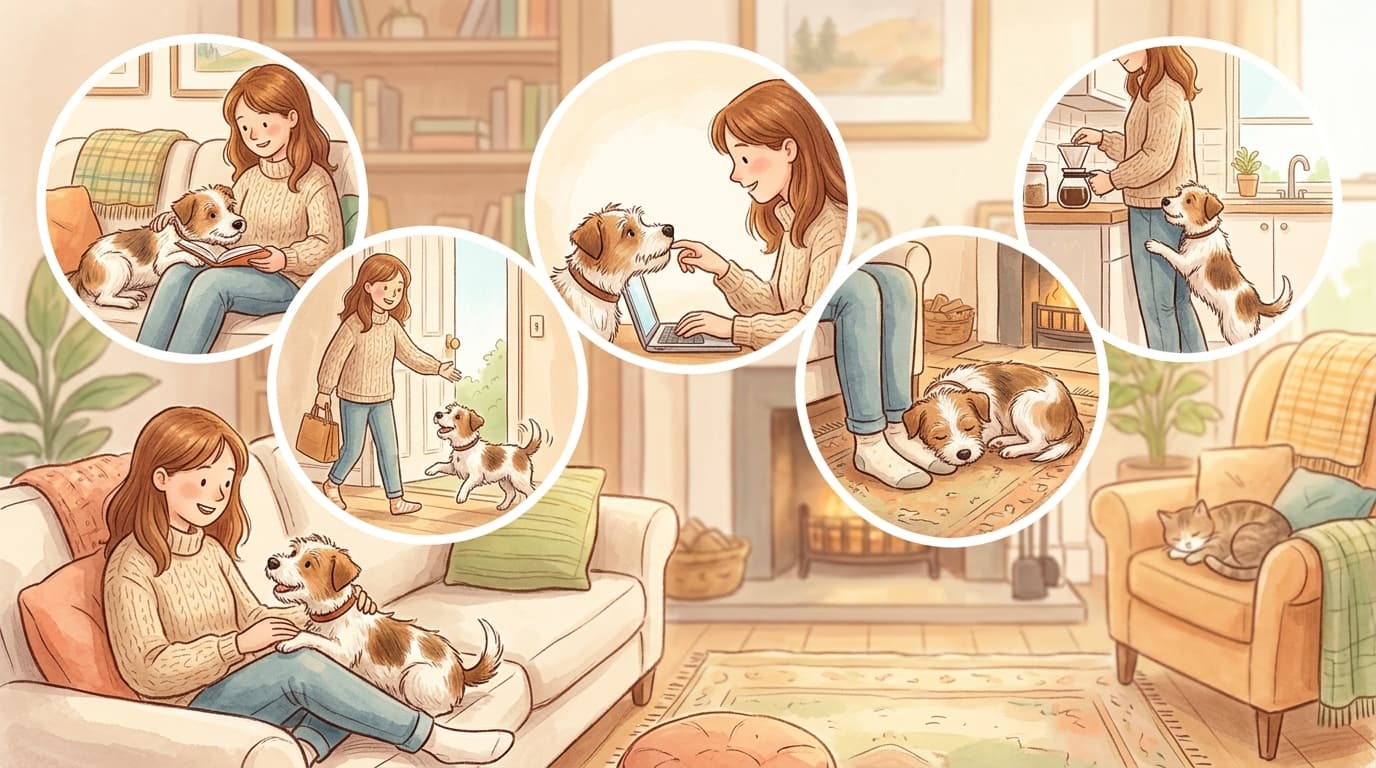
That look from the doorway while you cook, or the quiet gaze from their bed while you answer emails, is often “information gathering.” Over thousands of years living alongside humans, dogs became unusually tuned in to human faces—so tuned in that they’re built to prioritize reading you, not other dogs.
They’re tracking tiny changes: shoulder tension, breathing shifts, the micro-movements that happen right before you stand up. Some studies suggest dogs can pick up on extremely brief facial changes—expressions so quick you don’t even realize you made them.
And yes, some dogs seem to “predict” your next move. Part of that may be because successful prediction is rewarding: their brain can release dopamine when they correctly anticipate what you’ll do next, reinforcing that watchful habit.