What It Really Means When You and Your Dog Lock Eyes (and How to Respond)
Locking eyes with your dog boosts bonding chemicals, shapes their stress levels, and even affects brain health. Here’s what their stare is telling you.
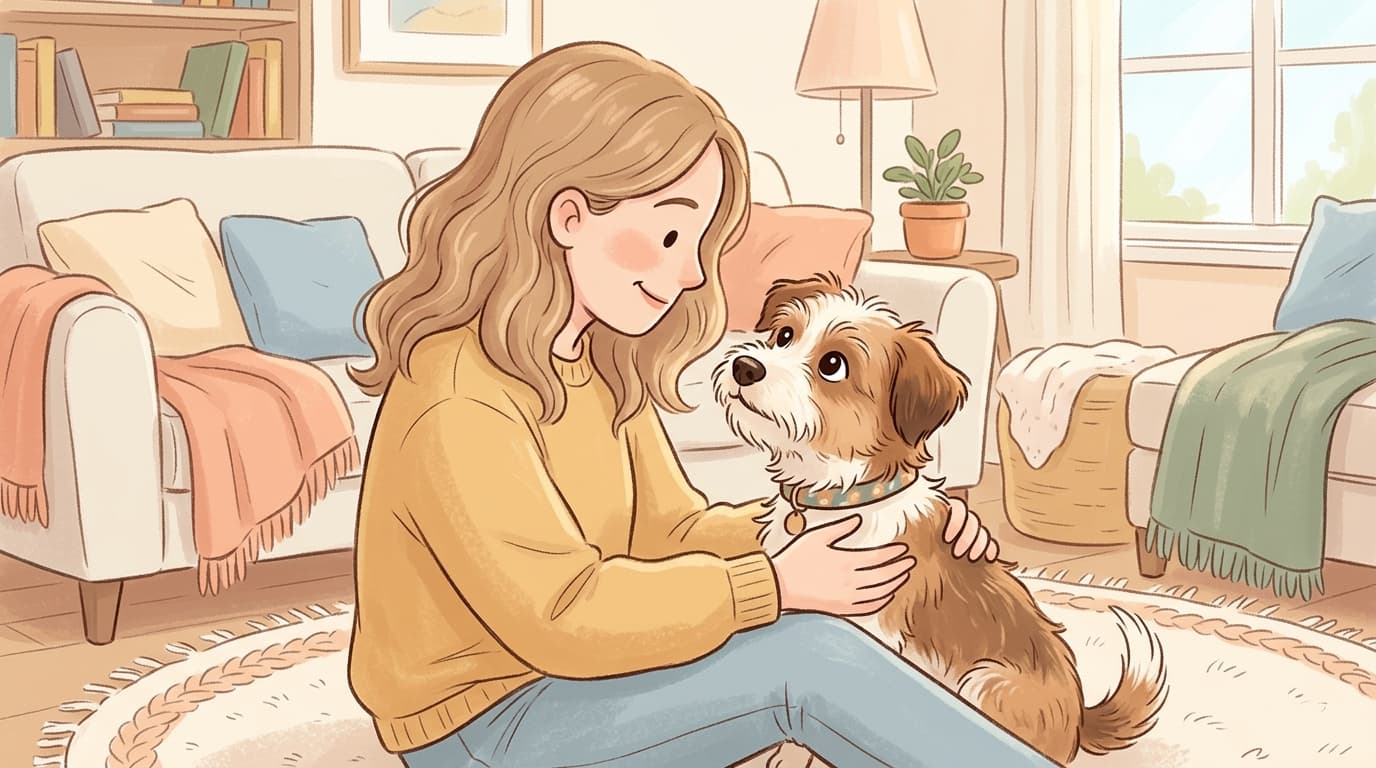
Locking eyes with your dog isn’t just a sweet moment you happen to catch on the couch. It can trigger a real chemical cascade in both of you—one that’s unusually similar to the bonding loop between a parent and a baby.
If you’ve ever noticed your dog staring like they’re trying to read your mind, you’re not imagining it. In many cases, they’re doing something much more specific than “looking.”
Locking eyes with your dog can trigger a bonding chemical high
When your eyes meet and you hold that gaze for a few seconds, both of your bodies can respond with a spike in oxytocin (the bonding hormone). In research observations, dogs can show a dramatic jump in oxytocin after just a few seconds of steady eye contact, and humans can spike even higher.
What’s wild is what can happen next: your stress response can ease at the same time. Heart rhythms may start to sync up, cortisol can drop together, and some dogs even begin matching your breathing rate without meaning to. It’s like your nervous systems are quietly negotiating, “We’re safe. We’re together.”
That said, not every dog can tolerate long, intense eye contact. Dogs with anxiety, past trauma, or certain temperaments may break eye contact quickly (often after a second or two) and choose a different kind of closeness instead—like looking at your chin, glancing from the side, or leaning their body against you.
The “distance rule”: why your dog watches you from across the room
Most pet owners don’t realize their dog often chooses specific distances for staring.
That look from the doorway while you cook, or the quiet gaze from their bed while you answer emails, is often “information gathering.” Over thousands of years living alongside humans, dogs became unusually tuned in to human faces—so tuned in that they’re built to prioritize reading you, not other dogs.
They’re tracking tiny changes: shoulder tension, breathing shifts, the micro-movements that happen right before you stand up. Some studies suggest dogs can pick up on extremely brief facial changes—expressions so quick you don’t even realize you made them.
And yes, some dogs seem to “predict” your next move. Part of that may be because successful prediction is rewarding: their brain can release dopamine when they correctly anticipate what you’ll do next, reinforcing that watchful habit.
Why your dog holds eye contact longer through a window or glass door
Ever notice your dog can stare at you through a glass door like it’s their full-time job?
Researchers have observed that dogs may hold eye contact noticeably longer through a barrier like glass than they do face-to-face. The idea is simple: the barrier creates a built-in sense of safety. Even though your dog loves you, direct staring is still an intense signal in the animal world. A window softens that intensity, letting them “connect” while their instincts stay calmer.
If you watch closely, you might see tiny signs of active thinking—slight pupil changes, ears tipping forward just a touch—as they run their little mental script: “Do they see me? Will they come over? Is it time to go out?”
The silent, motionless stare: a bond test (not just begging)
There’s “I want a treat” staring, and then there’s the unnervingly still, quiet stare with no tail wag, no shifting, no sound.
That motionless version often isn’t about demanding. It’s about measuring. Your dog may be checking how aware you are of them—how tuned-in you are to their presence without them having to perform for your attention.
Dogs who use calm, steady eye contact can be surprisingly good problem-solvers, because they’ve learned something powerful: humans struggle to ignore a quiet gaze.
It’s also one reason therapy dogs can be so effective. A steady, gentle gaze can help trigger a calming response in people, lowering stress and encouraging slower breathing. Your dog’s stare might be doing more for your nervous system than you realize.
Your response time teaches your dog what to expect from you
Here’s a detail that can change the way you think about daily interactions: dogs build a “response map” of you.
They remember whether you typically acknowledge them right away, after a delay, or only after they escalate (pacing, whining, barking). That pattern can influence their attachment style and baseline stress.
Consistent, timely acknowledgement—often within a few seconds—can reinforce connection and predictability. But long delays or frequent ignoring can create uncertainty. In observations of dogs whose eye contact attempts were repeatedly dismissed, some eventually stopped trying as much. The shift wasn’t just “fine, I’ll stop staring.” It could look like less following you around, less reunion excitement, and less seeking physical contact—almost like emotional self-protection.
You don’t have to reward every stare with a treat or a full conversation. Even a quick glance, a soft word, or a gentle hand signal can tell your dog, “I see you.”
The slow blink after eye contact (and what it means when it’s missing)
After a warm moment of eye contact, many dogs offer a subtle slow blink. It’s easy to miss, but it often reads like a de-escalation signal: “We’re good. I’m relaxed.”
When that slow blink doesn’t happen, it can mean your dog is still in “ready mode.” Their pupils may stay wide, their face may look tense, and their body can feel poised for the next instruction or event.
This is especially common in dogs whose past eye contact always led to action—commands, work, tasks, transitions. Some working dogs and shelter dogs carry that association for a long time, even in a calm home.
How dogs end eye contact: 5 common “sign-offs” you can learn to read
Dogs don’t all break eye contact the same way. The way your dog disengages is often the message.
- The soft break: a slow head turn while their body stays oriented toward you. They’re satisfied—connection complete.
- The glance away and back: they want to keep connecting, but the intensity got a bit high. Think of it like turning the volume down.
- The downward break: head drops, eyes go to the floor. Often self-regulation, not “guilt.”
- The full body turn: a clearer request for space to process.
- The freeze and slide: eyes shift away while the head stays still. This can show uncertainty, especially if your face looks calm but your emotions are stressed (dogs notice that mismatch).
If your dog chooses a bigger disengagement (like a full body turn), the kindest move is to respect it. Giving them space teaches them they don’t need to escalate to be understood.
Eye contact can literally shape your dog’s brain over time
Regular eye contact isn’t only emotional—it can be developmental.
In canine cognition research, dogs that engage in more social gazing have been associated with differences in brain areas linked to facial recognition, memory, and social learning. And it may not be purely genetic: puppies who get consistent, positive eye contact in their first year can build stronger social-cognition pathways regardless of breed.
There’s also evidence that these exchanges increase BDNF (brain-derived neurotrophic factor), a protein involved in neural growth and maintenance, in both species. In plain English: those tiny daily moments of connection may help keep both your brains more resilient.
Some dogs even become “anticipatory gazers.” They learn your patterns so well—posture shifts, breathing changes, the way you set down your mug—that they position themselves right before you look up, as if they’ve timed your attention down to the second.
A simple way to use locking eyes with your dog to build trust
If your dog offers eye contact, try meeting it gently for a couple seconds, then soften your face and relax your body. If they blink slowly or look away comfortably, you’re in a good place.
And if they can’t hold the gaze, let them choose a different kind of closeness. The goal isn’t to “win” a staring contest—it’s to build the quiet, steady feeling that you understand each other.
Continue reading

7 Dog Body Language Signals Most Owners Miss (And What Your Dog Is Really Saying)
From play bows to doorway guarding, learn the dog body language signals that reveal trust, comfort, and connection.

Dog Body Language Signs of Love: 7 Little Moments That Mean “You’re My Person”
From the play bow at the door to sleeping pressed against you, these dog body language signs quietly prove how much your dog loves you.

Male Dogs vs Female Dogs: 5 Real Differences You’ll Notice at Home and on Walks
From pee-mail to leash pulling and rough play, here are 5 everyday ways male dogs tend to differ from females.