Male Dogs vs Female Dogs: 5 Real Differences You’ll Notice at Home and on Walks
Male dogs don’t just seem different from female dogs—many of their everyday habits are powered by instincts that push them to move, communicate, and bond in their own style. If you’ve ever wondered why your boy dog turns a simple walk into a full investigative mission, you’re not imagining it.
1) Male dogs leave an “invisible map” on every walk
That leg lift isn’t only about emptying a bladder. For many male dogs, it’s communication.
Urine carries chemical signals that other dogs can read like a bulletin board: who was here, roughly how mature they are, and even clues about overall condition and mood. Those scent messages can linger for a long time—long enough that your dog may return to the same spot days later like he’s checking the neighborhood news.
Testosterone tends to crank up this urge to mark, which is why it often intensifies around adolescence (many males start seriously marking around the time hormones surge). And while neutering often reduces marking a lot, it doesn’t always erase it completely. Once a dog has practiced a behavior repeatedly, part of it can become habit—his default way of “showing up” in the world.
Most pet owners don’t realize that when their dog sniffs a spot and then marks right over it, he’s essentially replying. It’s not random. It’s social.
2) Leash pulling isn’t just bad manners—it’s motivation
If your male dog hits the end of the leash like he’s got somewhere important to be, there’s a good chance he does—at least in his head.
Research comparing shelter dogs has found males tend to pull more and create higher leash tension than females, and it isn’t fully explained by size or strength. A big part of it is drive. Male dogs are often more likely to surge forward to investigate what’s ahead, especially when a high-value scent is in the area.
One scent in particular can flip the switch: a female in heat. For intact males, that smell can narrow their focus so much that it feels like they “forget” their training. This is also where you get the sudden escape-artist behavior—digging, fence testing, door-dashing—because the urge to locate the source is incredibly strong.
Neutering can reduce roaming and mate-seeking behavior significantly, but even neutered males may keep that forward momentum: the need to check what’s around the next corner.
3) Male dogs often play to connect (and they may “hold back” for you)
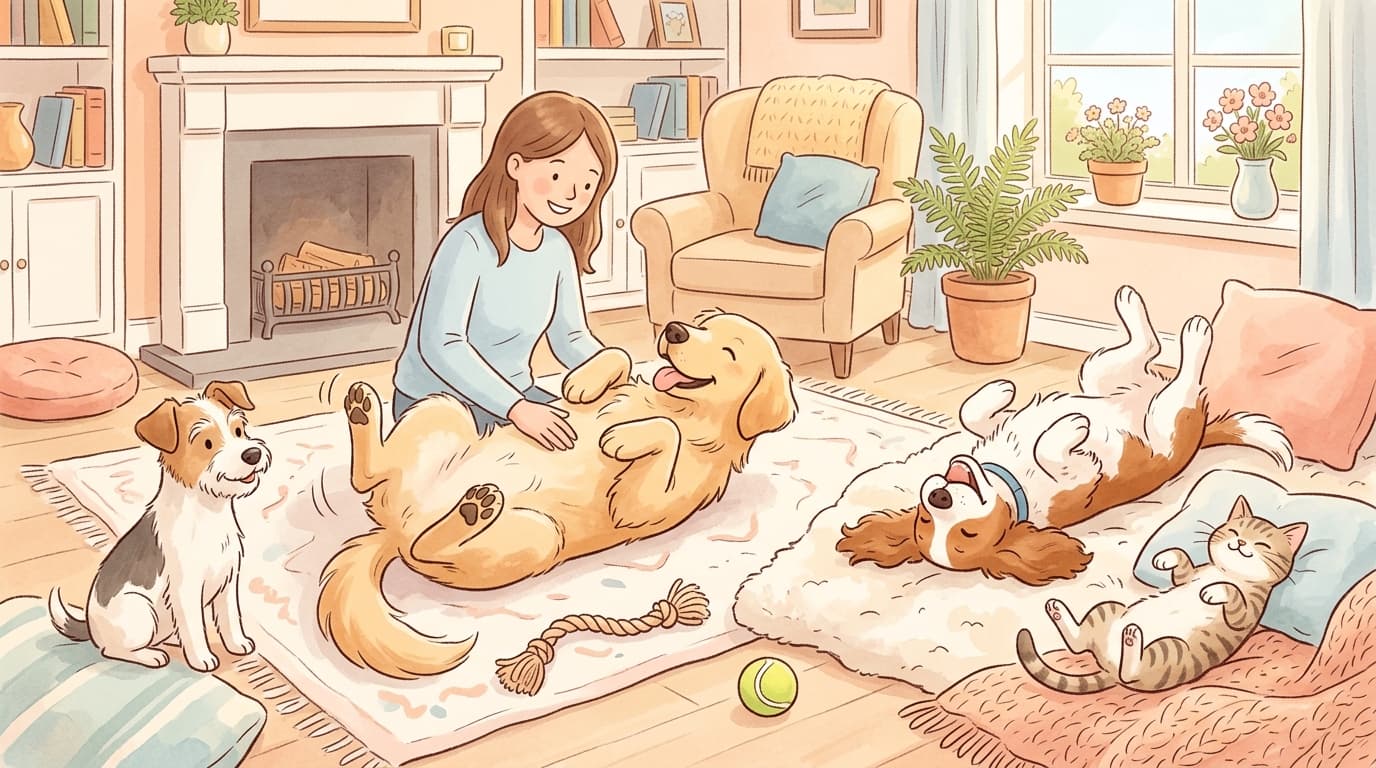
Male dogs frequently lean into physical play: tug, wrestling, body-slams that somehow feel affectionate, and those chaotic zoomies that end with a dramatic skid at your feet.
In mixed-sex play, males tend to initiate play more often and show more “offensive” play behaviors. But there’s a surprisingly sweet detail tucked inside that: males also tend to show more self-handicapping—meaning the stronger player intentionally holds back to keep the game fun and going.
So if your dog could absolutely win tug in one second but keeps re-gripping, re-engaging, and letting you have little victories, he may be doing it on purpose. Not because he’s weak—because he wants the interaction.
And that matters for your relationship. Rough-and-tumble play isn’t just burning energy; for many male dogs, it’s bonding. If he keeps jamming a rope toy into your hand, he’s not only asking to play—he’s asking for you.
4) His loyalty can look more “independent” (but it’s still loyalty)
Watch male dogs at a park or on a hike and you’ll often see a pattern: they range farther, then loop back. They might not constantly glance at you the way some female dogs do, and that can read as “less attached.”
But attachment doesn’t always look like Velcro.
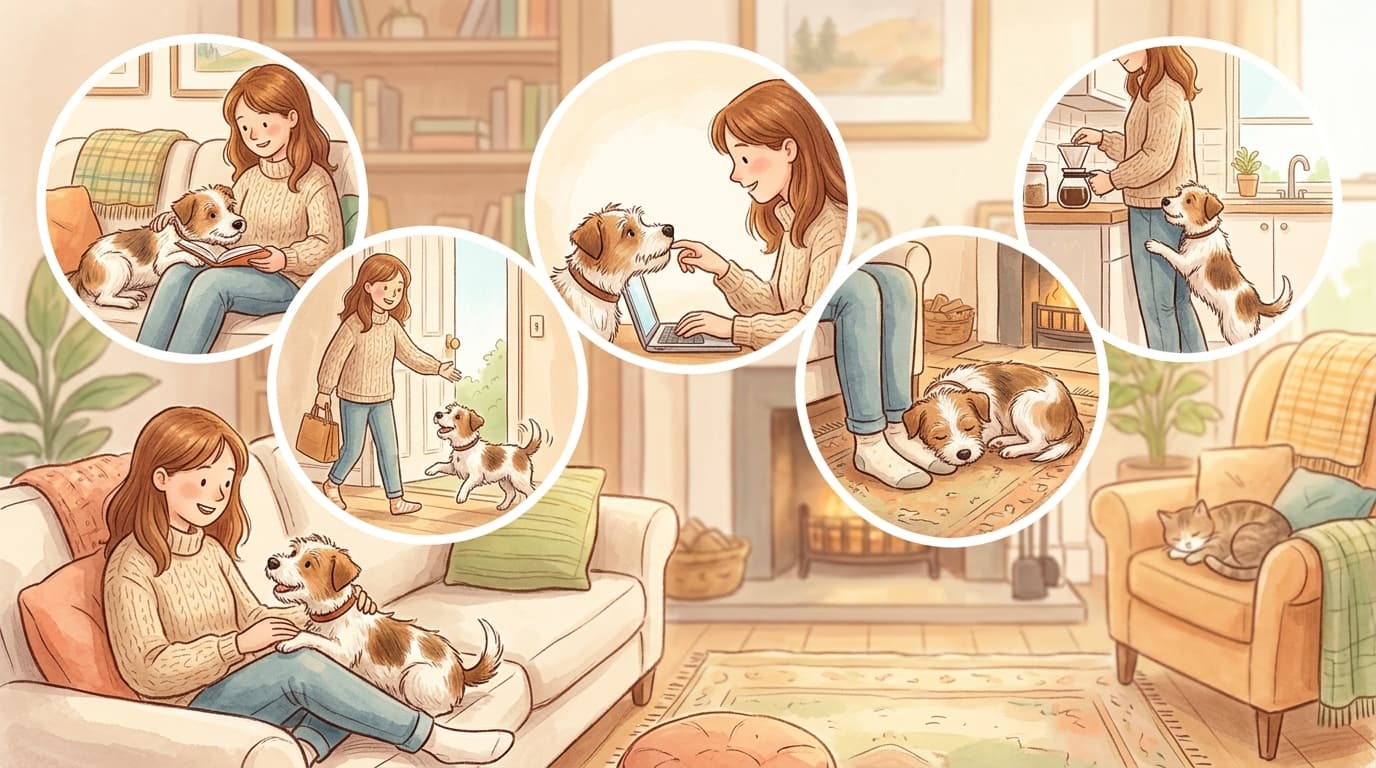
Dogs show attachment by using you as a secure base—checking in, returning to you, and feeling safe enough to explore because you’re there. Many male dogs express closeness through confidence: they venture out because they trust the bond will hold and they can come back.
You might also notice loyalty showing up as positioning. Some males, especially those deeply bonded to their families, are more likely to place themselves between you and something they find suspicious, or to respond boldly to unfamiliar sounds. It’s their version of, “I’m on it.”
If you want a clue to how your male dog reads the world, pay attention to where he chooses to stand when someone new approaches—or where he settles when you’re relaxing at home.
5) When you leave, his distress may show up as pacing, noise, or “scent-targeting”
Dogs don’t experience time like we do. A short errand and a long workday can feel oddly similar from your dog’s perspective—what changes his emotions is often the fact that you’re gone, not the clock.
Dogs form strong attachment bonds with their people, and separation can trigger real stress. Male dogs aren’t automatically more prone to separation anxiety than females, but some males express that stress in a particular way: restlessness, pacing, louder vocalizing, or destructive behavior.
And if you’ve ever noticed your dog going after a shoe, sock, or laundry item, it’s not always “being bad.” Items that smell like you can become the target because your scent is comforting and emotionally charged.
There’s also that eerie, familiar moment: your dog seems to “know” you’re about to come home. Many owners see a shift in behavior shortly before arrival—more alertness, moving toward the door, a sudden burst of energy—followed by the full-body reunion celebration.
The takeaway
Living with a male dog often means living with a little extra drive: more scent-reading, more forward motion, more physical play, and a loyalty that can look independent while still being deeply rooted. Once you start seeing these behaviors as communication instead of “stubbornness,” it gets easier to meet your dog where he is—and enjoy who he is.
Meta description: From pee-mail to leash pulling and rough play, here are 5 everyday ways male dogs tend to differ from females.
Continue reading

Why Your Cat Licks You (And Why It’s Not Always About Love)
Cat licking isn’t just affection—it can be scent-marking, bonding, stress-soothing, or even checking on you. Here’s what it means.

How Cats Secretly Test You Every Day (And What They’re Really Looking For)
Cats test your patience, boundaries, and consistency daily. Learn the subtle signs—and how to earn real feline trust.

16 Five-Second Habits That Make Your Dog Feel Truly Loved (No Treats Required)
These 16 tiny, five-second habits help your dog feel safe, seen, and deeply loved—without extra toys, treats, or long walks.