Dogs and Humans Share Emotion Genes: What a Golden Retriever DNA Study Reveals
A large Golden Retriever DNA study found gene regions linked to behavior that also relate to human traits like emotional regulation and depression.
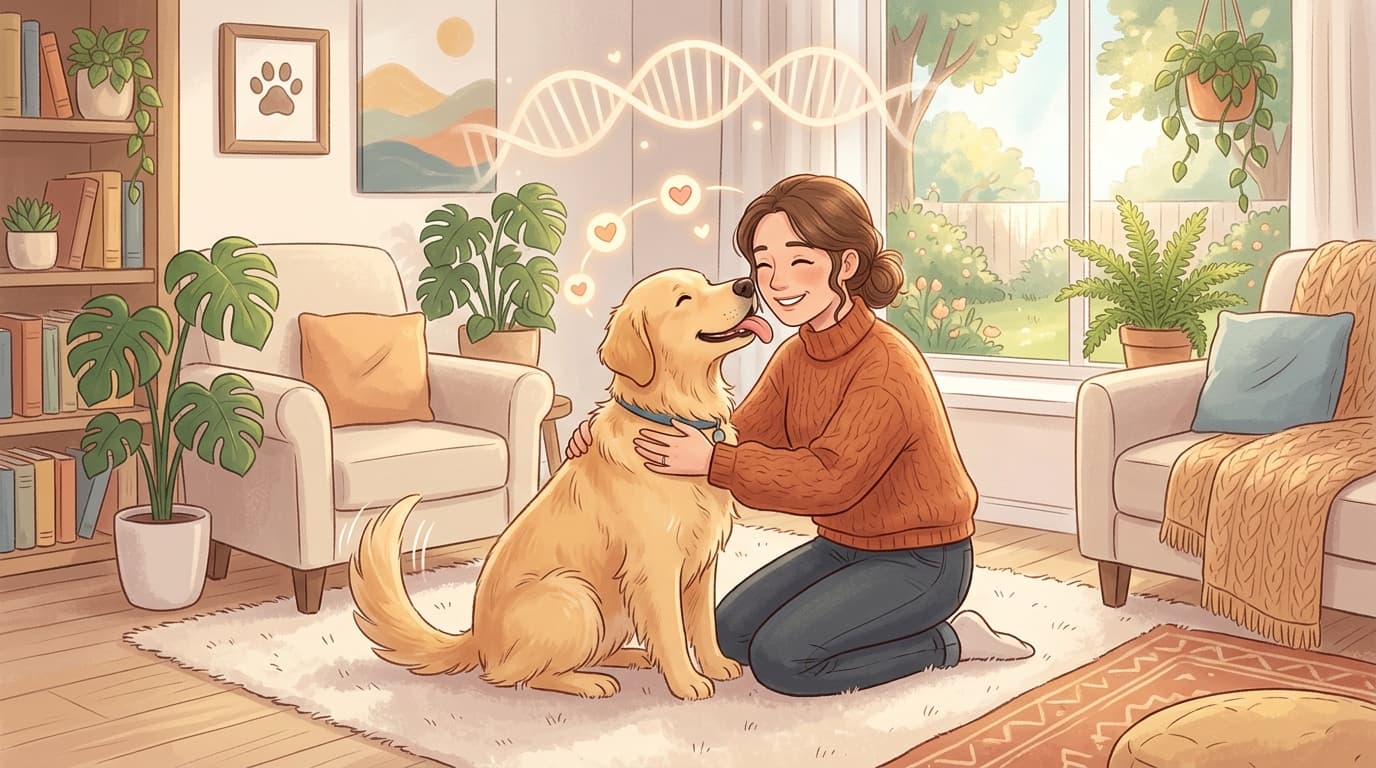
Most pet owners don’t realize that some of the big feelings you see in your dog—fear, sensitivity, even how quickly they learn—can have roots in the same kind of genetic wiring humans carry. A large genetic study in Golden Retrievers suggests the connection between dogs and people goes deeper than companionship.
The Golden Retriever DNA study, in plain English
Researchers at the University of Massachusetts looked at DNA from 1,343 Golden Retrievers and paired it with detailed behavior questionnaires. The goal wasn’t to label dogs as “good” or “bad”—it was to understand why one dog seems naturally confident while another is more nervous, reactive, or quick to pick up cues.
By combining genetics with real-world behavior reports, the team could spot patterns that don’t show up if you only look at training style or only look at DNA.
The key finding: gene regions linked to common dog behaviors
The study identified 12 regions of the canine genome associated with eight behavior traits. Think of traits that many dog owners recognize right away, such as:
- Fearfulness
- Aggression
- Learning ability
That doesn’t mean there’s a single “fear gene” or “aggression gene.” It’s more like a set of genetic influences that can tilt a dog toward certain tendencies—especially under stress, in new environments, or with limited socialization.
The jaw-dropping part: some of those regions overlap with human emotional traits
After identifying the dog genome regions tied to behavior, the researchers compared them with human genetic databases. Several of the same regions have been linked in people to traits such as:
- Depression-related traits
- Intelligence and cognitive functions
- Emotional regulation
If you’ve ever noticed your dog getting overwhelmed in busy places or becoming extra sensitive to tension in the house, this overlap makes intuitive sense. Dogs didn’t just learn to live near us—they evolved alongside us in ways that may have shaped how both species respond emotionally to the world.