Dogs and Humans Share Emotion Genes: What a Golden Retriever DNA Study Reveals
A large Golden Retriever DNA study found gene regions linked to behavior that also relate to human traits like emotional regulation and depression.
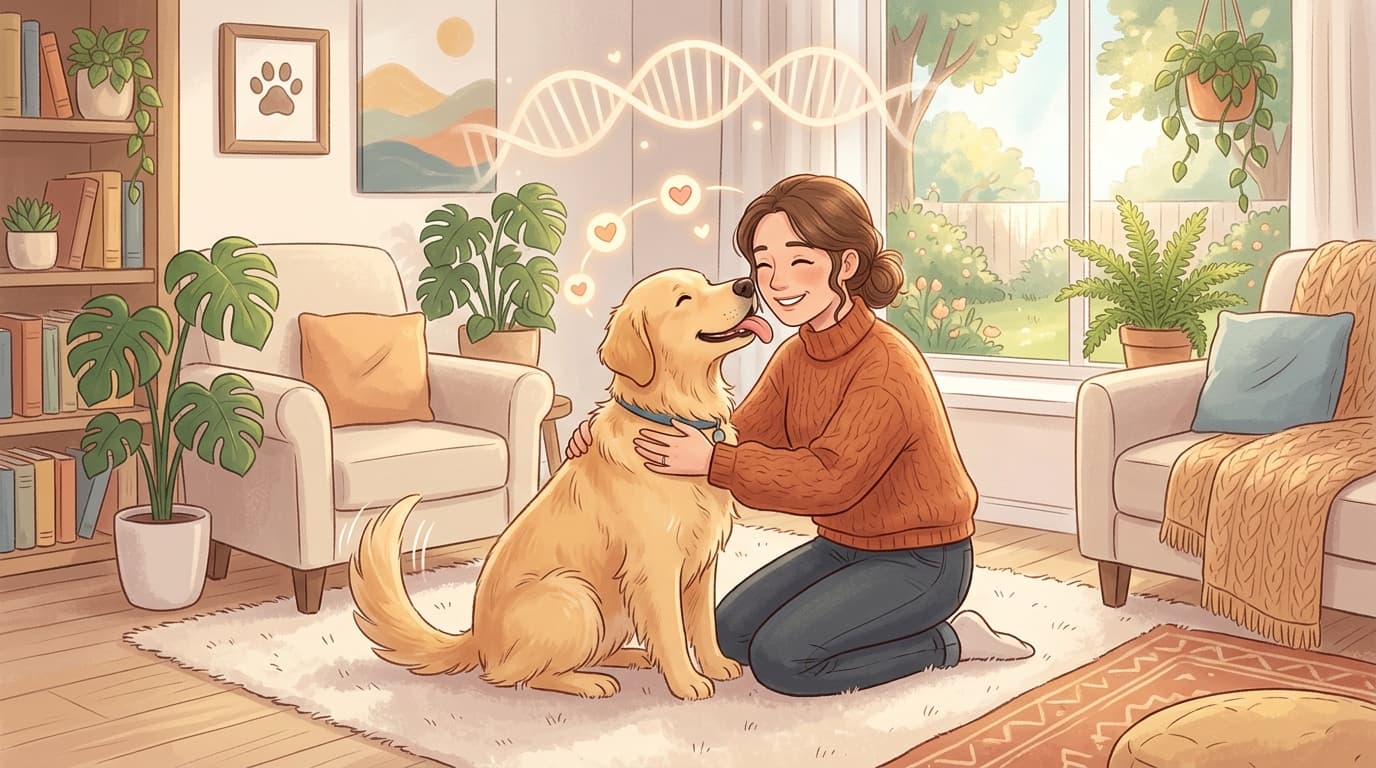
Most pet owners don’t realize that some of the big feelings you see in your dog—fear, sensitivity, even how quickly they learn—can have roots in the same kind of genetic wiring humans carry. A large genetic study in Golden Retrievers suggests the connection between dogs and people goes deeper than companionship.
The Golden Retriever DNA study, in plain English
Researchers at the University of Massachusetts looked at DNA from 1,343 Golden Retrievers and paired it with detailed behavior questionnaires. The goal wasn’t to label dogs as “good” or “bad”—it was to understand why one dog seems naturally confident while another is more nervous, reactive, or quick to pick up cues.
By combining genetics with real-world behavior reports, the team could spot patterns that don’t show up if you only look at training style or only look at DNA.
The key finding: gene regions linked to common dog behaviors
The study identified 12 regions of the canine genome associated with eight behavior traits. Think of traits that many dog owners recognize right away, such as:
- Fearfulness
- Aggression
- Learning ability
That doesn’t mean there’s a single “fear gene” or “aggression gene.” It’s more like a set of genetic influences that can tilt a dog toward certain tendencies—especially under stress, in new environments, or with limited socialization.
The jaw-dropping part: some of those regions overlap with human emotional traits
After identifying the dog genome regions tied to behavior, the researchers compared them with human genetic databases. Several of the same regions have been linked in people to traits such as:
- Depression-related traits
- Intelligence and cognitive functions
- Emotional regulation
If you’ve ever noticed your dog getting overwhelmed in busy places or becoming extra sensitive to tension in the house, this overlap makes intuitive sense. Dogs didn’t just learn to live near us—they evolved alongside us in ways that may have shaped how both species respond emotionally to the world.
Two genes that help explain the connection
A couple of specific genes highlighted in the findings make the dog-human overlap feel especially real.
PTPN1
In the Golden Retriever data, this gene showed an association with aggression-related behavior. In humans, it has been linked to cognitive functions and depressive disorders.
ROR1
In dogs, this gene appeared connected to learning. In humans, it has been associated with emotional response.
The takeaway isn’t that your dog is “destined” to behave a certain way. It’s that some of the building blocks influencing behavior can be surprisingly similar across species.
Why dogs and humans might share emotion genes at all
Dogs and humans have been connected for thousands of years. Over that time, domestication acted like a long, slow selection process.
Dogs that were better at living with people—reading human signals, staying socially flexible, responding to our environment—were more likely to thrive. Over generations, those traits didn’t just become habits; they became more common in the gene pool.
So yes, culture and training matter. But there’s also a genetic “history of partnership” written into dogs.
Genes aren’t destiny: environment decides what you actually see
The researchers emphasized an important point: genes can create predispositions, but the environment heavily influences how those predispositions show up.
- A dog with a tendency toward anxiety may never develop serious anxious behavior if they grow up with thoughtful socialization and a stable routine.
- A dog with high learning potential still needs practice, enrichment, and clear communication to truly shine.
This is why two dogs with similar genetics can look totally different in daily life—because their experiences shape how their traits express themselves.
What this means for you and your dog’s behavior
Understanding that some behaviors have a genetic component can change how you interpret your dog.
- Reactivity isn’t automatically “bad behavior.” It can be a dog’s nervous system running a little hotter.
- Shyness may be more than a confidence issue—it can be part of a biological tendency.
- Fast learning isn’t only about how you train; some dogs are simply primed to connect patterns quickly.
Instead of blaming your dog (or yourself), you can focus on what helps: better management, calmer introductions, more gradual training steps, and the right kind of stimulation.
A better way to see the bond
The connection between dogs and humans isn’t only emotional or cultural—it may be partly genetic too. When you start looking at behavior as a mix of predisposition and life experience, it becomes easier to meet your dog where they are and help them feel safe, understood, and capable.
Continue reading

7 Dog Body Language Signals Most Owners Miss (And What Your Dog Is Really Saying)
From play bows to doorway guarding, learn the dog body language signals that reveal trust, comfort, and connection.

Dog Body Language Signs of Love: 7 Little Moments That Mean “You’re My Person”
From the play bow at the door to sleeping pressed against you, these dog body language signs quietly prove how much your dog loves you.

Male Dogs vs Female Dogs: 5 Real Differences You’ll Notice at Home and on Walks
From pee-mail to leash pulling and rough play, here are 5 everyday ways male dogs tend to differ from females.