Why Dogs Bark at Night: 7 Common Causes (and What You Can Do About Them)
Dogs bark at night for real reasons—senses, boredom, anxiety, territory, discomfort, and more. Learn 7 causes and practical fixes.
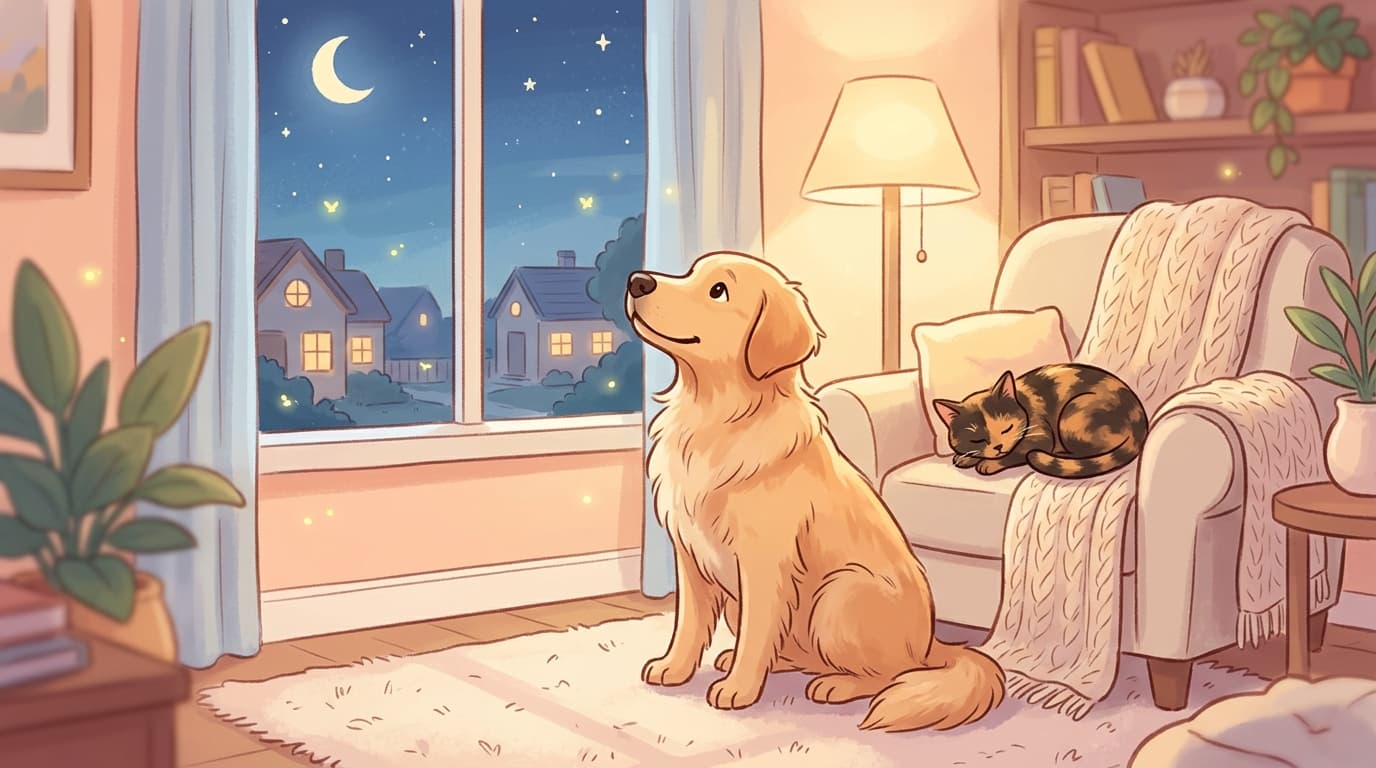
Your dog can hear a world you can’t—especially after dark. So when nighttime barking starts up in an otherwise quiet house, it’s usually not “for no reason.” It’s your dog reacting to something that feels real, urgent, or rewarding.
1) Dogs bark at night because their senses ramp up
Dogs are basically built for noticing things we miss. At night, your neighborhood gets quieter, which means small sounds carry farther—distant footsteps, a car door two streets over, a critter in the bushes, even subtle rustling outside.
If you’ve ever sat up thinking, “There’s nothing there,” while your dog stares at the window like a security guard, this is why. To your dog, that faint noise is information.
What helps: Close windows, use thicker curtains, and try a steady background sound (like a fan or white noise) to mask tiny outdoor noises.
2) Territorial instincts can kick in after dark
Many dogs feel more protective at night. The yard, the hallway, the front door—those are “their” zones, and barking is one of the main ways dogs say, “I hear you, and you’re not welcome.”
This is especially common if your dog sleeps near a window, the front door, or a fence line where they can hear movement.
What helps: Limit access to “patrol posts” at night (like the front window), and create a cozy sleeping spot in a quieter area of the home.
3) Boredom and leftover energy don’t disappear at bedtime
A dog who didn’t get enough exercise or enrichment during the day can turn into a night owl. Barking can be a release valve for pent-up energy—especially in young dogs, working breeds, and dogs who spend long hours without much to do.
Most pet owners don’t realize that mental stimulation counts just as much as physical exercise. A dog can come back from a walk and still be under-stimulated if they didn’t get to sniff, think, or engage.
What helps: Add a little more activity earlier in the day (or early evening), plus a brain task: short training sessions, food puzzles, or a sniffy walk where your dog sets the pace.