Why Your Dog Stares Into Your Eyes: The Oxytocin Bond Behind That Look
That intense dog eye contact can trigger an oxytocin “bond loop” in both of you—one reason your connection feels so strong.
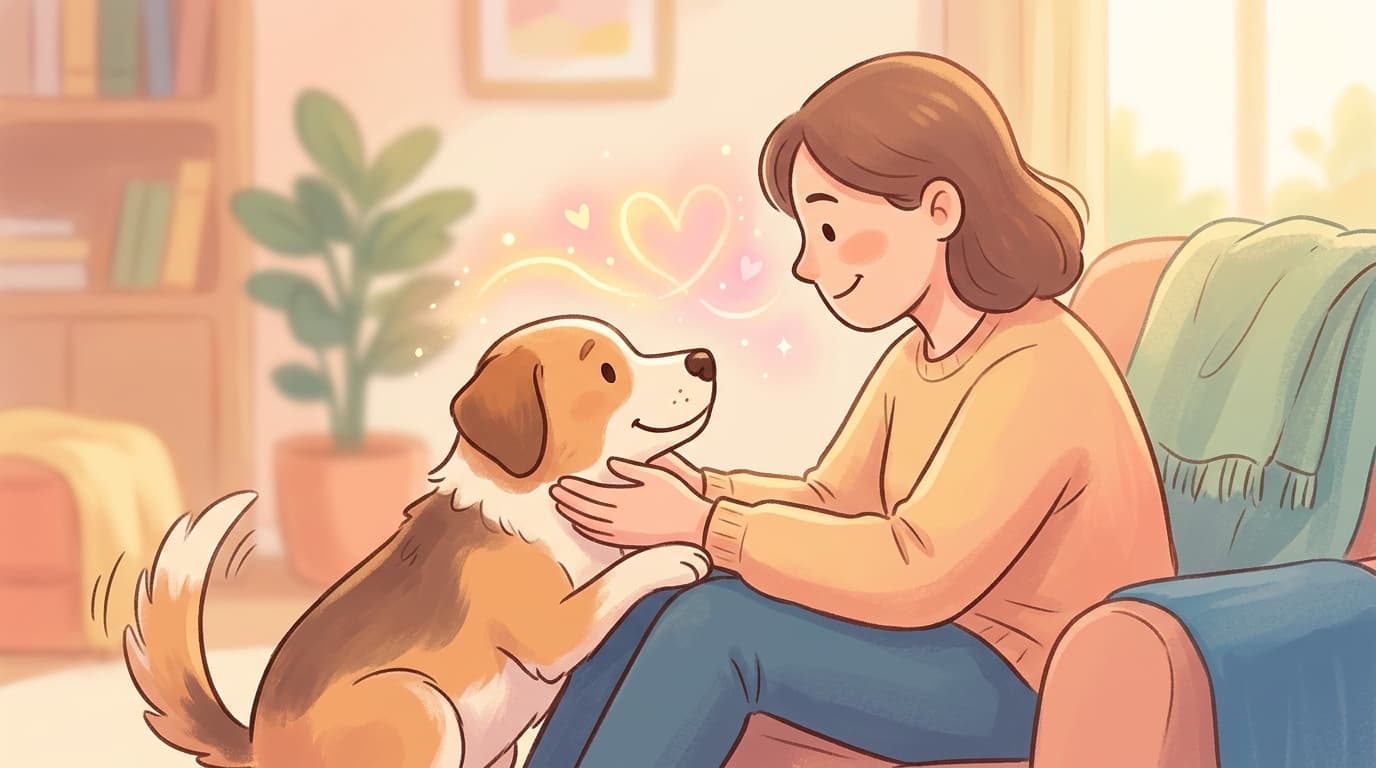
Your dog locks eyes with you and suddenly it feels like you’re the only two creatures in the room. It’s not always about treats or a walk—science suggests that dog eye contact can actually spark a bonding response in both of you.
Dog eye contact can trigger an “oxytocin bond loop”
Researchers have described something often called a positive oxytocin-gaze loop: when a dog and a human make warm, sustained eye contact, oxytocin levels can rise in both. Oxytocin is a brain chemical tied to attachment, trust, and nurturing behavior.
What’s fascinating is how this can become a self-reinforcing cycle. Eye contact boosts oxytocin, oxytocin makes you more likely to interact affectionately (petting, talking, staying close), and those friendly interactions can encourage your dog to look back at you even more. If you’ve ever noticed your dog staring at you and then leaning in for pets—or following you around afterward—this helps explain why the moment can feel so emotionally “sticky.”
Oxytocin doesn’t just happen to you—dogs respond to it too
In the same line of research, when dogs were given oxytocin, they tended to look at humans more. That matters because it suggests the bond isn’t one-sided or purely learned behavior.
In other words, your dog isn’t only staring because they’ve figured out it gets them what they want (though yes, dogs are smart). Their biology can be part of the story too, nudging them toward the kind of social connection that keeps the relationship close.
Why dogs do this (and wolves usually don’t)
One of the most telling comparisons is between dogs and human-raised wolves. Even when wolves are socialized by people, they typically don’t show the same pattern of mutual gaze that boosts oxytocin in humans.
That gap points to domestication as a major reason dog eye contact feels so different. Over thousands of years living alongside us, dogs developed communication habits that work well with human brains—things like sustained eye contact, sensitivity to our gestures, and responsiveness to our voice.