Is Your Dog Guarding You While You Sleep? 8 Nighttime Signs They’re Watching Over You
From sleeping facing the door to silent sound checks, these nighttime habits can mean your dog is keeping watch while you rest.
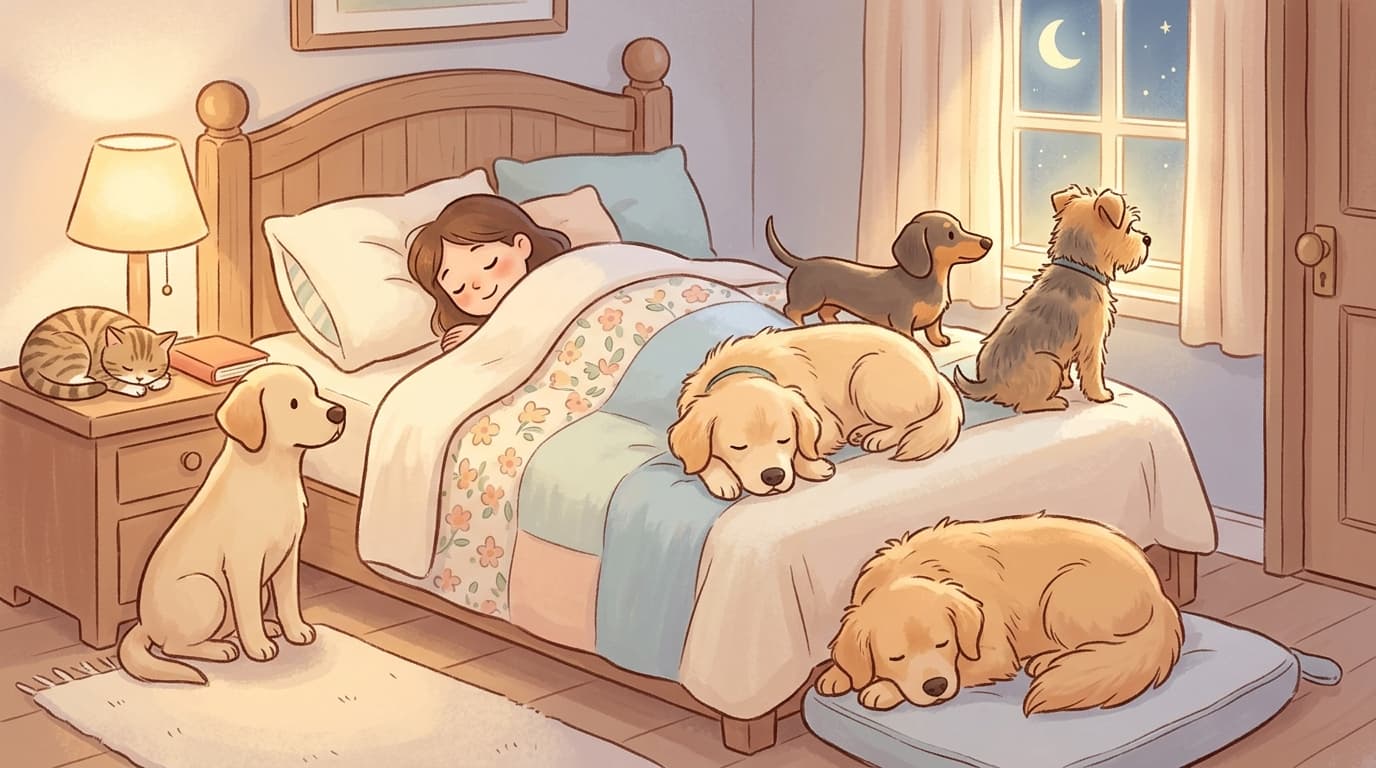
Some dogs conk out the second the lights go off. Others seem to treat bedtime like a shift at a security desk, even if they’re half-asleep. If you’ve ever noticed your dog popping one eye open at the tiniest noise, you’re not imagining things.
1) They sleep facing the door (or the hallway)
Where your dog points their body at night can be a clue to what they’re prioritizing. A lot of dogs choose a position that gives them a clear view of the bedroom door, the hallway, or the stairs.
It can look like a random preference—until you realize it’s a simple way to monitor the main “entry point” to your space. In your dog’s mind, keeping an eye on the route into the room is part of keeping the whole pack safe, including you.
2) They get up and follow you on nighttime bathroom trips
During the day, following you around can be plain old attachment (or curiosity about snacks). But at 2:00 a.m., it often feels different.
If you get up and your dog quietly trails behind you like you’re on a two-person patrol, they may be doing a mix of “I’m with you” and “I’m watching the house while you’re vulnerable.” The dark, the quiet, and unfamiliar little sounds can flip their brain into monitoring mode.
3) They react instantly to tiny sounds you barely notice
At night, the house changes. Pipes tick. Floorboards creak. A draft nudges a door. Something outside makes a faint scrape.
Your dog’s senses pick up details you’ll never register, and some dogs go from deep sleep to full alert in a second—head up, ears sharp, eyes fixed. If they stay still for a moment and seem to “listen with their whole body,” that’s not them being dramatic. That’s them running a quick threat assessment.
4) They angle their body between you and the sound
Most pet owners don’t realize how often dogs place themselves like a living buffer.
If your dog hears something and subtly shifts so they’re between you and the doorway, window, or hall, that’s a classic protective posture. They’re not necessarily expecting trouble—they’re positioning themselves just in case.