Is Your Dog Guarding You While You Sleep? 8 Nighttime Signs They’re Watching Over You
Some dogs conk out the second the lights go off. Others seem to treat bedtime like a shift at a security desk, even if they’re half-asleep. If you’ve ever noticed your dog popping one eye open at the tiniest noise, you’re not imagining things.
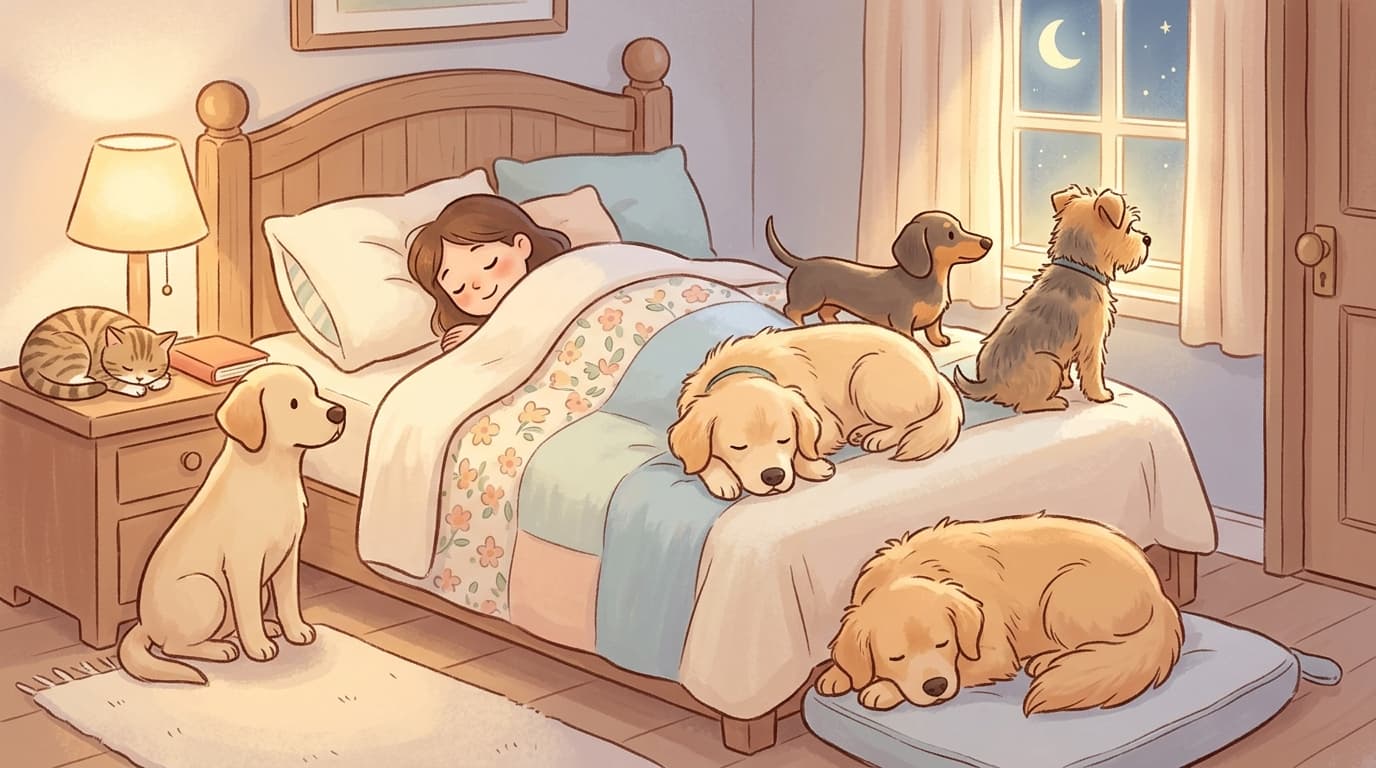
1) They sleep facing the door (or the hallway)
Where your dog points their body at night can be a clue to what they’re prioritizing. A lot of dogs choose a position that gives them a clear view of the bedroom door, the hallway, or the stairs.
It can look like a random preference—until you realize it’s a simple way to monitor the main “entry point” to your space. In your dog’s mind, keeping an eye on the route into the room is part of keeping the whole pack safe, including you.
2) They get up and follow you on nighttime bathroom trips
During the day, following you around can be plain old attachment (or curiosity about snacks). But at 2:00 a.m., it often feels different.
If you get up and your dog quietly trails behind you like you’re on a two-person patrol, they may be doing a mix of “I’m with you” and “I’m watching the house while you’re vulnerable.” The dark, the quiet, and unfamiliar little sounds can flip their brain into monitoring mode.
3) They react instantly to tiny sounds you barely notice
At night, the house changes. Pipes tick. Floorboards creak. A draft nudges a door. Something outside makes a faint scrape.
Your dog’s senses pick up details you’ll never register, and some dogs go from deep sleep to full alert in a second—head up, ears sharp, eyes fixed. If they stay still for a moment and seem to “listen with their whole body,” that’s not them being dramatic. That’s them running a quick threat assessment.
4) They angle their body between you and the sound
Most pet owners don’t realize how often dogs place themselves like a living buffer.
If your dog hears something and subtly shifts so they’re between you and the doorway, window, or hall, that’s a classic protective posture. They’re not necessarily expecting trouble—they’re positioning themselves just in case.
5) They sit motionless in a doorway like a sentry
Doorways are powerful spots in dog logic. From a single threshold, they can watch multiple areas at once.
So if you wander out at night and find your dog planted in a doorway, quietly staring into the hall, it may be strategic. They can keep you in view while also controlling the “approach lane” into the room.
6) They do a pre-bed “perimeter check” before settling
You know that routine where your dog doesn’t immediately lie down—sniffs around, circles, glances toward the door, listens for a beat, then finally sighs and curls up?
That can be more than a bedtime quirk. For many dogs, it’s a quick scan of the environment: what’s changed, what smells new, where the exit is, and whether everything feels normal. At night, when quiet makes every little sound feel bigger, this checking behavior can ramp up.
7) They choose a sleep spot with a clear vantage point
During the day, your dog might nap wherever your scent is strongest. At night, some dogs switch priorities from cozy to coverage.
Common “night watch” spots include:
- The foot of the bed
- The bedroom threshold
- The top of the stairs
- A slightly elevated place like an ottoman or bench for a better line of sight
If your dog consistently picks a spot that lets them see you and the main route into the room, they may be balancing rest with readiness.
8) They sleep with their back to you (and the door in view)
This one surprises people. You’d think a dog watching over you would face you.
But often, a dog lying with their back toward you and their eyes toward the doorway isn’t ignoring you—they’re covering the approach. Turning their back can actually be a trust signal, like they’re saying, “You’re safe with me. I’ll watch the part you can’t.”
A bonus clue: they wake you gently when something feels “off”
Some dogs wake you like a marching band. Others wake you with a soft nudge, a quiet whine, or a light paw—especially if something is unusual.
If those gentle wake-ups seem to line up with odd noises outside, a different morning routine, or you sleeping later than normal, your dog may be giving you a low-key alert rather than demanding breakfast.
The takeaway
If your dog does even a few of these nighttime habits, it often points to a mix of attachment, awareness, and a natural guarding instinct. They’re not trying to be the hero of the house—they’re just doing what dogs do best: keeping an eye on their favorite human while the world goes quiet.
Meta description: From sleeping facing the door to silent sound checks, these nighttime habits can mean your dog is keeping watch while you rest.
Continue reading

16 Five-Second Habits That Make Your Dog Feel Truly Loved (No Treats Required)
These 16 tiny, five-second habits help your dog feel safe, seen, and deeply loved—without extra toys, treats, or long walks.

Why Your Dog Licks You Every Day (And What It Really Means)
Daily dog licking isn’t about salt or snacks. It’s bonding, comfort, and pack love—plus 14 other signs your dog adores you.

Everyday Habits That Hurt Your Dog’s Feelings (and What to Do Instead)
Small daily habits can quietly stress your dog. Learn what hurts your dog’s feelings—and the simple swaps that rebuild trust.