Serval Cats as Pets: The Real-Life Pros, Cons, and What Most People Don’t Expect
Thinking about a serval cat as a pet? Learn what they’re really like at home—space needs, behavior, costs, and legal limits.
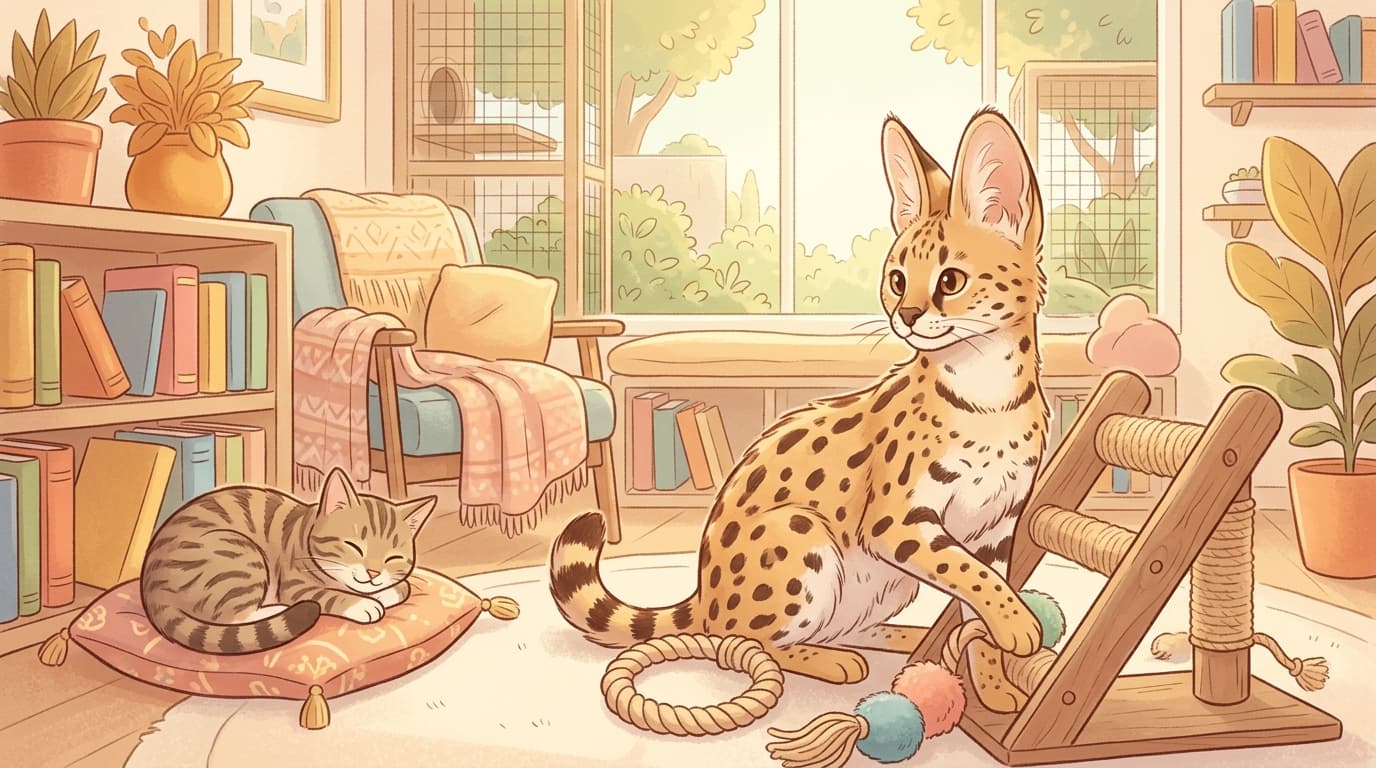
Serval cats look like living pieces of wildlife art—tall, spotted, and unbelievably athletic. But a serval cat as a pet isn’t “a bigger house cat”… it’s a wild animal living in your home. And that difference shows up fast.
What a serval cat actually is (and why that matters)
A serval is a wild African feline species, not a domesticated cat breed. Domestic cats have spent thousands of years adapting to life alongside people; servals haven’t. They still run on instinct first—hunting drive, territorial behavior, and quick defensive reactions.
Physically, they’re built for catching prey: long legs, big ears, and serious power. They can jump impressively high to grab moving targets, which is amazing to watch… and also a clue that your living room isn’t exactly designed for them.
Serval cats as pets need way more space than most homes can give
Most pet owners don’t realize how much territory a serval expects to have. In the wild, they roam and hunt. In a home, that need doesn’t vanish—it turns into restlessness, stress, and problem behavior if the environment is too small or boring.
If you’ve ever noticed a bored indoor cat getting destructive, imagine that same frustration in a much stronger, faster animal. Servals typically need:
- Large, secure space to move and explore
- Constant mental stimulation
- Plenty of vertical climbing options
- A safe, reinforced outdoor enclosure (not just “supervised backyard time”)
Without enough enrichment, servals may act out with intense scratching, spraying, or rough behavior that’s simply beyond what most households can manage.
Their behavior can be unpredictable—because it’s instinct-driven
Some servals do bond with people, and you might see clips online that make them look like affectionate, oversized cats. Real life is more complicated.
Servals aren’t wired to be calm lap pets. Their responses are guided by instinct, not a domesticated temperament. Things that seem minor to you—sudden movements, loud noises, new visitors—can trigger a defensive reaction.
Even in homes where a serval is “well socialized,” play can get intense quickly. Their prey drive and strength mean a playful swat or bite can cause real injury, especially if they get overstimulated.
Legal restrictions and ethical concerns come with the territory
Before anyone falls in love with the idea of owning a serval, the legal side needs to be crystal clear. Rules vary widely depending on where you live. Some places ban servals outright, others require permits, and some have strict housing and safety requirements.
Then there’s the ethical side. Many conservation-minded experts argue that wild animals belong in protected habitats or accredited wildlife facilities—not typical homes. Owning a wild cat isn’t just a lifestyle choice; it raises bigger questions about breeding and keeping wildlife for private use.
The cost of a serval cat as a pet is much higher than people expect
Even if you can legally own one and provide the right space, servals are expensive long-term.
Costs often include:
- Specialized diet needs (not a standard cat food routine)
- Reinforced living areas and secure enclosures
- Finding an exotic animal veterinarian (not always available locally)
- Medical care that can be harder to access and more costly than typical pet care
A lot of people budget like they’re getting a fancy cat. In reality, you’re budgeting for a wild species with specialized needs.
Who a serval cat as a pet might fit—and who it won’t
A serval may work for a very small group of people: those with legal permission, deep experience with wild animal behavior, and the ability to provide large, secure space and constant enrichment.
A serval is a poor match if you want a predictable, affectionate pet, live in an apartment or small home, or expect domestic-cat manners.
Want the “wild look” without the wild reality?
In many cases, people drawn to servals are really craving that sleek, exotic appearance. If that’s you, a domestic breed with a wild vibe can be a more realistic fit for home life—cats like Bengals or Savannahs are often on that shortlist.
Owning a serval cat as a pet isn’t about having a cooler version of a house cat. It’s about choosing to live with a powerful, instinct-driven wild animal—and making your entire lifestyle revolve around meeting needs most homes were never built to handle.
Continue reading

Choosing a Cat by Coat Color: What You Should Know Before You Adopt
Your cat’s coat color can hint at temperament and care needs. Here’s how orange, black, white, tabby, tuxedo and more often differ.

Burmilla Cats: 5 Traits That Make This Shimmery Breed So Easy to Love
Meet the Burmilla cat: a shimmering coat, emerald eyes, a gentle voice, and a perfect mix of playful and calm.

What Your Cat Has Been Waiting for All Along: 6 Small Changes That Build Real Trust
Your cat isn’t asking for more toys—just a few daily habits that make them feel safe, understood, and closer to you.