Your cat might be living in your home every day while quietly wishing you’d do a few simple things differently. Not expensive things. Not “big gestures.” Just small choices that tell your cat, over and over, that you’re safe to be around.
If you’ve ever noticed your cat hiding more than you’d expect, flinching at a quick pet, or acting “aloof” for no obvious reason, this is often the missing piece: cats stop asking for what they need when they learn it won’t work.
Most pet owners don’t realize how strongly cats crave height. In a cat’s mind, being up high isn’t about mischief—it’s about security and control. From above, they can watch the room, avoid surprises, and relax without worrying about something sneaking up behind them.
That’s why cats head for the top of the fridge, the highest shelf, or the back of the couch. And it’s also why some cats hide under beds or behind furniture: not because they prefer low spaces, but because they don’t have a safe “up.”
You don’t need a fancy setup. A tall cat tree near a window, a sturdy wall shelf, or even clearing the top of a bookcase and adding a non-slip blanket can completely change how your cat feels in your home. When a cat has a reliable lookout spot, you’ll often see less hiding and more calm observing.
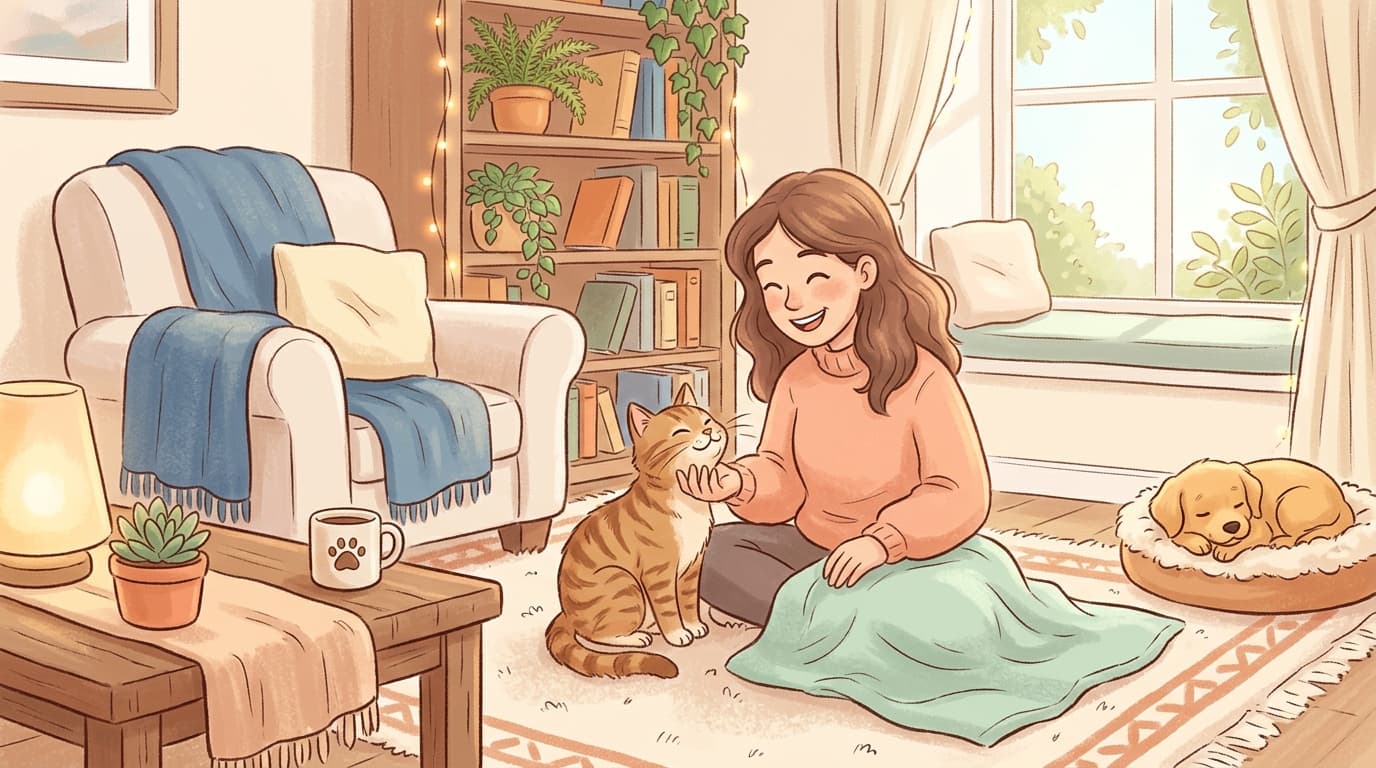
Cats don’t experience affection the same way many dogs do. A lot of cats need to choose the moment, the place, and the duration of touch for it to feel good.
So what does “asking” look like?
- Head-butting or rubbing their face against your hand
- Walking up slowly with their tail upright (sometimes with a tiny quiver at the tip)
- Curling up on your lap without you placing them there
What many of us do instead is reach out because we feel affectionate—and when a cat leans away, ducks their head, or walks off, we take it personally or assume they’re moody. But to your cat, repeated unwanted touch can make you feel unpredictable. And unpredictability is the fastest way to drain trust.
The hardest part is doing nothing. Letting your cat pass by without grabbing a quick pet. Keeping your hand still even when you want to reach out. Oddly enough, that’s often when cats start coming to you more—because you’ve become someone who respects their “yes” and their “no.”
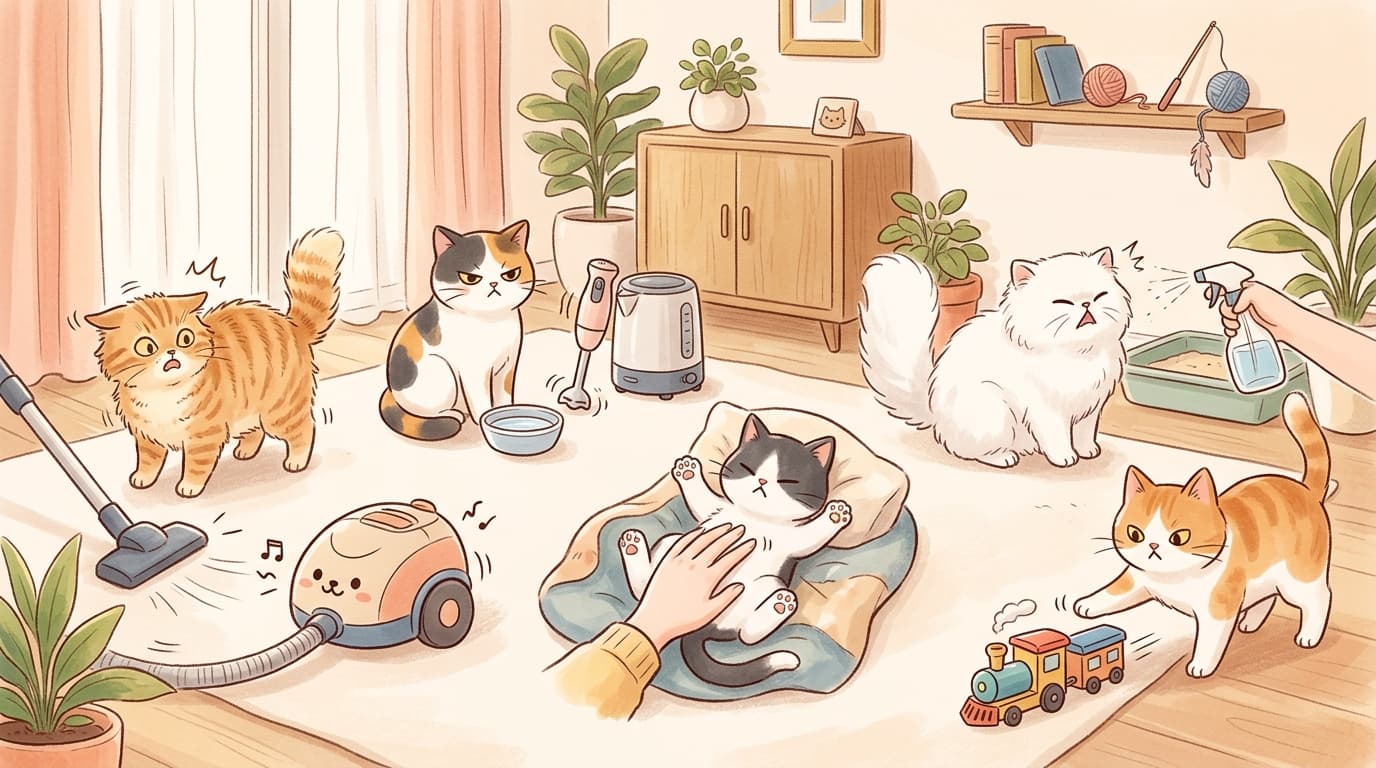
Your cat spends a lot of life looking up at you. From their perspective, you’re a huge creature who moves fast, makes loud noises, and towers over them. Even if you’re gentle, your size alone can feel intimidating.
Try this: the next time your cat is relaxing in the living room, sit on the floor a few feet away. Don’t call them. Don’t reach. Just exist there quietly.
Many cats soften almost immediately. Some will approach out of curiosity. Others will simply settle deeper into relaxation because, for once, you’re not a looming figure they need to monitor. This is especially powerful for shy cats or cats who are new to your home.
To a cat, scent is information. It’s how they “read” what’s happening: who you are right now, where you’ve been, whether you’ve been near another animal, and whether anything feels off.
When you go straight for the pet without offering your hand to sniff, it can feel intrusive—like someone stepping into your space with zero warning.
A simple habit helps a lot:
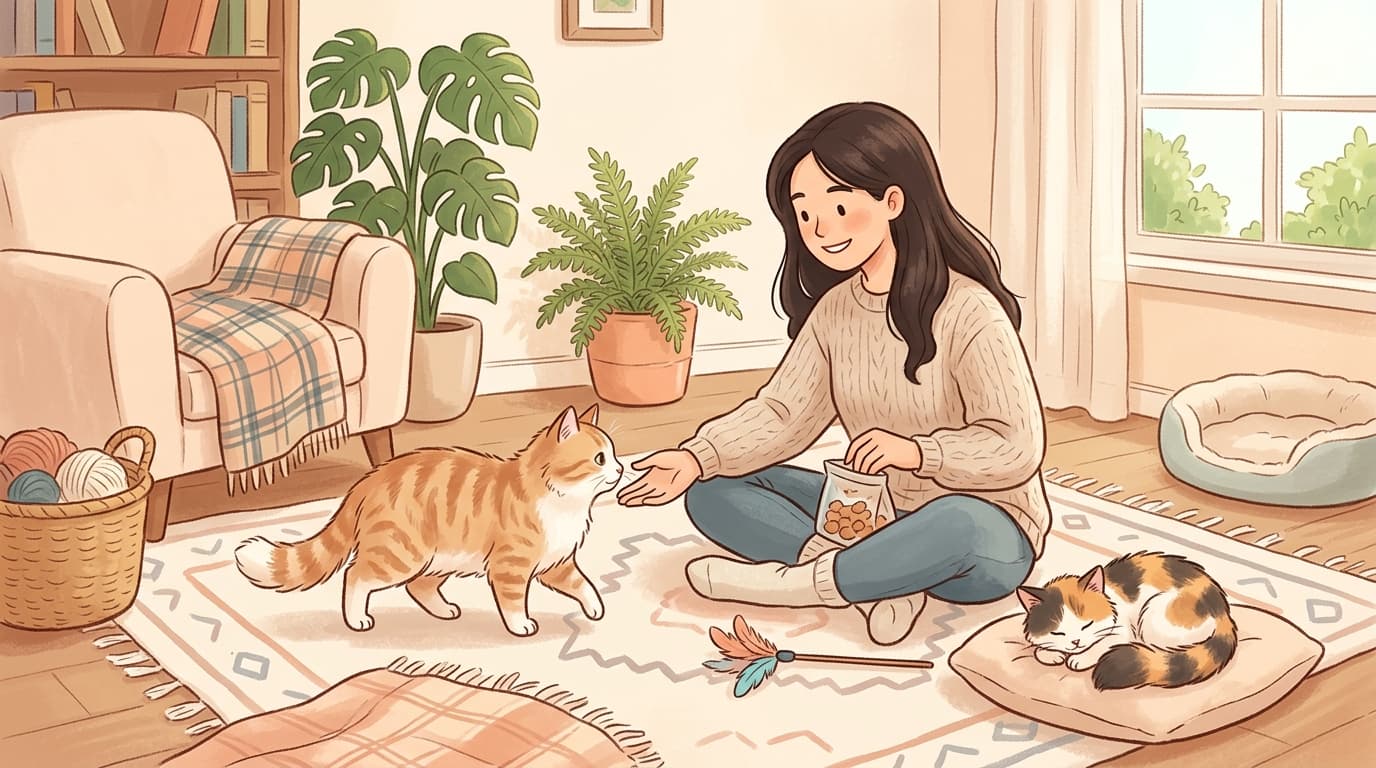
- Offer your hand near (not over) your cat
- Let them come forward and sniff
- If they rub their cheek or forehead into you, that’s your green light
- If they turn away, pause and respect it
When your cat learns they can decline contact without you pushing it, they often become more willing to seek contact on their own.
Cats don’t need a wall clock to know “it’s time.” They live by patterns.
Feeding at roughly the same time, playing around the same part of the day, having a familiar evening rhythm—these things create an invisible map your cat can rely on. And reliability is calming.
When life becomes random (meals late, playtime sporadic, sudden changes in your habits), some cats become extra alert. Not “bad.” Just watchful. A cat who’s busy scanning for what might happen next has less emotional space to be cuddly, playful, or relaxed.
A predictable routine lowers that guard. It tells your cat: the world makes sense here.
Adult cats don’t typically meow to each other the way they meow to humans. Meowing is, in many cases, a communication style cats develop specifically for us.
That means your cat is already trying to “talk” to you—at the door when you get home, in the kitchen while you cook, in the hallway when they follow you to bed. And a lot of people never respond.
Try greeting your cat in the morning. Narrate what you’re doing while you make coffee. Answer their meow with a few words—or even a gentle imitation of their sound. Cats recognize your voice and can tell when you’re speaking to them versus talking on the phone.
It might feel silly at first, but to your cat it’s social connection. It’s you participating in the relationship.
Your cat isn’t asking you to get everything right. They’re asking you to see them for what they are: independent, yes, but deeply social in their own way.
Give them height, choice, predictability, and a little conversation, and you may be surprised how quickly your cat starts choosing you back.