Your Cat Doesn’t See You as Human: What You Really Mean to Them
Your cat doesn’t see a “human owner.” Learn what you represent to your cat—and the small signals that build real trust.
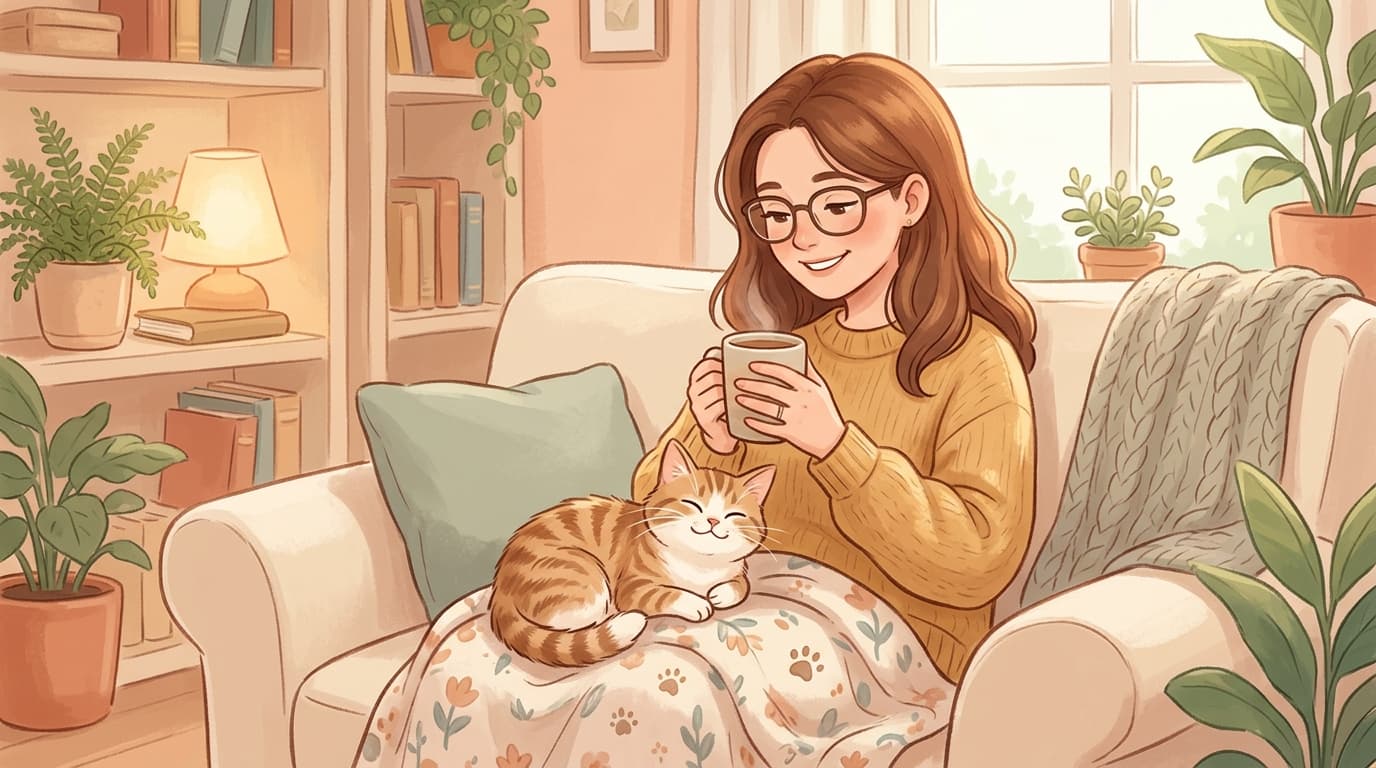
Your cat looks at you every day with that steady, unreadable stare—and most people assume it’s judgment or pure indifference. But in your cat’s mind, you’re not a “person” in the way you think you are. You’re something far more personal.
Your cat doesn’t see a human—your cat sees family
Cats get labeled as aloof, but their attachment style is just quieter than a dog’s. Instead of loud greetings and constant checking-in, cats tend to bond selectively and deeply. If you’re “their person,” you’re not simply the food source—you’re part of their inner circle.
Think of it this way: your home isn’t just your home. In your cat’s brain, it’s a territory with familiar paths, safe zones, and important members. You’re one of those members. Maybe a big, clumsy one… but still essential.
That’s why your cat does things that look random until you understand the logic:
- Rubbing against your legs isn’t just affection—it’s also a way to blend scents and reinforce “we belong together.”
- Bringing you a toy (or, unfortunately, a real “gift”) can be your cat’s version of sharing resources with a trusted companion.
- Sitting near you when you’re down isn’t your cat “trying to get something.” It’s closeness, feline-style.
Most pet owners don’t realize cats weren’t shaped by domestication in quite the same way dogs were. Cats moved in close to humans largely by choice, learned our routines, and decided certain humans were worth sticking with.
Your scent is comfort—so the laundry pile makes perfect sense
If you’ve ever found your cat curled up on your worn hoodie or pressing their face into your shoes the second you take them off, it can feel… gross. In cat logic, it’s the opposite.
Cats experience the world through scent in a way we can’t compete with. Your smell is one of the strongest “safe” signals your cat knows. When you’re gone, your cat doesn’t just miss you emotionally—they miss the stability your presence brings to the territory.
That’s why a shirt, pillow, or jacket you’ve used isn’t just an object. To your cat, it’s a piece of you. Familiar. Reassuring. Proof that you exist and you come back.
Research on cat stress has found that access to an owner’s scent during absences can be calming, lowering signs of anxiety compared to cats without that familiar smell. So yes—your cat choosing your dirty laundry is weirdly sweet.
Your cat reads your emotions better than you think
Cats may not mirror your feelings as obviously as dogs, but they’re paying attention. Your cat watches your face, listens to your voice, and tracks your energy.
Studies suggest cats can combine cues—like facial expression and tone of voice—to interpret human emotion. That means your cat isn’t only reacting to what you say, but how you say it.
And when your signals don’t match—like you’re smiling but your voice is tense—your cat often notices the mismatch. That’s when you might see your cat pause, stay alert, or give you space.
If your cat seems to “know” when you’re having a rough day, you’re not imagining it. They’re not reading your mind. They’re reading you.
Your cat’s “hello” is subtle, but it matters
A lot of people think cats don’t greet their humans. They do—it’s just not a full-body celebration.
When you come home, your cat might watch from a distance, stretch slowly, approach calmly, rub your legs, or offer a soft meow and then wander off like they didn’t care. Underneath that cool act, your cat is doing something important: relaxing.
While you’re gone, many cats stay more vigilant about their environment. Your return—plus the familiar mix of scents and routine—helps your cat settle back into “all is normal.”
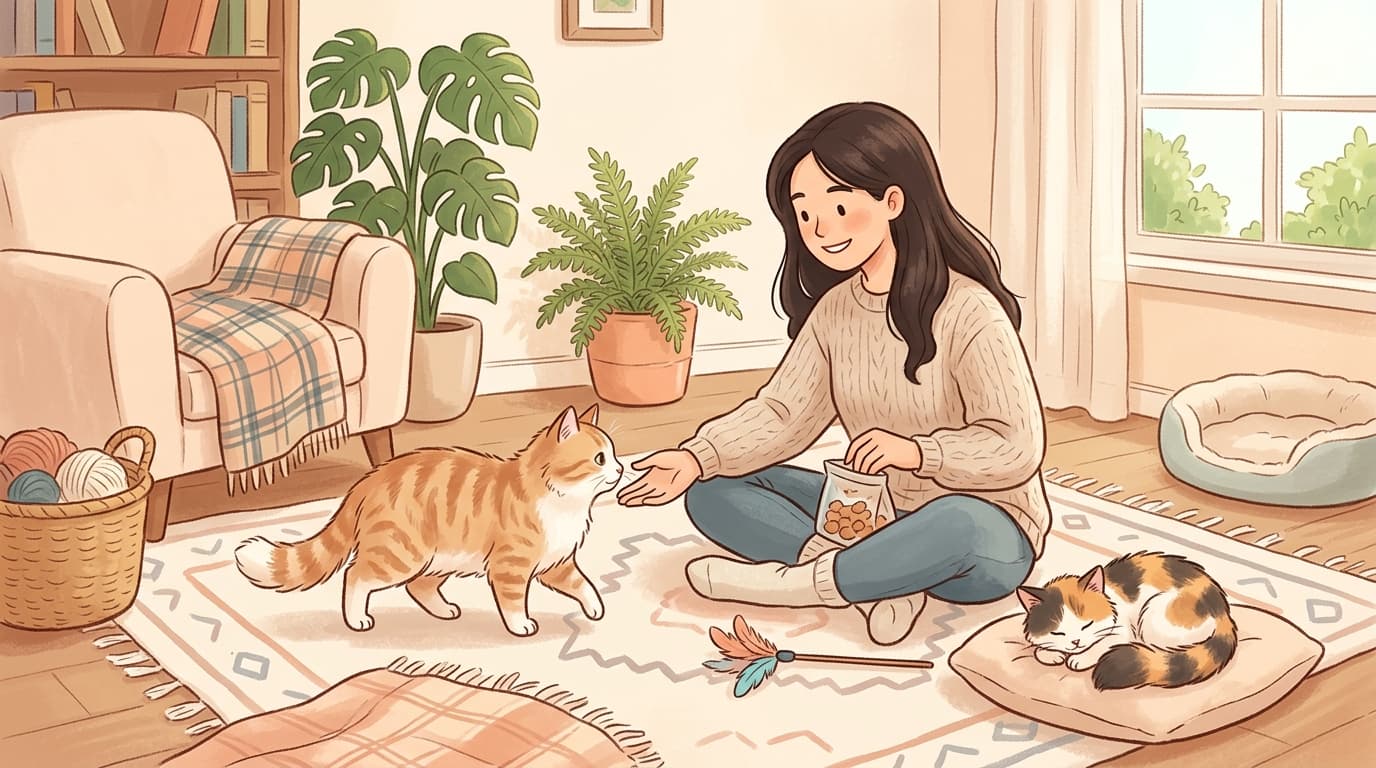
If you want to strengthen your bond, keep the reunion calm and predictable:
- Get to your cat’s level
- Offer your hand for a quick sniff
- Use a soft voice
- Give a few gentle head or cheek strokes (if your cat likes that)
Your cat doesn’t need fanfare. Your cat wants steadiness.
Your cat may choose you over food (yes, really)
Cats love food. We all know the sound of a can opening can summon a cat from another dimension.
But interestingly, research on cat attachment has shown that many cats will choose interaction with their human over a food reward in certain situations. Not every cat, not every time—but enough to challenge the “cats only love snacks” myth.
To your cat, you represent more than dinner:
- Safety
- Warmth
- Predictability
- Gentle touch
- A familiar voice
That’s why your presence can matter even when the bowl is full.
Your cat uses you as a “safe base” in scary moments
When something unfamiliar happens—a loud noise, a new visitor, a strange object—your cat often checks you before deciding what to do. This is a real behavior pattern sometimes called social referencing: looking to a trusted individual to judge whether something is safe.
And there’s another powerful idea here: the secure base effect. When your cat knows you’re nearby, they may explore more and act braver—not because you’re doing anything dramatic, but because your presence changes how safe the situation feels.
So if your cat hides behind you, peeks around your legs, or looks at your face before investigating something new, that’s not weakness. It’s trust.
The slow blink: your cat’s quiet “I love you”
That slow, dreamy eye-close your cat gives you from across the room isn’t just sleepiness. In cat communication, a slow blink is a big deal.
Closing their eyes in front of someone is vulnerability. A cat wouldn’t do that around a threat. When your cat slow-blinks at you, it’s often a sign of comfort and confidence—basically, “I feel safe with you.”
Try it back:
- Look at your cat softly (don’t stare intensely)
- Slowly close your eyes
- Pause for a beat
- Open them gently
Many cats respond by slow-blinking back or visibly relaxing—softer posture, calmer breathing, less tension.
The takeaway: you’re not just the owner—you’re the anchor
Your cat doesn’t need you to be perfect. What your cat wants is to feel secure, understood, and included in the quiet daily rhythm of home. Notice the slow blinks, the scent-seeking, the gentle greetings—and answer in small, calm ways.
Over time, those tiny moments add up to something huge: a cat who doesn’t just live in your house, but chooses you as family.
Continue reading

Why Your Cat Walks on You at Night (And What They’re Really Trying to Tell You)
If your cat steps on your chest at night, it’s not random. Here are the real reasons—and how to respond without encouraging 5 a.m. wakeups.

Choosing a Cat by Coat Color: What You Should Know Before You Adopt
Your cat’s coat color can hint at temperament and care needs. Here’s how orange, black, white, tabby, tuxedo and more often differ.

Burmilla Cats: 5 Traits That Make This Shimmery Breed So Easy to Love
Meet the Burmilla cat: a shimmering coat, emerald eyes, a gentle voice, and a perfect mix of playful and calm.