Why Your Cat Suddenly Stops Sleeping With You (And What They’ve Been Saying All Along)
Cats don’t share your bed just for warmth. Learn what it means, what sleep positions say, and why a sudden change deserves attention.
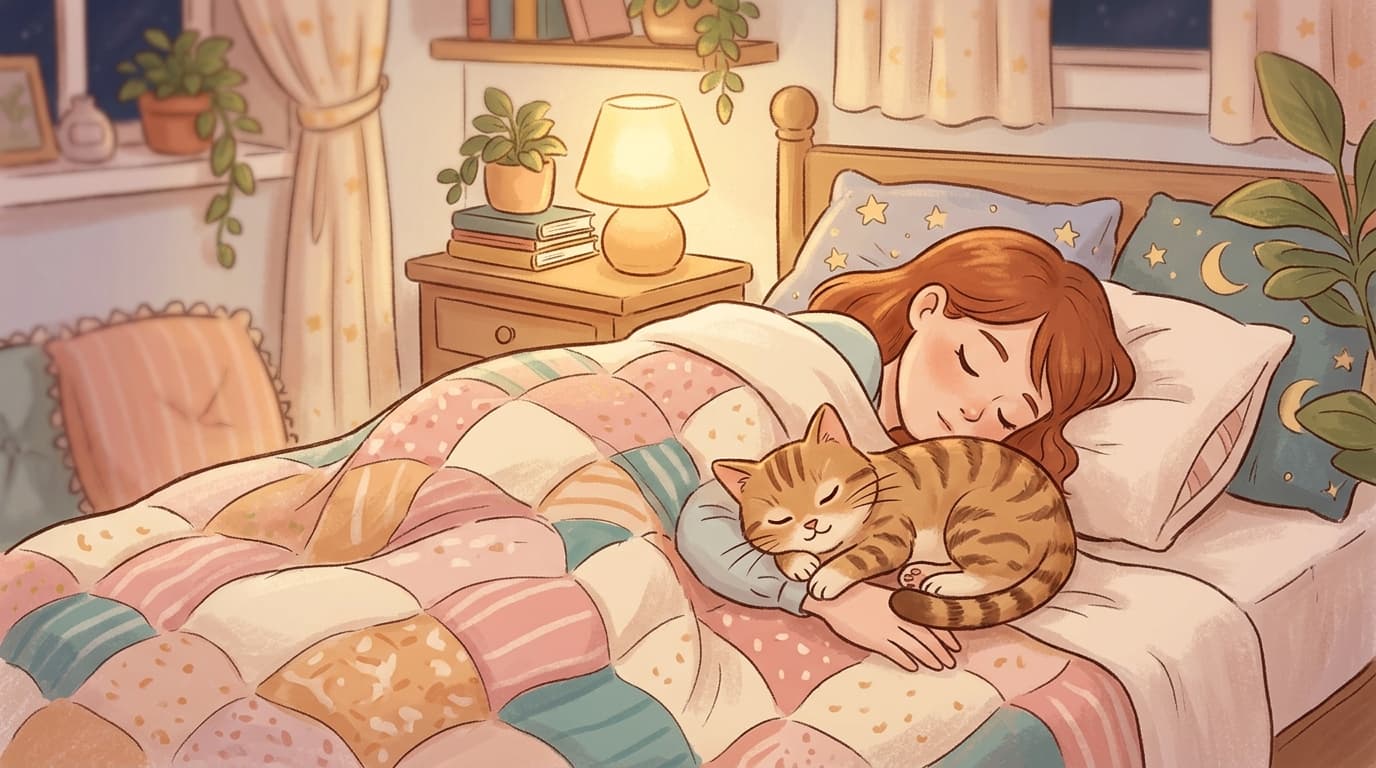
Your cat choosing to sleep beside you isn’t a cute accident—it’s one of the most emotionally loaded things they can do. And if they suddenly stop, it can feel weirdly personal, even if you don’t realize how much meaning that little nighttime routine held.
Sleeping with you isn’t about warmth (your cat has options)
Most pet owners assume bed-sharing is simple: you’re warm, your cat is cold, end of story. But cats are basically heat-seeking geniuses. They can find a sunny patch, a recently used laptop, a radiator, or a pile of fresh laundry without any help from you.
So if your cat keeps choosing your bed night after night, it’s usually because sleep is when they’re most vulnerable. Instinct tells a cat to rest somewhere hidden and safe. Curling up next to a human—someone much larger, louder, and unpredictable by “cat logic”—only happens when your cat feels deeply secure with you.
Your cat is creating a shared “family scent”
If you’ve ever noticed your cat rubbing their face, head, or body against you right before settling down, that’s not random affection. Cats have scent glands on their cheeks, forehead, and near the base of the tail. Rubbing deposits their scent on you.
But the sweet part is what happens next: by sleeping pressed close, your cat helps blend your scents together into a shared smell. In cat social groups, a common scent is one way they recognize who belongs. It’s like your cat is quietly reinforcing, “You’re one of mine.”
It also explains why your cat may sniff you intensely when you come home from somewhere new. To them, you smell “off,” like the shared scent got diluted—and bedtime cuddling can be part of resetting that familiar, comforting identity.
Your cat may see themselves as your nighttime lookout
Where your cat sleeps on the bed often isn’t a coincidence. Some cats post up near your head, others choose your feet, and some wedge themselves against your back.
That positioning can be surprisingly strategic. Even the most pampered indoor cat still has ancient instincts. In group-living cat communities, someone staying alert while others rest had real survival value. Your cat may not be able to “protect” you in the human sense, but in their mind, they’ve taken a shift guarding the space you share.
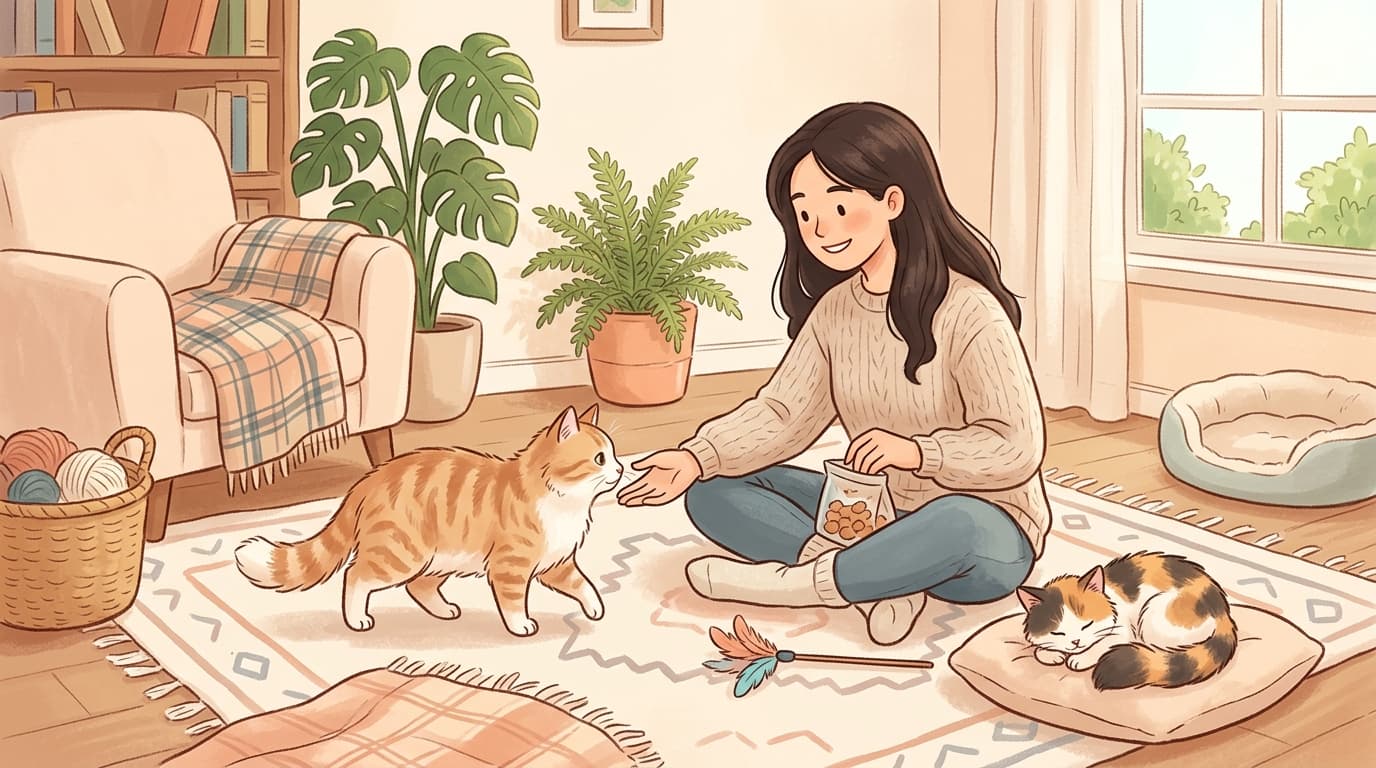
Want a clue? Notice what direction they face. A cat oriented toward the bedroom door may be “watching the entrance,” while a cat near your pillow may be choosing the spot they consider most important to keep safe.
Cat sleep positions are messages (yes, even the butt-to-face one)
Cats communicate a lot through how they rest. Here are a few common bed positions and what they often mean.
The tight curled-up ball
This is the classic self-protective posture: belly tucked, paws hidden, vital organs guarded. If your cat sleeps near you like this, it can mean they feel safe being close—but they’re still keeping one layer of caution. Think of it as trust, with a security blanket.
The full-body sprawl (sometimes belly-up)
A stretched-out cat, especially one exposing their belly, is displaying maximum comfort. That’s your cat basically turning the “danger radar” way down because they believe the environment—meaning you and the room you share—is safe.
Sleeping with their back to you
Some people take this as a snub. In cat language, it’s often the opposite. Turning their back can mean your cat trusts you so much they don’t feel the need to keep an eye on you.
Full contact, no space at all
The cat who insists on being glued to you isn’t necessarily “needy.” Often, it’s simply the strongest version of closeness they know how to show—choosing connection over personal space, even if it means folding themselves into an awkward little shape.
Your cat adjusts their schedule just to match yours
Cats are naturally most active around dawn and dusk. That’s the rhythm their bodies are built for.
And yet, bonded cats often shift their daily patterns to line up with their people—waking when you wake, settling when you settle, and hanging around when you’re most available. Most pet owners don’t realize how big that is: your cat is bending their instincts to spend more time in your orbit.
That’s why some cats appear right before your alarm goes off or meet you at the door like they’ve been tracking your timing all day.
Your cat can sense stress before you say a word
Ever had a rough day and noticed your cat sticking closer than usual? Cats pick up on subtle changes in your body and behavior—how you move, how you breathe, and even shifts in your scent.
Sleeping near you gives your cat a front-row seat to your baseline: your breathing patterns, restlessness, and general energy. Over time, your cat learns what “normal you” feels like, so they can react quickly when something seems off.
Why a cat suddenly stops sleeping with you
If your cat has slept with you for months (or years) and then abruptly quits, don’t write it off as them being moody. Cats love routine. A sudden break in a major habit is often your cat communicating that something changed.
Here are common reasons:
1) Physical discomfort
Pain, illness, or general discomfort can make a cat seek solitude. Cats are wired to hide vulnerability when they don’t feel well, so pulling away can be a red flag—especially if it’s paired with other subtle changes (less appetite, less grooming, unusual hiding).
2) Household changes
A new pet, a new person in the home, or even a shift in your daily schedule can disrupt your cat’s sense of safety. What feels small to you can feel huge to a cat who measures life in territory, predictability, and familiar smells.
3) A negative association with the bedroom
A loud noise, a conflict, a scare, or even one bad surprise while they were resting can make a cat decide the bed (or the room) isn’t a great place to relax anymore. Cats remember what made them feel unsafe and will quietly avoid it.
Helping your cat feel safe enough to come back
Start by observing, not forcing. Pay attention to what else changed around the same time: routines, people, pets, noises, or your cat’s behavior and energy. If your cat seems physically “off,” it’s worth checking that angle sooner rather than later.
In the meantime, make the bedroom feel predictable again—calm evenings, familiar bedding, and gentle invitations instead of grabbing or trapping. The goal is to rebuild the feeling your cat had when they first chose your bed: “I can fully relax here.”
Your cat sleeping with you was never a small thing. If they return, it’s not just a habit coming back—it’s trust finding its way home.
Continue reading

Why Your Cat Walks on You at Night (And What They’re Really Trying to Tell You)
If your cat steps on your chest at night, it’s not random. Here are the real reasons—and how to respond without encouraging 5 a.m. wakeups.

Choosing a Cat by Coat Color: What You Should Know Before You Adopt
Your cat’s coat color can hint at temperament and care needs. Here’s how orange, black, white, tabby, tuxedo and more often differ.

Burmilla Cats: 5 Traits That Make This Shimmery Breed So Easy to Love
Meet the Burmilla cat: a shimmering coat, emerald eyes, a gentle voice, and a perfect mix of playful and calm.