Why Your Dog Steals Your Seat: The Real Reasons Behind That “Couch Theft”
Your dog isn’t being rude when they take your spot. Here are the scent, comfort, and attachment reasons dogs “steal” your seat.
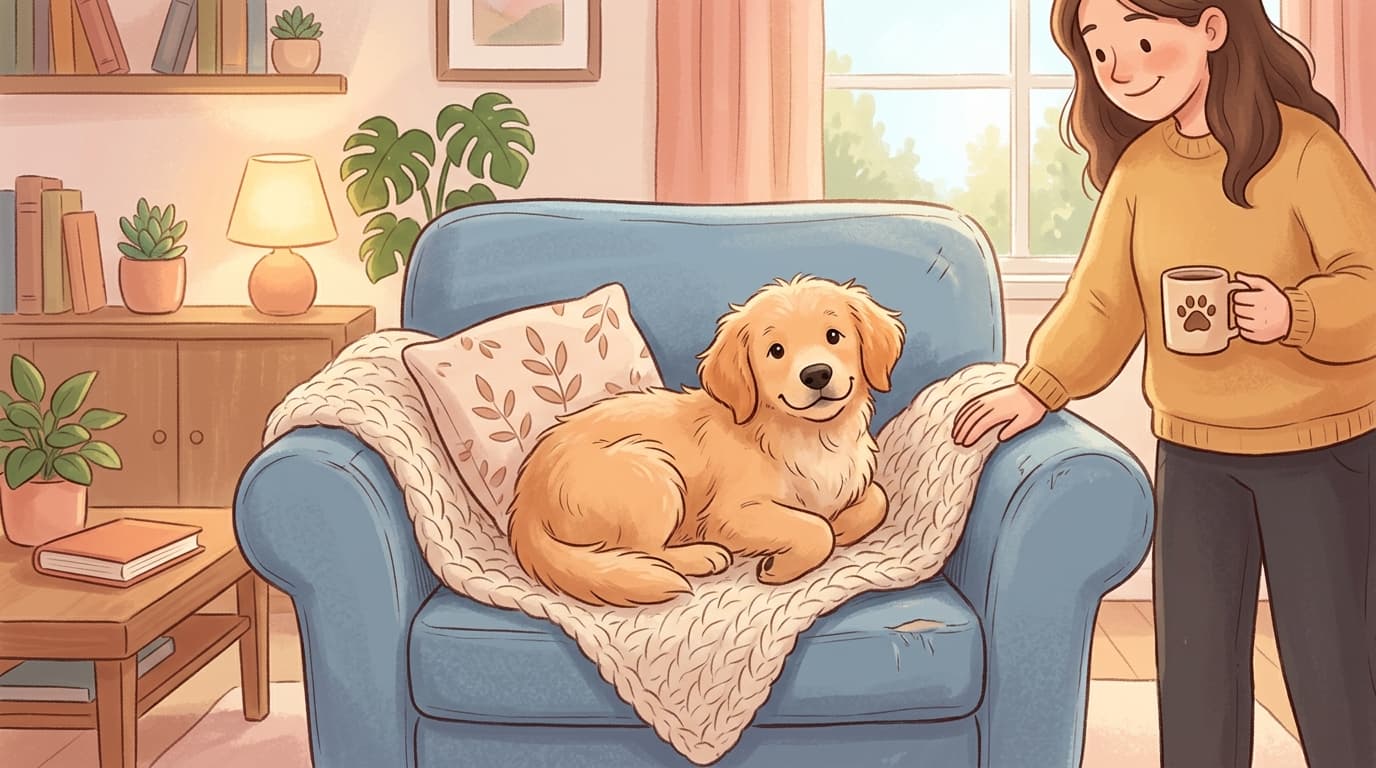
You stand up for a moment, and somehow your dog teleports into your exact spot like they’ve been waiting for it all day. It’s easy to label it as pushy or sneaky—but “seat stealing” is usually one of the most affectionate, comfort-driven things your dog does.
Your seat smells like you (and your dog reads it like a love letter)
Dogs don’t experience your home the way you do. You see a couch. Your dog smells a whole story.
Your favorite spot holds a concentrated version of you: skin oils, the unique “you” scent your dog recognizes instantly, and even subtle chemical changes that come with your mood. Most pet owners don’t realize dogs can pick up on emotional states through scent alone—so that cushion isn’t just familiar, it’s emotionally informative.
If you’ve ever noticed your dog pressing their nose into the fabric and sighing before settling in, that’s not them being dramatic. It’s comfort. It’s the closest thing they have to wrapping themselves in your presence when you’re not right there.
Your dog isn’t stealing your spot—they’re “keeping” it
From a human perspective, it feels like your dog is taking something from you. From a dog perspective, it can look more like protecting something important.
Dogs are wired to value key resting places and meaningful resources, especially those tied to the person they’re most bonded with. Sitting in your spot can be your dog’s way of holding onto the area that feels most like “your place” in the home—keeping it safe, keeping your scent strong, and staying close to what matters.
This is also why dogs often gravitate to things like worn shoes, laundry piles, or pillows when you’re gone. It’s not random mischief. It’s attachment plus comfort-seeking.
Why your seat specifically? It’s a sign of social closeness
In multi-person households, dogs usually don’t choose seats at random. They tend to pick the spot used by the person they feel most connected to.
Over time, your dog builds a surprisingly detailed mental map of the household: who feeds them, who walks them, who settles in for the evening, who feels like “home.” Your seat becomes meaningful because you made it meaningful by using it consistently—and because your dog associates that spot with your calm, your routines, and your presence.
So no, it’s not necessarily a dominance play. It’s often the opposite: closeness, familiarity, and a quiet kind of respect.
The warmth is a big deal (and it saves your dog energy)
Your seat isn’t just comfy. It’s pre-warmed.
Dogs generally run warmer than humans, and they love resting on heat-holding surfaces—sun patches, warm laundry, that one blanket fresh from the dryer. A spot you’ve been sitting in is basically a perfect heat target.
There’s also a practical side: resting on a warm surface can reduce how much energy your dog needs to spend staying comfortable. So your dog isn’t only choosing emotional comfort—they’re choosing physical efficiency too.
Your dog knows you’re about to get up before you do
Ever had the eerie feeling your dog moves into position before you even stand? That’s because they’re paying attention to tiny patterns you don’t realize you have.
Dogs are incredible at reading micro-signals: the way you shift your weight, the sound of a phone being set down, the slight lean forward that usually happens right before you rise. Over months and years, your dog connects those little cues to what happens next.
So by the time you’re actually upright, your dog has already made their move. Not because they’re trying to beat you—but because they’re very, very good at predicting you.
“Seat stealing” can be a mini coping tool for separation stress
You might notice your dog does this more when you leave the room than when you just stand up briefly. That timing matters.
Many dogs experience small spikes of stress when their person breaks visual contact—even if it’s only for a minute. Sliding into your spot can be a fast self-soothing strategy: your scent is strongest there, the warmth is reassuring, and the familiar “nest” helps them settle.
In that moment, your seat isn’t a prize. It’s a security blanket.
The cushion shape feels like a ready-made den
There’s also a simple physical reason your spot wins.
Dogs have a natural instinct to circle, dig, and create a shallow “nest” before resting. Your body has already done the work by compressing the cushion into a perfect little bowl. When your dog curls into that dip, it creates gentle pressure and a contained, protected feeling—like the furniture is hugging them back.
Add your scent and warmth, and it’s basically the ultimate resting setup.
Your dog copies you more than you think
Dogs don’t just live around us—they learn from us.
If you consistently choose one seat as your place to unwind, your dog notices. They watch your body relax there, see you settle in, and connect that location with safety and downtime. Over time, they may decide: if you keep going there, that must be the best spot in the house.
This is one of those funny, sweet moments where your dog is basically saying, “I’ll have what they’re having.”
The deepest reason: your dog feels safest where you’ve been
Sleep and deep rest are vulnerable states for dogs, even in a cozy home. Instinctively, where they choose to fully relax still matters.
So when your dog chooses the place that smells most like you, holds your warmth, and feels like your “home base,” they’re making a big statement in dog language: this is where I feel secure enough to let my guard down.
Next time you come back and find your dog curled up in your spot, try pausing before you shoo them away. That “stolen” seat is often your dog’s way of staying close to you—literally and emotionally.
Continue reading

When Your Dog Shows Their Belly: How to Tell “Rub Me” From “I’m Nervous” (and What to Do Instead)
A belly-up dog isn’t always asking for rubs. Learn the body language cues and a simple “scratch, pause, opt-in” method.

5 Things Your Dog Does Only for You (And You Might Be Missing Them Daily)
Five subtle behaviors that show your dog has chosen you as their safe place, comfort person, and favorite human.

15 Signs Your Dog Is Truly Happy (Not Just ‘Fine’)—From Belly-Up Sleep to Micro-Touches
From belly-up sleep to weird joy rituals, these signs reveal when your dog feels safe, secure, and genuinely happy.