How to Become Your Dog’s Favorite Person (It’s Not About Treats)
Your dog’s favorite person is the one who feels safest and most predictable. Use simple routines and a 90-second gaze ritual to deepen your bond.
You can buy the best treats, share the couch, and still feel a tiny sting when your dog lights up more for someone else. The surprising truth is that “favorite person” energy usually isn’t earned with goodies—it’s earned with something your dog’s nervous system can actually relax into.
Your dog’s favorite person is the most “readable” one
Most pet owners don’t realize this, but dogs aren’t keeping a tally of who spoils them most. They’re tracking who makes life easiest to predict.
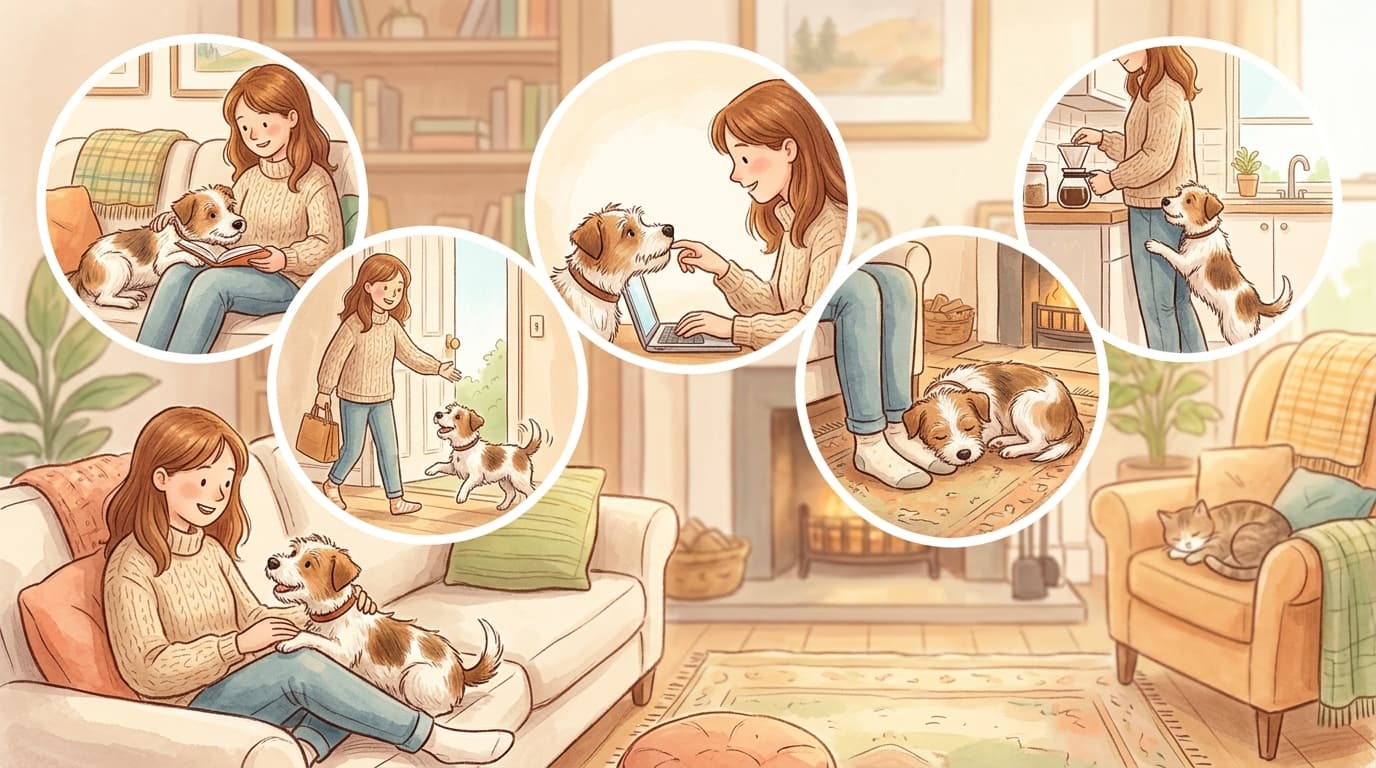
Think of it as legibility: your dog learns your patterns, your tone, your reactions, and your follow-through. When you’re consistent, your dog doesn’t have to stay on alert trying to guess what happens next. That sense of predictability isn’t just nice—it’s what lets your dog fully settle, play freely, and choose connection without feeling on edge.
If you’ve ever noticed your dog acting “busy” at home—pacing, checking windows, struggling to relax—sometimes it’s not boredom. It can be a sign they’re still scanning for what’s coming next.
Predictability builds trust faster than extra treats
It’s easy to assume love equals more: more toys, more snacks, more activities. And sure, those are fun.
But the real bonding currency is how safe your dog feels around you moment-to-moment. When your responses are steady, your dog’s internal alarm quiets down. And once that alarm is lower, your dog can actually enjoy the world more.
A fascinating finding from recent research: dogs with strong attachment to their person don’t just prefer that person—they can even become more open to other humans who are “good” to their owner. In other words, your bond can spill over into how your dog decides who else is safe.
The early social window matters—but it doesn’t doom adult dogs
Puppies have a powerful early-life socialization period that starts around 3 weeks and closes around 12 weeks. During that stretch, their brains are building the basic “blueprint” for what safe human relationships feel like.
Dogs who get steady, positive human contact then tend to carry an easier template forward.