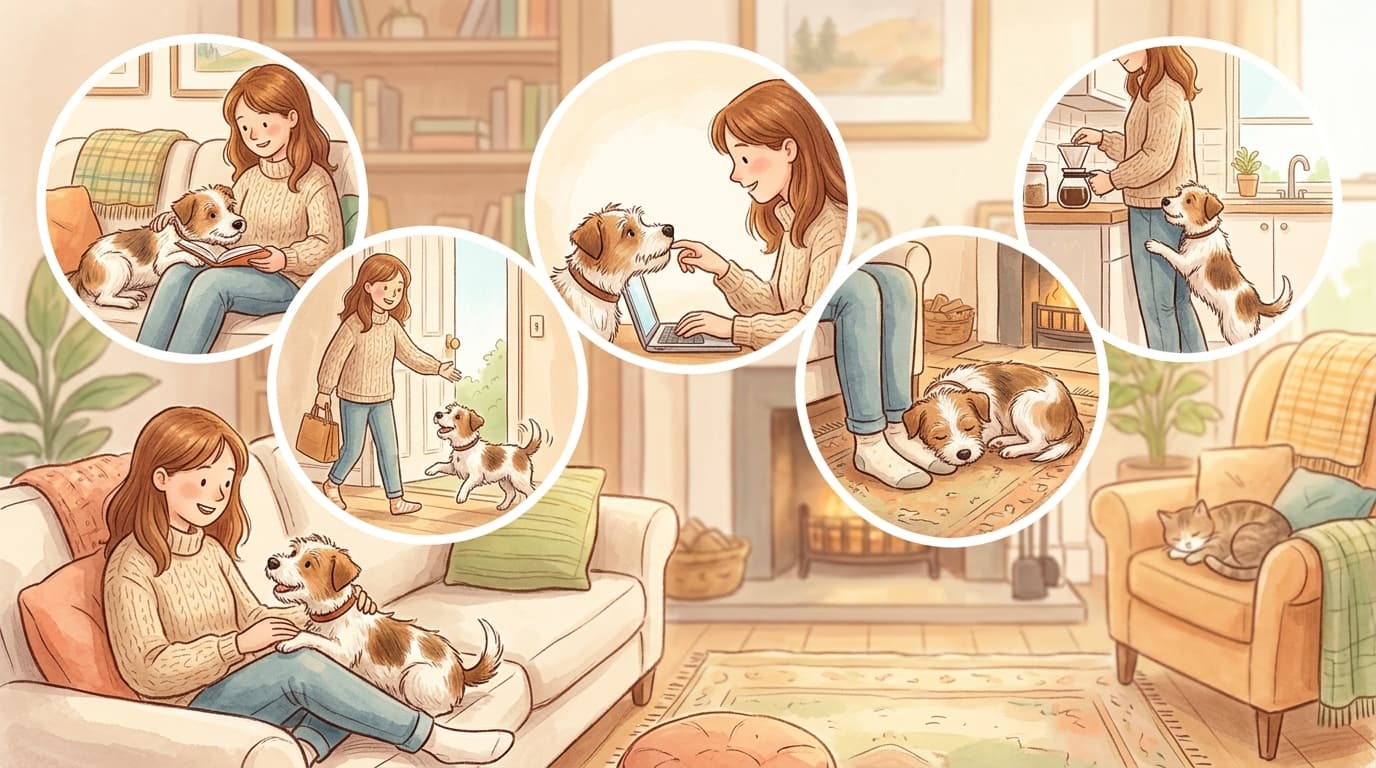
How to Become Your Dog’s Favorite Person (It’s Not About Treats)
Your dog’s favorite person is the one who feels safest and most predictable. Use simple routines and a 90-second gaze ritual to deepen your bond.
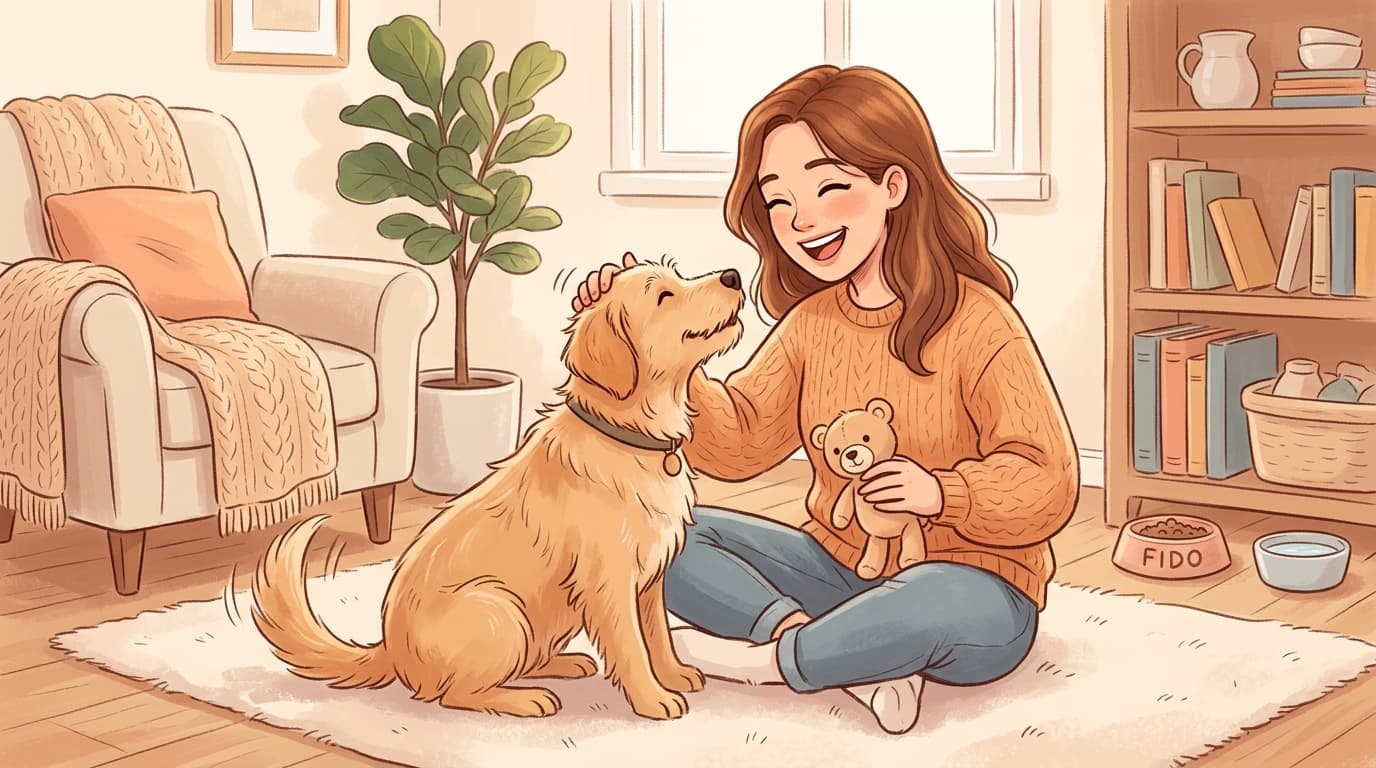
You can buy the best treats, share the couch, and still feel a tiny sting when your dog lights up more for someone else. The surprising truth is that “favorite person” energy usually isn’t earned with goodies—it’s earned with something your dog’s nervous system can actually relax into.
Your dog’s favorite person is the most “readable” one
Most pet owners don’t realize this, but dogs aren’t keeping a tally of who spoils them most. They’re tracking who makes life easiest to predict.
Think of it as legibility: your dog learns your patterns, your tone, your reactions, and your follow-through. When you’re consistent, your dog doesn’t have to stay on alert trying to guess what happens next. That sense of predictability isn’t just nice—it’s what lets your dog fully settle, play freely, and choose connection without feeling on edge.
If you’ve ever noticed your dog acting “busy” at home—pacing, checking windows, struggling to relax—sometimes it’s not boredom. It can be a sign they’re still scanning for what’s coming next.
Predictability builds trust faster than extra treats
It’s easy to assume love equals more: more toys, more snacks, more activities. And sure, those are fun.
But the real bonding currency is how safe your dog feels around you moment-to-moment. When your responses are steady, your dog’s internal alarm quiets down. And once that alarm is lower, your dog can actually enjoy the world more.
A fascinating finding from recent research: dogs with strong attachment to their person don’t just prefer that person—they can even become more open to other humans who are “good” to their owner. In other words, your bond can spill over into how your dog decides who else is safe.
The early social window matters—but it doesn’t doom adult dogs
Puppies have a powerful early-life socialization period that starts around 3 weeks and closes around 12 weeks. During that stretch, their brains are building the basic “blueprint” for what safe human relationships feel like.
Dogs who get steady, positive human contact then tend to carry an easier template forward.
But here’s the part that matters if your dog is a rescue or came to you later: adult dogs can still form deep bonds. It’s just a different kind of construction. Instead of building on an early blueprint, you’re creating safety through repeated experiences—calm routines, predictable interactions, and trust that’s earned in the present.
And honestly? A bond that’s built deliberately can be incredibly strong. If your dog came to you with a whole life before you, their trust isn’t automatic. It’s chosen.
The “secure base” effect: why your presence changes your dog’s behavior
There’s a concept borrowed from human infant psychology called the secure base effect. The idea is simple: when a baby has their parent nearby in a new environment, they explore more.
Dogs show something similar.
In problem-solving research, dogs worked longer and stayed more engaged when their owner was present—even when the owner wasn’t helping, talking, or doing anything special. Swap the owner for a friendly stranger who sits in the same spot, and many dogs lose interest faster.
That’s a huge clue about what your dog actually wants from you.
You don’t have to entertain your dog 24/7 to be their favorite person. Sometimes you’re doing the most important job just by being a calm, familiar anchor in the room.
Eye contact isn’t just cute—it can be bonding chemistry
One of the most heartwarming pieces of dog research shows how mutual gaze can create a real biological bonding loop.
In a well-known study, dogs who spent more time gazing at their owners had higher oxytocin afterward (oxytocin is the hormone strongly linked with bonding). Even better: their humans’ oxytocin rose too.
So that soft look your dog gives you from across the room? It’s not always “begging” or neediness. It can be a connection-seeking behavior that literally strengthens the relationship in both directions.
Your dog’s brain can value you more than food
If you’ve ever worried that your dog only loves you because you’re the food person, there’s research that should calm your mind.
In brain imaging work with awake dogs trained to lie still in an MRI, researchers found that a key reward area of the brain (the caudate nucleus) could respond more strongly to signals associated with their owner than to signals associated with food.
That’s the point that flips the script: you’re not just the provider of rewards. In your dog’s brain, you can be the reward.
The 90-second ritual that helps you become your dog’s favorite person
You don’t need a complicated training plan to start building this. Try this once a day, ideally when your home is quiet:
- Get down on your dog’s level (sit on the floor or a low seat).
- Let your dog approach you—no calling, no luring, no commands.
- When they look at your face, meet their gaze softly.
- Keep your expression relaxed (loose jaw, gentle eyes) and hold the moment for about 30 seconds.
- Repeat until you’ve spent roughly 90 seconds total in calm, pressure-free connection.
This isn’t a staring contest. It’s an invitation. Over time, it can make it easier for your dog to seek you out, settle near you, and treat you as their emotional “home base.”
Simple ways to become your dog’s favorite person in daily life
You’ll get the biggest results from small, repeatable habits:
- Be consistent with cues and boundaries. If “off the couch” sometimes means off and sometimes means “fine, whatever,” your dog has to guess.
- Reward calm connection, not just excitement. A quiet “good dog” when they choose to settle near you can matter more than hyping them up.
- Create tiny routines your dog can count on. Same short morning greeting, same evening wind-down, same tone.
- Show up in new places as their anchor. In unfamiliar environments, be the calm presence before you ask for bravery.
Your dog doesn’t pick a favorite person based on who tries the hardest. They pick the person who makes the world feel steady, safe, and worth engaging with. Give your dog that kind of consistency—and you’ll feel the relationship shift in ways treats can’t buy.
Continue reading

7 Dog Body Language Signals Most Owners Miss (And What Your Dog Is Really Saying)
From play bows to doorway guarding, learn the dog body language signals that reveal trust, comfort, and connection.

Why Your Cat Climbs on You: It’s Not “Just Love” (And What They’re Really Saying)
From lap-sitting to cheek rubs, your cat’s “cute” habits are secret messages about safety, scent, and trust.

Dog Body Language Signs of Love: 7 Little Moments That Mean “You’re My Person”
From the play bow at the door to sleeping pressed against you, these dog body language signs quietly prove how much your dog loves you.