15 Human Foods Cats Can Safely Enjoy (And Why They’re So Drawn to Your Plate)
You’re eating something simple, and suddenly your cat sits nearby like a tiny statue—quiet, focused, watching every bite. It can feel oddly intense. But most pet owners don’t realize that stare isn’t “begging” the way a dog begs; it’s your cat’s instincts doing a careful scan for food that feels biologically right.
Why your cat wants your food more than their own
Cats are built for real, animal-based foods—things that resemble what they’d catch and eat in nature. That’s why a little plain cooked chicken can get a stronger reaction than a bowl of dry kibble. It’s not that commercial cat food is automatically “bad.” It’s convenient and designed to cover the basics for most cats.
The difference is that fresh, simple ingredients can sometimes hit those “small details” your individual cat is craving—protein, moisture, certain fats, or even a bit of fiber. And your cat’s body often recognizes those needs before you do.
If you’ve ever noticed your cat acting more relaxed, more affectionate, or just looking brighter after certain foods, you’re not imagining it. Food can influence how their body feels—and that can show up as mood.
Your cat isn’t picky—they’re running a safety check
Cats don’t usually rush new foods. They sniff slowly, touch with the nose, sometimes tap with a paw, then taste. That’s not attitude; it’s survival programming. In the wild, one wrong bite could be dangerous, so cats evolved to be cautious.
This is also why sudden diet changes often fail. If your cat ignores a new food you were sure they’d love, it doesn’t always mean they’re not hungry. It can mean their brain hasn’t decided it’s “safe” yet.
15 human foods cats often do well with (cheap, simple, and nourishing)
These are best used as small add-ons or occasional meals—think “real-food boosters,” not a total replacement for a complete cat diet.
1) Plain boiled chicken
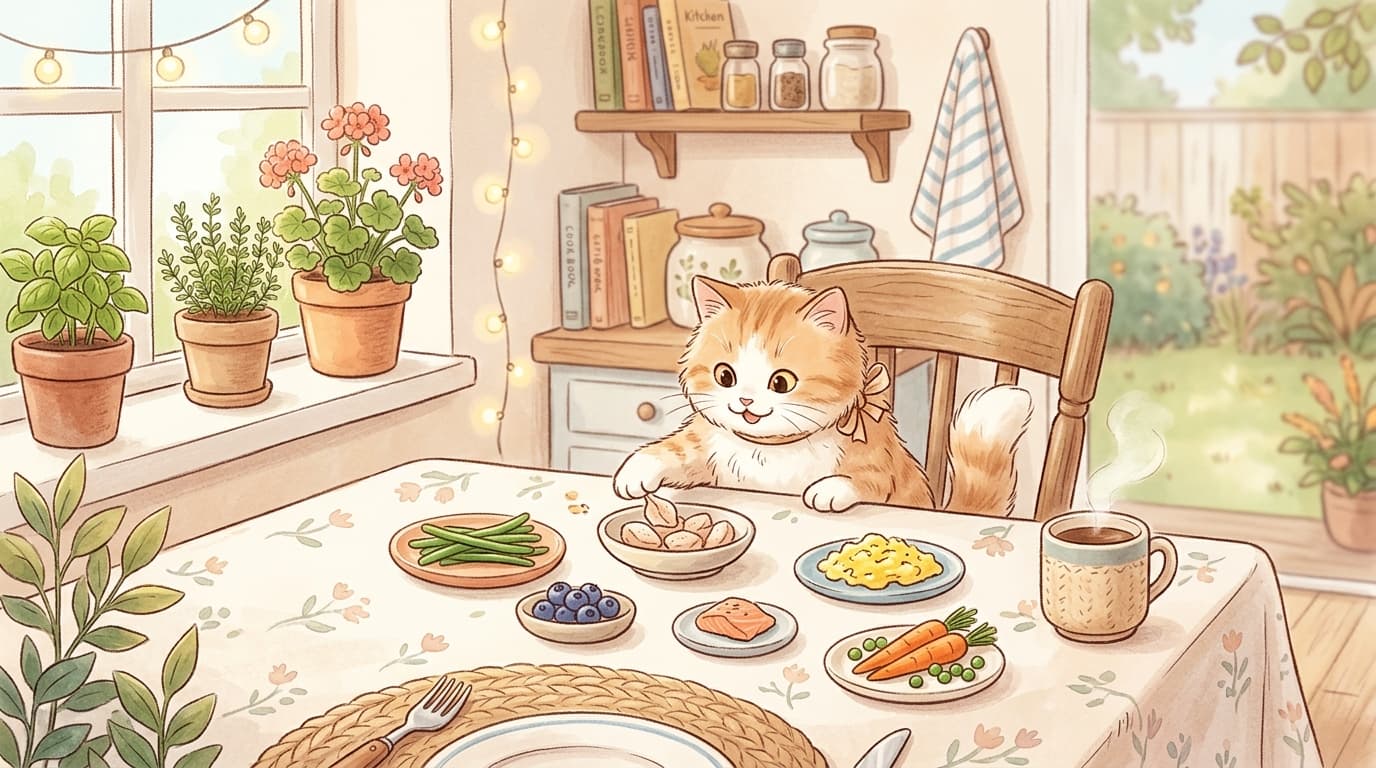
A classic for a reason: it’s close to what a cat’s body is designed to use. Serve cooked, unseasoned, and shredded into small pieces.
2) Plain cooked turkey
Turkey is another lean, cat-friendly protein. Some cats seem to seek it out when they’re keyed up or nervous, as if it helps them settle.
3) Plain cooked salmon
Salmon tends to get a big reaction because of its smell and its fatty profile. Those fats can support the nervous system, and some cats appear calmer or more affectionate afterward.
4) Plain cooked white fish
Simple fish can be an easy protein option. Some cats love it, others barely care—often based on what smells “safe” to them from past experiences.
5) Sardines (in water, not oil)
Many cats adore sardines. Keep portions tiny because it’s rich, and choose plain options without sauces.
6) Cooked egg (especially hard-boiled)
A small amount of cooked egg can provide steady energy and high-quality nutrients. Offer a little at a time—cats don’t need much.
7) Cooked rabbit (where available)
Rabbit is a natural prey-style protein. Some cats prefer it because it feels gentle on their stomachs.
8) Cooked shrimp
Small pieces of shrimp can “wake up” that hunting style of eating—sniff, paw, nibble. Keep it plain and fully cooked.
9) A tiny bit of liver
In nature, cats eat more than muscle meat; organs are nutrient-dense. Liver is powerful, so think “small and occasional,” not daily.
10) A tiny bit of heart
Heart is another organ cats would naturally consume. Like liver, it’s concentrated—serve in small portions.
11) Mashed cooked pumpkin
Pumpkin is a go-to for gentle fiber. Some cats seem drawn to it when their digestion feels off, and it can help with smoother poops and fewer hairball issues for certain cats.
12) Soft cooked vegetables (small amounts)
Some cats show surprising interest in mild cooked veggies. It can connect to an instinctive drive for fiber—similar to what they’d get from the stomach contents of prey.
13) Cat grass or safe greens
That “why are you chewing plants?” moment is often your cat trying to regulate their stomach. Many cats use greens as a natural reset.
14) Warm meat broth (unsalted, no onion/garlic)
A little warm broth can add moisture and make food more enticing. Keep it plain—no seasoning, no alliums.
15) Small mixed plates of plain proteins (mini ‘hunt’ style)
Offering a few tiny pieces of different plain meats can encourage natural eating behavior. Some cats do better with variety over time rather than one single food forever.
The real secret: your cat uses food to self-regulate
Cats don’t only eat to “fill up.” They often eat to adjust how they feel—energy, digestion, even stress. That’s why you might notice patterns:
- A cautious cat warms up to certain foods slowly, then begins to trust them.
- A cat drawn to fattier fish may seem more settled afterward.
- A cat interested in pumpkin or soft veg may be trying to balance digestion.
Instead of labeling your cat as dramatic or finicky, it helps to watch what they choose, what they avoid, and how they act afterward. Those tiny reactions—sniffing, licking, walking away, coming back—are information.
How to offer human foods the smart way
- Keep everything plain: no salt, oil, sauces, or spices.
- Cook thoroughly and serve small pieces.
- Introduce one new item at a time and repeat it gently over several days.
- Use rich foods (like liver) rarely and in tiny amounts.
- Pay attention to your cat’s “after”: digestion, energy, coat feel, and mood.
A calmer, closer cat might start with a better bite
Feeding your cat can be more than topping up a bowl—it can become a quiet way you learn each other. When you start noticing what your cat’s body seems to ask for, meals turn into a kind of silent conversation, and your bond gets softer and steadier.
Meta description: Your cat isn’t being picky—instinct drives their food choices. 15 cat-friendly human foods and how to offer them safely.
Continue reading

Why Your Cat Touches Your Face With Their Paw (And What They’re Trying to Tell You)
A paw on your face can mean affection, attention, play, scent-marking, or even “give me space.” Learn the clues to read it right.

Why Your Cat Licks You (And Why It’s Not Always About Love)
Cat licking isn’t just affection—it can be scent-marking, bonding, stress-soothing, or even checking on you. Here’s what it means.

How Cats Secretly Test You Every Day (And What They’re Really Looking For)
Cats test your patience, boundaries, and consistency daily. Learn the subtle signs—and how to earn real feline trust.