5 Things Your Dog Does Only for You (And You Might Be Missing Them Daily)
Five subtle behaviors that show your dog has chosen you as their safe place, comfort person, and favorite human.
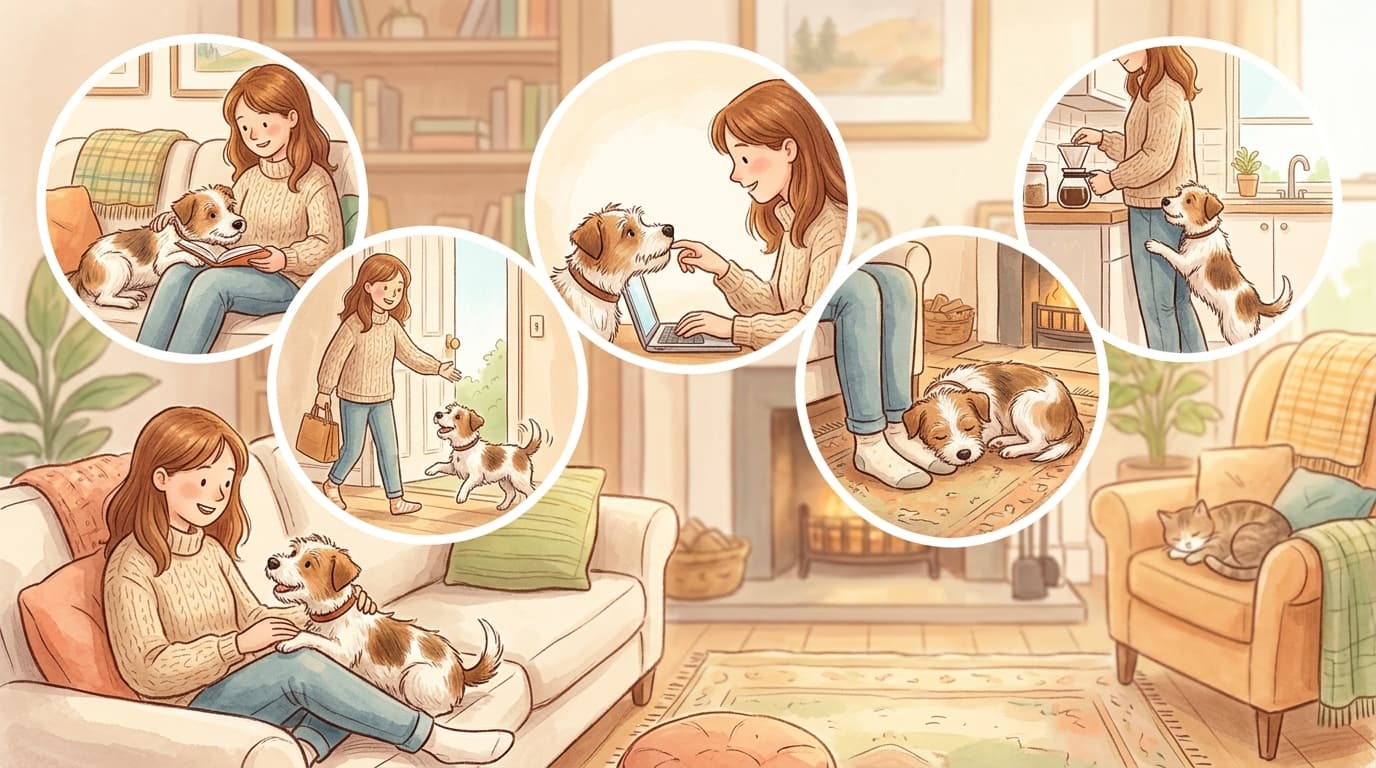
Most pet owners don’t realize how often they walk right past love in motion. The truth is, there are a few things your dog does only for you that are so quiet, they look like “nothing” until you know what you’re seeing.
Below are five behaviors that often show up in ordinary moments: on the couch, at the doorway, on a rough day, or in that split second after you get home.
1) Vigilant sleep: the “nap” that’s actually watch duty
If you’ve ever noticed your dog sleeping near you and waking up the second you shift your legs, you’re not imagining it. Some dogs don’t fully “power down” when their favorite person is close.
Researchers have looked at how dogs sleep around their owners and found that highly attached dogs can show different sleep patterns in their person’s presence (including more alertness and quicker responsiveness). In normal-life terms: your dog may be resting, but part of them is still tuned in to you.
What it looks like at home:
- They choose the floor beside your bed or couch instead of another cozy spot.
- Their ears flick, even when their eyes are closed.
- They wake fast, then immediately check in on you before anything else.
2) The “offering”: bringing you a toy, sock, or random object when you’re not okay
You come home heavy. Your shoulders are tight. You haven’t said a word. Then your dog appears with a toy, a shoe, or whatever was easiest to grab, and places it near you like it matters.
This can be a real comfort behavior. Studies on dogs and human emotion have shown that dogs respond differently to distress sounds (like crying) than neutral sounds, often approaching and trying to make contact. At home, that contact sometimes turns into an “offering,” because giving you something is one of the few ways your dog can try to change your mood.
How you can tell it’s comfort and not just play:
- They bring the item, then pause and watch you instead of insisting on a game.
- They get physically close (leaning, sitting on your feet, pressing into your leg).
- They do it most when your energy is off, not when you’re already playful.