6 Simple Things Your Cat Secretly Wants You to Do (Most Owners Miss These)
Your cat can have good food, a warm home, and plenty of cuddles—and still feel oddly restless or “off.” A lot of the behaviors we label as random (night zoomies, counter chaos, ankle attacks) are usually your cat asking for something more basic: a life that makes sense to their instincts.
Below are six small, realistic changes that can make your cat noticeably calmer, more confident, and more connected to you.
1) Let your cat “hunt” for food (even in a safe indoor home)
If you’ve ever noticed your cat acting like a tiny tornado right after you filled the bowl, it’s not because they’re ungrateful. For cats, eating isn’t the main event—earning the meal is.
In the wild, cats spend a huge chunk of their awake time stalking, chasing, pouncing, missing, trying again. That mental loop is the point. A full bowl that requires zero effort removes the daily challenge your cat’s brain is built for.
What to do instead (easy version):
- Split your cat’s daily food into smaller portions.
- Hide a few little piles around the house (behind a chair leg, near a scratching post, on a low shelf).
- Rotate hiding spots so it doesn’t turn into a boring routine.
What to do instead (upgrade):
- Use puzzle feeders, treat balls, snuffle mats, or DIY “paper cup” games.
- Feed at least one meal per day through an activity feeder.
Many owners notice that giving cats a way to work for food reduces stressy behaviors and can even help with weight control, simply because your cat is finally using their brain.
2) Use a cat water fountain (moving water usually wins)
A lot of cats ignore a still water bowl and then magically appear the second a faucet turns on. That’s not a quirky personality trait—it’s a survival preference.
Moving water tends to smell fresher, stays more oxygenated, and doesn’t give off the same “stale puddle” vibe that still water can. Cats are also wired to notice motion and sound, so running water is easier to “trust” and more interesting.
This matters because many cats don’t naturally drink much. In nature, they get a lot of their moisture from prey, so the average house cat can be a low-drinker by default.
Make it work in real life:
- Pick a fountain that’s easy to clean (the simpler it is, the more likely you’ll keep up with it).
- Refresh the water often and wash the parts regularly.
- Put it in a quiet spot where your cat already feels safe.
A clean fountain is a gentle nudge toward better hydration without you having to nag or “teach” anything.
3) Keep the litter box truly clean (your nose isn’t the standard)
Most pet owners don’t realize how intense a litter box can be for a cat, even when it seems fine to us. Cats experience the world through scent far more than humans do, so “it doesn’t smell that bad” is not the same as “this feels usable.”
And for a cat, a dirty box isn’t just unpleasant. Instinctively, waste is something they want to bury and manage—strong smells can feel unsafe, like broadcasting their location.
A simple litter routine that cats tend to love:
- Scoop daily if you can (or at least very frequently).
- Dump all litter and wash the box about once a week.
- Don’t just top it off forever—old buildup changes the smell and the feel.
The box-count rule that prevents so many problems:
- One litter box per cat, plus one extra.
Yes, it sounds like a lot. But litter boxes are territorial real estate, and crowding cats into too few boxes can create silent stress that shows up later as avoidance, accidents, or tension between cats.
4) Share your scent on purpose (it’s comfort, not “weirdness”)
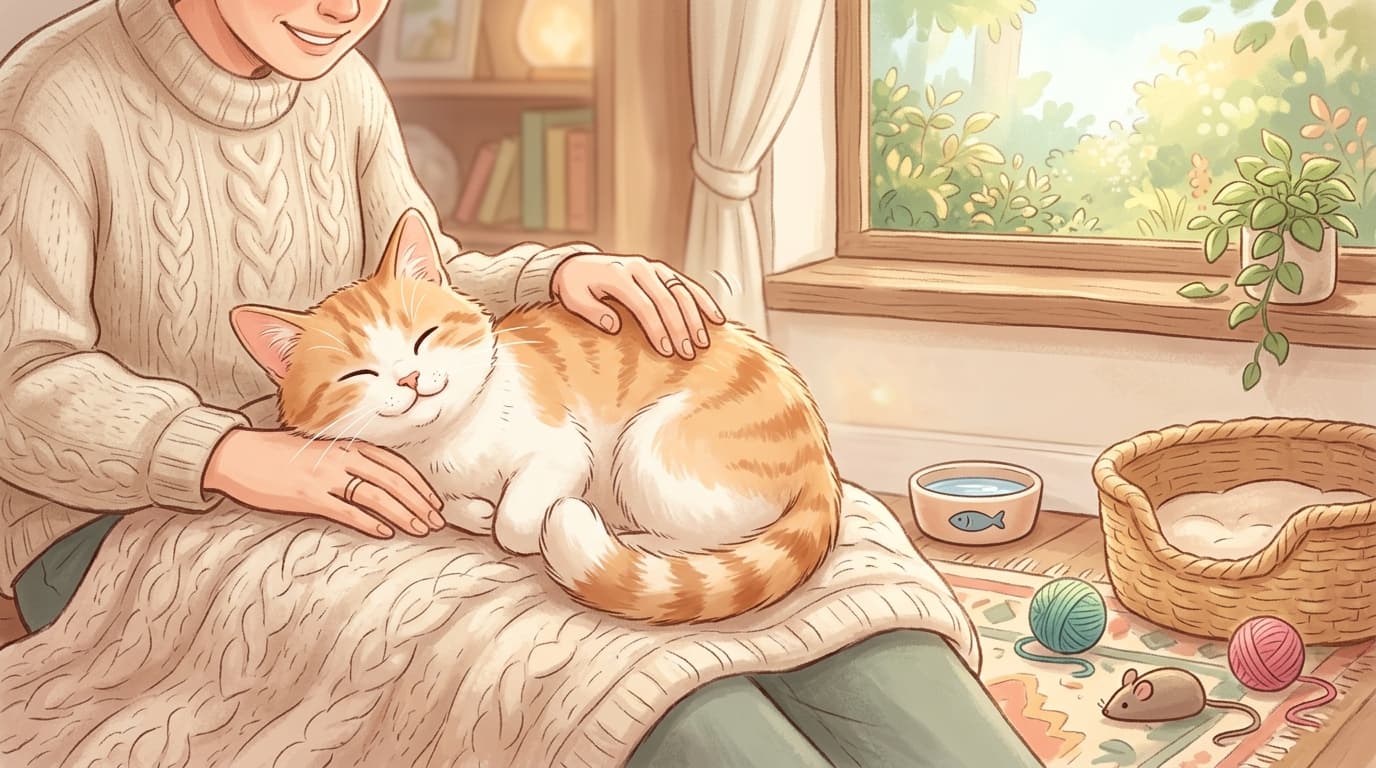
If your cat sleeps on your hoodie, parks themselves on your laptop bag, or claims the shirt you just took off, it’s not only about softness. They’re choosing your smell.
For cats, scent is identity and safety. When your cat rubs their face on you, they’re not just being cute—they’re mixing scents and saying, “You’re part of my safe zone.” Your scent works the same way for them, especially when you’re not home.
Try this:
- Leave a worn T-shirt or pillowcase near your cat’s favorite nap spot.
- If your cat gets stressed when you leave, place that item where they usually settle.
Also consider what not to do:
- Don’t over-sanitize your cat’s spaces.
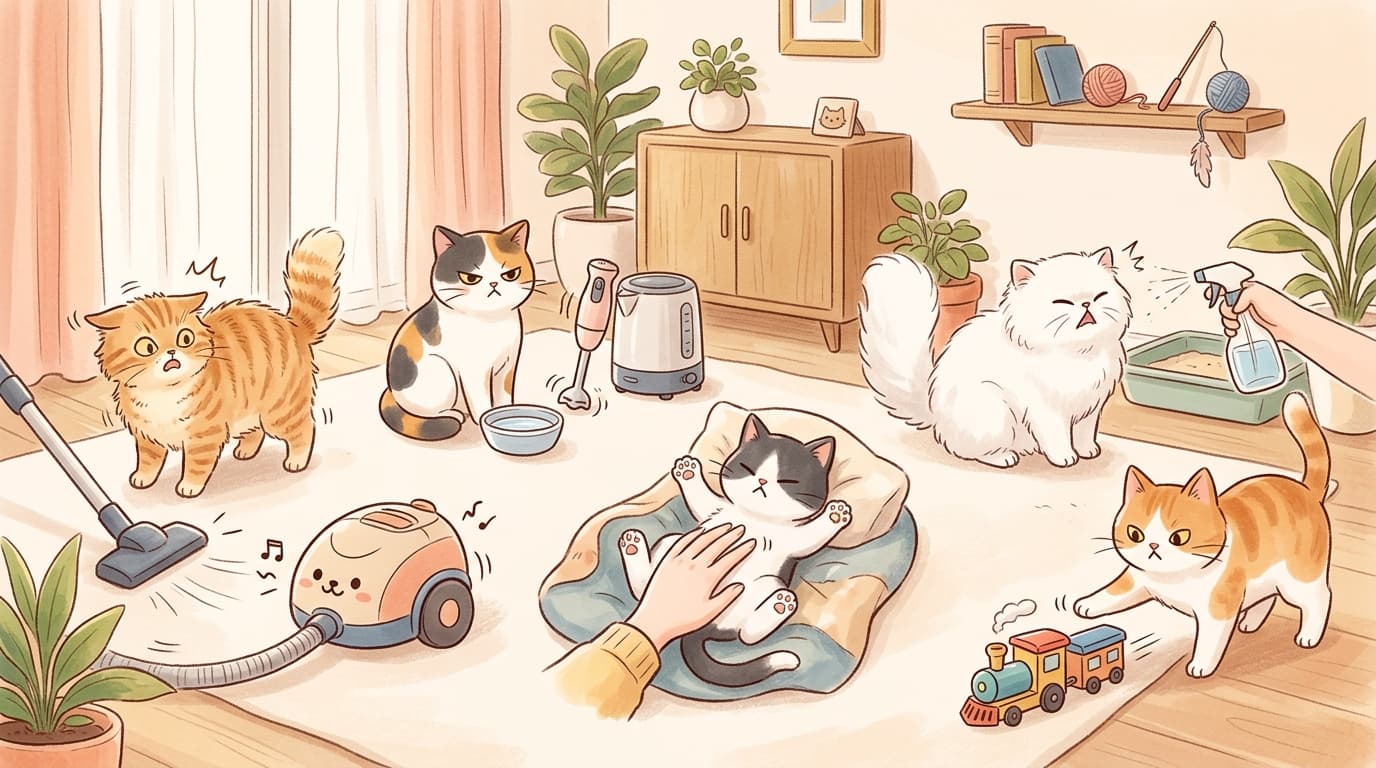
- Be careful with heavy air fresheners near their beds, perches, or litter area.
To you, strong “clean” smells mean freshness. To your cat, it can feel like someone erased the familiar map of home.
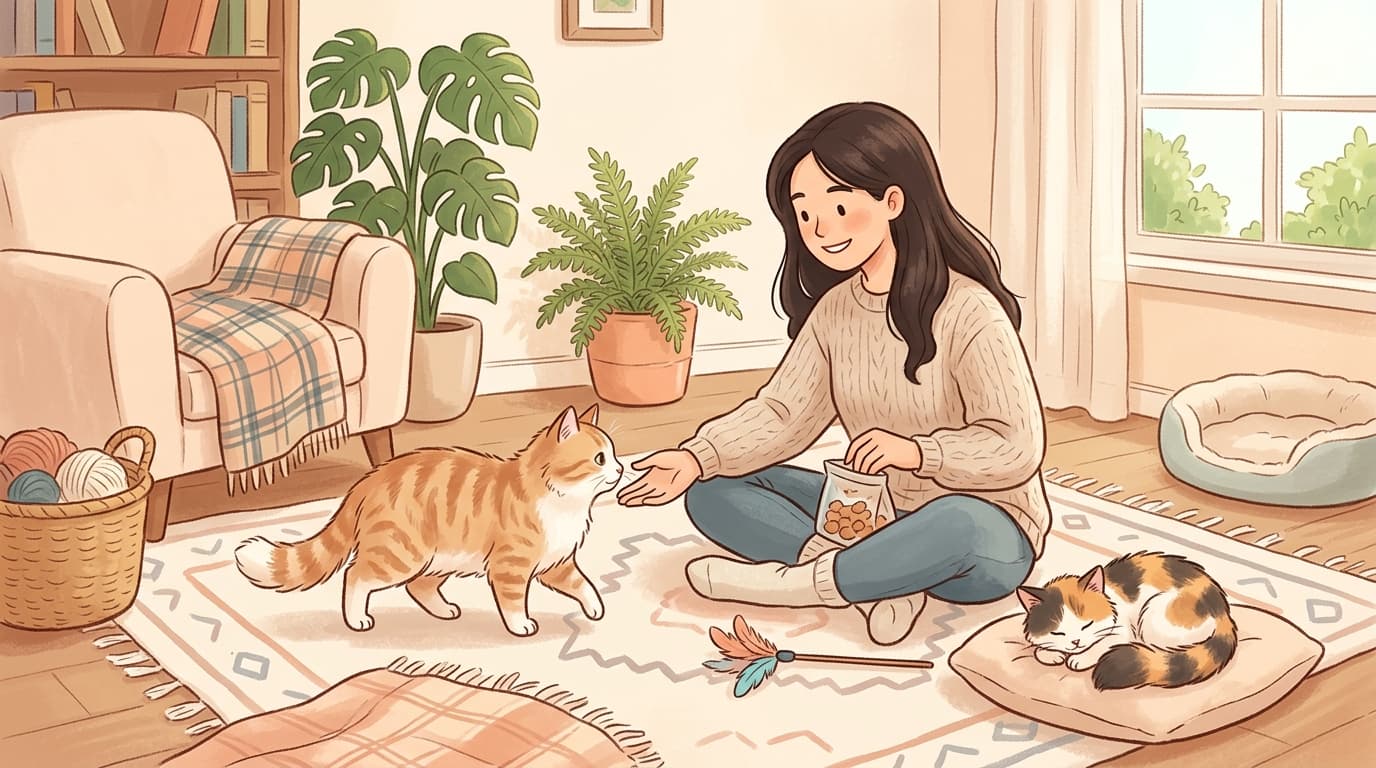
5) Sit on the floor with your cat for 10 minutes
Cats live close to the ground. You don’t.
From your cat’s point of view, you’re a tall, fast-moving creature that often approaches from above. Even a cat who adores you can find that body language a little overwhelming. Changing your height changes the entire interaction.
A low-effort bonding routine:
- Sit on the floor near your cat.
- Don’t call them over.
- Don’t reach for them.
- Just be there—calm, quiet, predictable.
You may be surprised how quickly your cat approaches when they feel like they’re in control of the distance. This is one of those tiny habits that can make a shy cat braver and a confident cat even more affectionate.
6) Give your cat vertical territory (your home is too “human-height”)
Here’s a common hidden issue in cat homes: everything is designed for people, which makes your cat’s world feel flat.
Cats don’t experience space as purely horizontal. Height equals safety and control. A high perch lets your cat watch what’s happening, avoid feeling cornered, and take a break from noise or busy movement.
When a cat has no vertical options, they’re stuck navigating your life from ground level, which can make them more jumpy, more defensive, or more likely to hide.
You don’t need a designer cat wall:
- A tall cat tree near a window can be enough.
- Clear a sturdy bookshelf top (and make it safe to access).
- Add one or two wall shelves placed like “steps.”
Vertical space often changes the vibe of a cat overnight: calmer body language, more curiosity, and a cat who seems more present instead of constantly on alert.
A simple way to start today
You don’t have to overhaul your whole home to make your cat happier. Pick just one change—hide part of a meal, refresh the litter routine, place a worn shirt near their nap spot, or add a higher perch—and watch what shifts over the next week.
Your cat isn’t asking for perfection. They’re asking to feel safe, engaged, and like they truly belong in the space you share.
Meta description suggestion: From food “hunting” to vertical space, these 6 small changes can make your cat calmer, happier, and more at home.
Continue reading

How to Stop Your Cat From Throwing Litter Out of the Box (Fast, Lasting Fixes)
Messy litter box? Fix litter flinging with the right box, litter type, fill depth, placement, and a cleaner routine.

Where Your Cat Sleeps Says a Lot About Love (7 Favorite Spots Decoded)
From your feet to your pillow, your cat’s sleeping spot is a quiet love letter. Here’s what 7 common choices really mean.

Why Cats Knock Things Over: The Real Reasons Behind That Push-and-Scatter Habit
Cats knock things over due to hunting instincts, curiosity, and attention-seeking. Learn what it means and how to curb the habit.