5 Quick Things to Do Before You Leave Your Cat Home Alone (That Actually Reduce Stress)
Help your cat stay calm while you’re out with 5 fast habits: routine, clean litter, active space, smart enrichment, and better feeding timing.
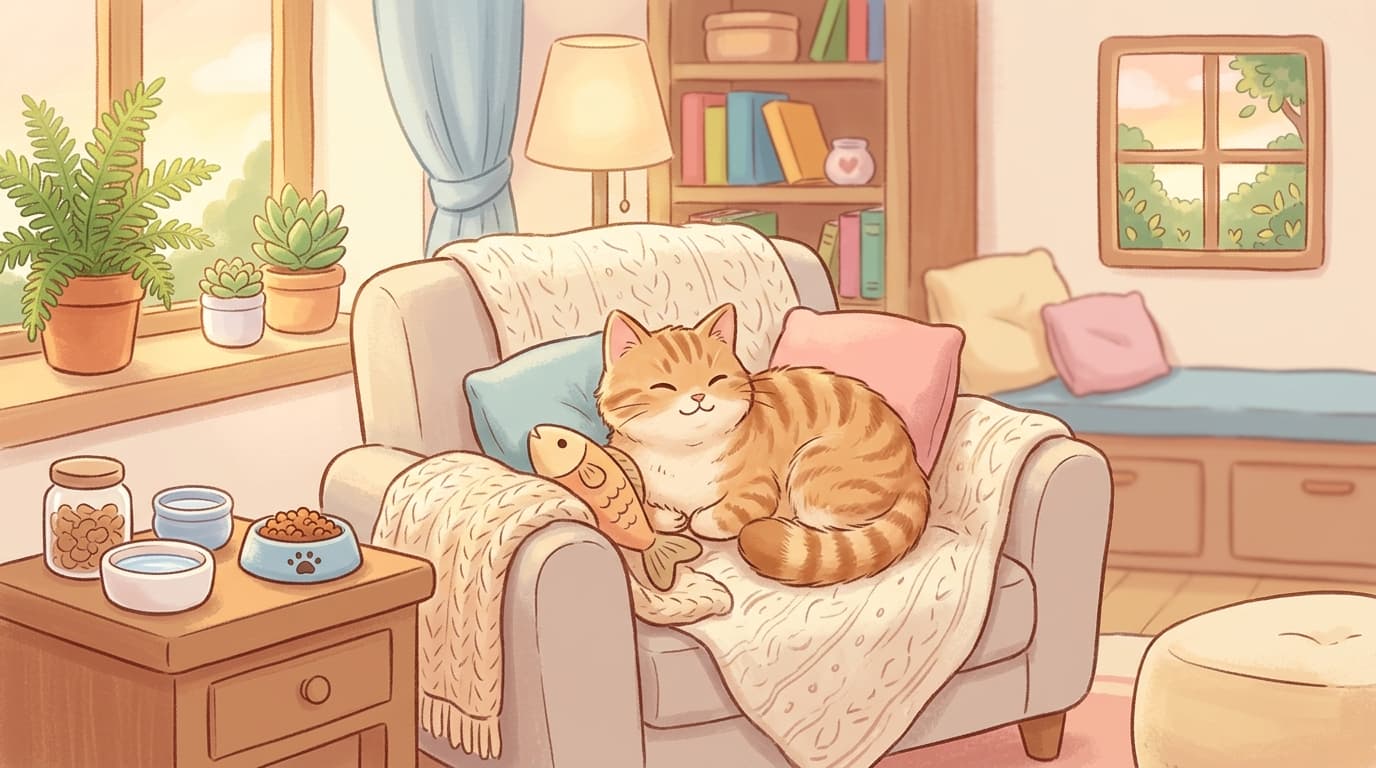
There’s a side of your cat you rarely see: the version of them that exists when the house goes quiet and you’re gone. Most people assume those hours are peaceful, but for many cats, being alone triggers real, measurable stress.
The good news is you don’t need a complicated setup to help. A few small habits—done consistently—can make your cat feel safer and more settled while you’re out.
Why leaving your cat home alone can be stressful
Cats aren’t as “independent” as they’re often portrayed. They form genuine bonds with their people, and your presence is part of what makes your cat feel secure.
If you’ve ever noticed your cat grooming too much, wandering around like they can’t relax, or hiding more after you’ve been out, those aren’t random quirks. They can be stress signals—your cat’s way of saying, “Something about being alone isn’t working for me.”
1) Keep a predictable routine (your cat loves a reliable day)
Routine is calming because it makes life feel readable. When your cat can predict what happens next—food, your morning movements, the usual sounds—their body doesn’t stay stuck in “alert mode.”
Try this:
- Feed at the same times every day (as closely as you can).
- Keep your “leaving the house” sequence consistent (keys, shoes, coat—same order helps).
- Use familiar cues your cat already associates with normal departures (the same radio station, the same lights, the same goodbye ritual).
Even small changes can throw sensitive cats off. Many pet owners don’t realize how much a slight schedule shift can change behavior.
2) Scoop the litter box right before you go
A clean litter box isn’t just “nice.” For many cats, it’s non-negotiable.
When a box is dirty, some cats won’t use it—not to be difficult, but because it feels unsafe or unacceptable to them. That can lead to accidents outside the box, which people sometimes mistake for spite or disobedience. In reality, it’s often stress plus a bad bathroom option.
Quick checklist:
- Scoop right before a longer absence (two minutes makes a difference).
- In multi-cat homes, aim for one box per cat, plus one extra.
- If you have multiple boxes, don’t let one become the “ignored, always gross” box—cats notice.
3) Create an “active territory” so the house doesn’t feel dead
A still, silent home for hours isn’t automatically restful. Your cat has a hunter’s brain that expects movement, information, and little changes to investigate.
Easy ways to make the environment feel alive:
- Set up a window spot where your cat can watch birds, people, or passing cars.
- Leave a paper bag or cardboard box in a new spot for exploring.
- Hide a few treats in places your cat doesn’t usually check.
This isn’t about buying more stuff. It’s about giving your cat something new to process so the day doesn’t feel like one long sensory blank.
4) Use enrichment that matches how your cat’s mind works
Scattering toys around can help… briefly. The problem is that many toys just sit there. And to a cat, a “prey” that never moves gets boring fast.
What tends to work better is enrichment that creates a mini hunting sequence: problem → effort → reward → done
Great options:
- Puzzle feeders loaded with part of your cat’s daily food
- Treat balls that dispense food as they roll (especially on hard floors so they move well)
- Toy rotation (keep some put away and swap them out so they feel “new” again)
If you’ve ever bought a toy your cat ignored after one day, rotation and food-based puzzles are often the missing piece.
5) Don’t “dump a big pile of food” and hope for the best
This is one of the most common mistakes when leaving a cat home alone. It feels generous to leave a mountain of food, but it can backfire in two different ways:
- For anxious or food-motivated cats: it can trigger stress-eating and overeating, followed by digestive upset.
- For picky cats: the food sits out too long, gets stale, and they may barely touch it—then you come home to a low-energy, underfed cat.
The deeper issue is timing. Meal times act like anchors in your cat’s day. Your cat’s body anticipates food with surprising precision, and when that expectation is met, it sends a calming signal. When it isn’t met, the waiting can turn into sustained stress.
What helps:
- Use an automatic feeder to deliver meals on your exact schedule.
- For overnight trips, arrange for a trusted person to visit at least twice a day—not only for food, but for the comfort of another living presence in the home.
A simple way to start tonight
Pick just one change and do it consistently for a week. If your cat tends to hide or over-groom after you leave, start with a more active territory and a reliable feeding schedule. If your cat is destructive or very vocal when you return, focus on routine and puzzle-style enrichment.
Your cat can’t ask for these things in words. They ask with behavior. A few quick steps before you walk out the door can change how safe your cat feels during every hour you’re away.
Continue reading

Does Your Cat Really Love You? 8 Quiet Signs of Trust Most People Miss
From slow tail-tip curls to choosing your seat, these 8 subtle behaviors can reveal how deeply your cat trusts you.

Why Your Cat Climbs on You: It’s Not “Just Love” (And What They’re Really Saying)
From lap-sitting to cheek rubs, your cat’s “cute” habits are secret messages about safety, scent, and trust.

Why Your Cat Walks on You at Night (And What They’re Really Trying to Tell You)
If your cat steps on your chest at night, it’s not random. Here are the real reasons—and how to respond without encouraging 5 a.m. wakeups.