Does Your Cat Really Love You? 8 Quiet Signs of Trust Most People Miss
Most people assume a “happy cat” is one who eats, sleeps, and occasionally commits minor crimes against the sofa. But real feline happiness is more layered than that—some cats don’t just cope in a home, they truly relax into it.
If you’ve ever wondered whether your cat actually loves you (in the cat way, not the golden-retriever way), these eight behaviors are some of the clearest clues that your cat feels safe, secure, and deeply connected to you.
1) Your cat sleeps on your worn clothes
You toss a used hoodie on the bed, and somehow your cat treats it like a luxury spa. It looks random… until you remember cats experience scent on a whole different level than we do.
Your smell isn’t just “familiar” to your cat—it’s emotionally grounding. Studies looking at stress hormones in cats separated from their people found that access to an item carrying the owner’s scent significantly reduced stress. The sweetest part is what this implies: your cat isn’t clinging out of neediness, they’re choosing your scent as their safe anchor.
2) The tiny tail-tip curl when they approach you
Not the full tail swish (which can mean a lot of things), but that subtle little hook or curl at the very end of the tail as your cat walks up.
That small movement is tied to positive emotion and tends to show up far more with a cat’s favorite person than with strangers. If you catch it, you’re basically watching your cat’s version of an involuntary “I’m happy to see you.”
3) Calm, unhurried eating
This one is easy to miss because it seems so normal—until you’ve seen a truly stressed cat eat.
A tense or insecure cat often eats fast, body tight, eyes scanning. A relaxed cat eats like they have all the time in the world, sometimes even pausing mid-meal to look around without acting on high alert. In shelter settings, researchers have observed that a cat’s eating speed can normalize within a few days once they begin feeling safe.
So if your cat eats with zero urgency, that’s not “just manners.” That’s peace.
4) Head-butting and face rubbing (the “you’re mine” that isn’t aggressive)
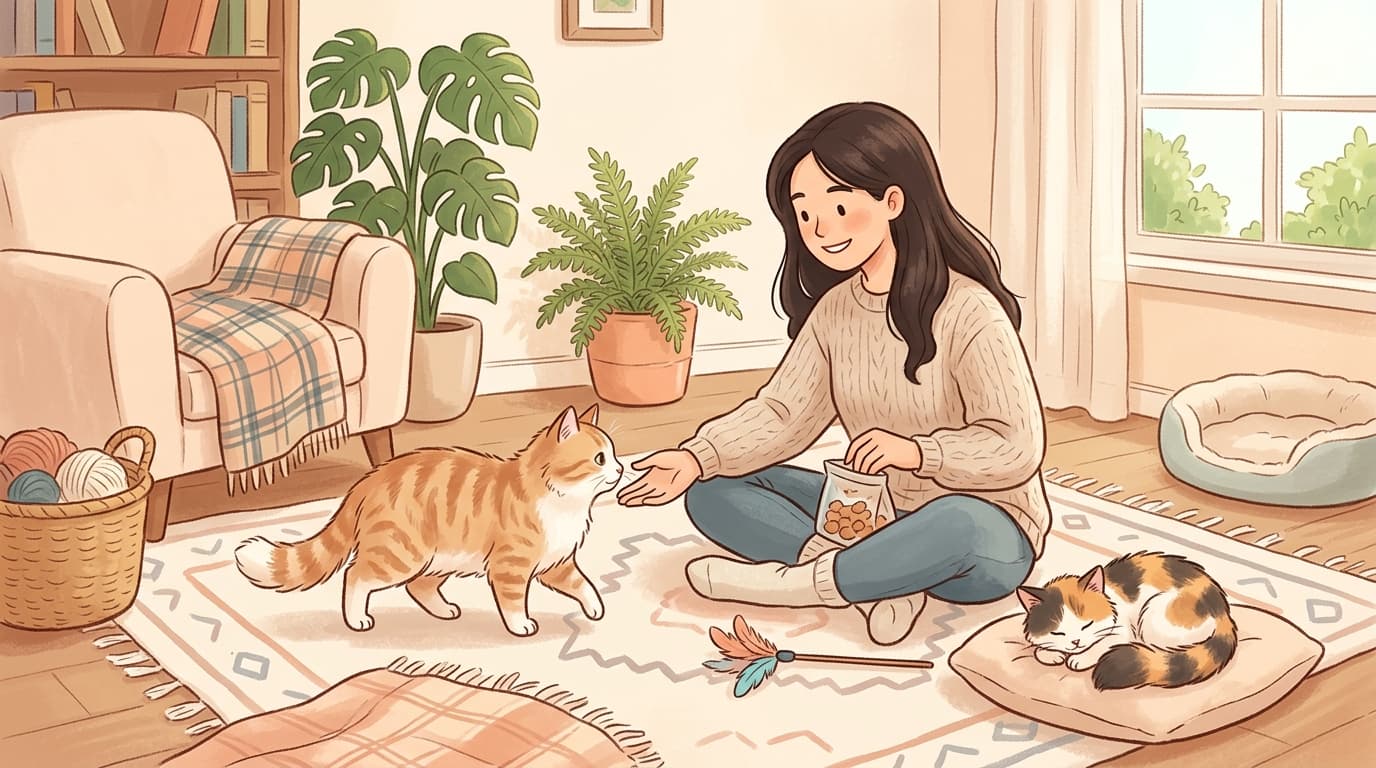
You’re minding your business and suddenly your cat presses their forehead into your hand or rubs their face along you. This behavior is sometimes called bunting.
Cats have scent glands around the face and forehead, and this is how they create a shared “family smell.” It’s not the same vibe as territorial marking meant to warn someone off. It’s closer to your cat saying, “You’re part of my inner circle.”
And because your cat has to step into your space to do it, it’s also a tiny act of vulnerability.
5) They steal your seat the second you stand up
You get up for water. You come back. Your cat is sitting in your exact spot like they pay rent.
Yes, warmth can be part of it—but cats often choose your seat even when there are warmer options. What they’re really after is the combination of your body heat and your scent left behind. It’s a clever way to cope with your brief absence by surrounding themselves with “you” until you return.
If your cat does this, take it as a compliment: your presence is their comfort.
6) The full belly display (real trust, not always an invitation)
A cat’s belly is their most vulnerable area. There’s a reason that, instinctively, they protect it.
So when your cat flops over and shows their stomach—especially without demanding play or trying to score treats—it’s a big deal. Only a smaller portion of cats do this spontaneously. It’s your cat saying, “I don’t feel like I need armor around you.”
One quick note most pet owners don’t realize: belly-showing is trust, but it doesn’t automatically mean “please rub my stomach.” Some cats love it, some tolerate it, and some will absolutely grab your hand like it offended their ancestors.
7) The gentle paw touch with no claws
You’re working, scrolling, reading… and you feel a soft paw placed on your arm. No pressure. No claws. No dramatic meowing.
This is one of the most tender signs of a secure bond because it’s so calm. An anxious cat often escalates—louder vocalizing, frantic attention-seeking. A confident cat can simply make light contact and feel connected.
It’s like your cat is saying, “I’m here with you,” without needing to take over the whole moment.
8) They watch you leave… and stay relaxed
A lot of people misread this. If a cat doesn’t freak out when you grab your keys, it can look like indifference.
But a cat who watches you go and remains calm may actually trust you more than you think. They’ve learned a kind of emotional “object permanence”—the belief that you still exist even when you’re out of sight, and that you come back. Cats who struggle with separation-related stress don’t have that same certainty.
So if your cat lets you leave with a serene look and a slow blink vibe, it can mean you’ve built something solid.
What these love signals have in common
None of these behaviors are flashy. They’re not big, obvious “I love you” moments. They’re quiet choices—choosing your scent, your space, your touch, your presence.
If you’ve noticed several of these signs, you’re not just housing a cat. You’ve created a place where your cat feels safe enough to be soft.
A simple takeaway you can feel good about
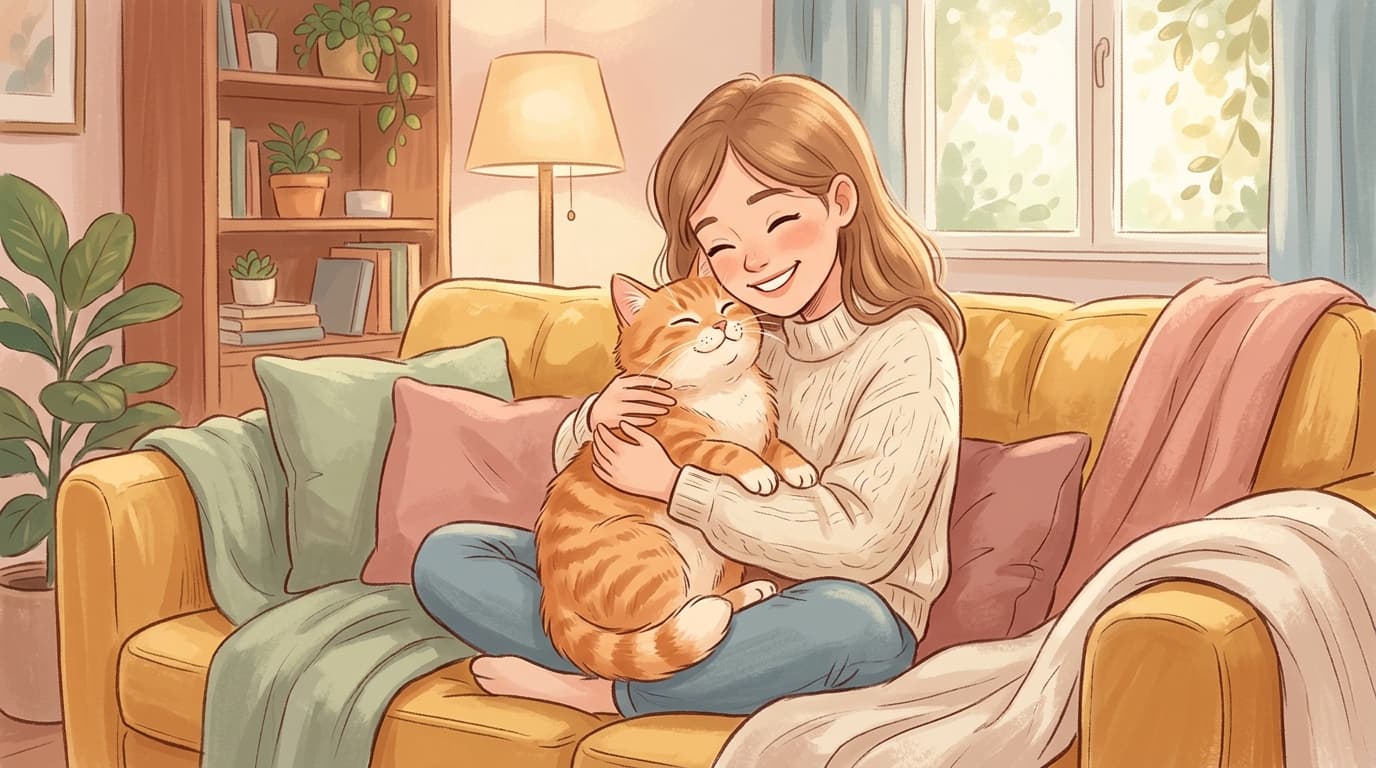
Love, in cat language, looks a lot like trust. Every time your cat curls up on your clothes or calmly watches you walk out the door, they’re telling you the same thing: “This is home, and you’re part of it.”
Meta description: From slow tail-tip curls to choosing your seat, these 8 subtle behaviors can reveal how deeply your cat trusts you.
Continue reading

Why Your Cat Puts a Paw on You: 5 Real Messages Hiding in That Tiny Tap
That gentle paw tap isn’t always affection. Here are 5 common reasons cats place a paw on you—and what to watch for.

Why Your Cat Licks You (And Why It’s Not Always About Love)
Cat licking isn’t just affection—it can be scent-marking, bonding, stress-soothing, or even checking on you. Here’s what it means.

How Cats Secretly Test You Every Day (And What They’re Really Looking For)
Cats test your patience, boundaries, and consistency daily. Learn the subtle signs—and how to earn real feline trust.