Cat Sounds Explained: What Your Cat Is Really Saying (From Chattering to Howling)
Learn what common cat sounds mean—chattering, purring, trilling, meowing, hissing, chirping, and howling—so you can respond better.
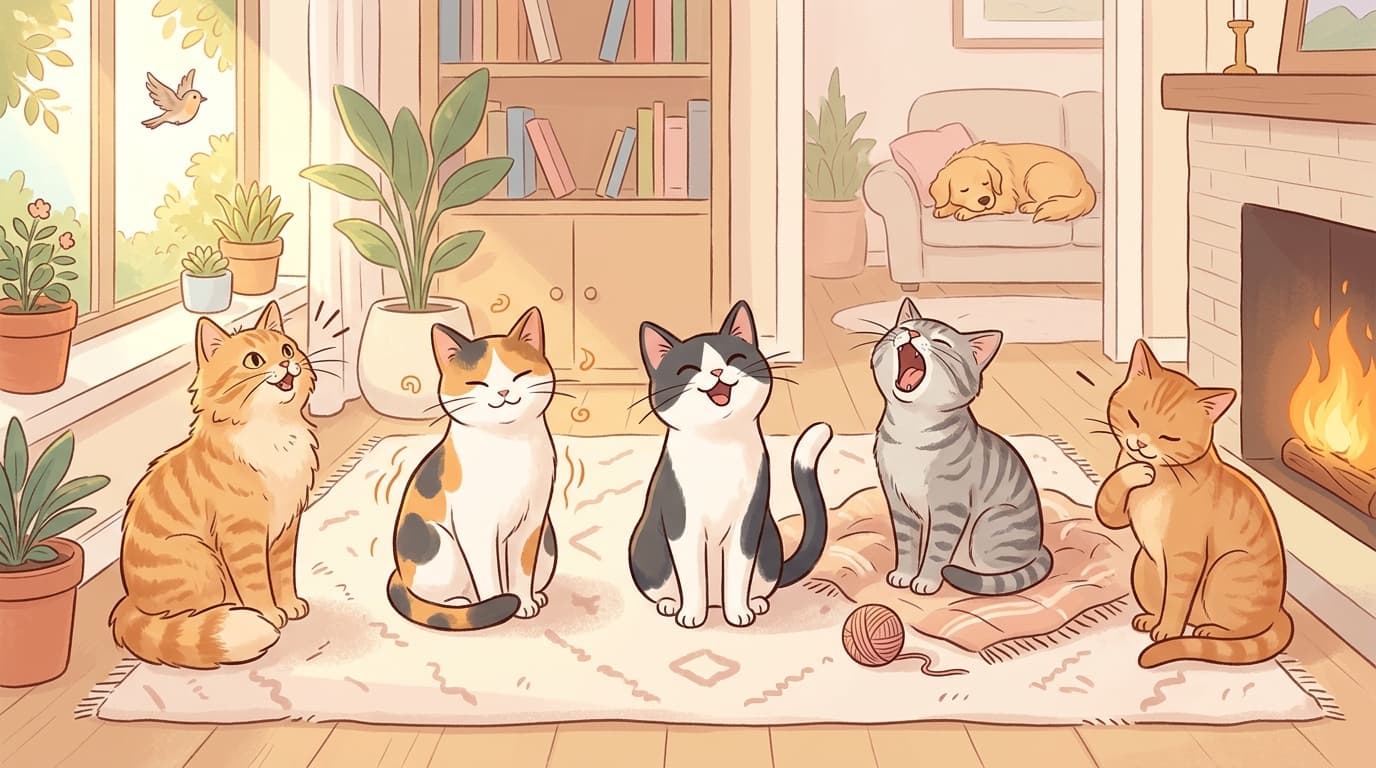
Your cat might look calm, but their mouth, tail, and ears can tell a completely different story. Those little noises—some cute, some alarming—are your cat’s way of getting a message across without using words. Once you know what to listen for, you’ll start “hearing” your cat differently.
Cat chattering: the window-hunter sound
If you’ve ever seen your cat freeze at the window while watching a bird, you’ve probably heard it: that rapid jaw-chatter, like their teeth are trembling with excitement. Cat chattering usually shows up when the “prey” is visible but unreachable—birds on a branch, pigeons on a roof, a squirrel your cat can’t get to.
What’s going on is pure hunting brain. Your cat’s body is in stalk mode (still posture, wide eyes, whiskers pushed forward), but there’s nowhere for all that energy to go. Some people think the jaw movement is a practice version of the killing bite cats use in nature—aimed at the neck. Others notice cats sometimes seem to mimic prey sounds to lure animals closer. Either way, it’s an ancient instinct playing out on your windowsill.
Purring: not always “I’m happy”
Purring is the sound most of us associate with a content cat—like the classic curled-up-on-your-lap moment. And yes, a relaxed purr often means your cat feels safe and comfortable.
But purring can also show up when a cat is tense. The trick is to read the rest of your cat’s body:
- Happy purr signals: soft eyes, loose posture, slow tail movements, calm breathing
- Stressed/alert purr signals: stiff body, ears angled back, watchful stare, ready-to-move posture
Most pet owners don’t realize purring can be a “holding it together” sound. If the purr is paired with tension, your cat may be asking for space or reassurance rather than cuddles.
Trilling: the sweet hello (and “come with me”)
A trill is one of the most heart-melting cat sounds: a quick, musical noise that lands somewhere between a purr and a meow. Cats often trill to greet you when you walk in, to ask for attention, or to show friendly excitement.
It tends to come in short bursts, sometimes with the mouth barely open, almost like a tiny bird-like “brrrp.” Mother cats use this sound to call their kittens—and adult cats often keep that same “follow me” language for the humans they trust.
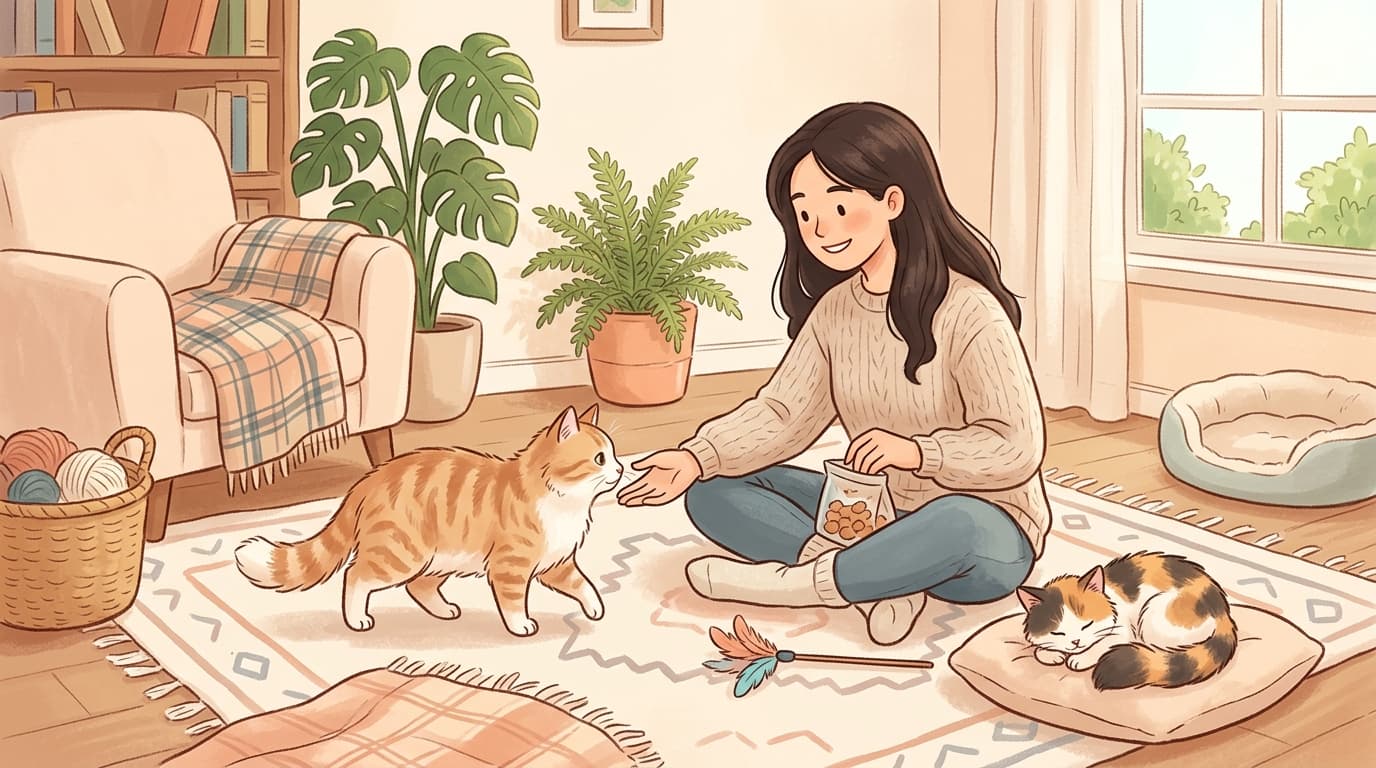
If your cat trills and then walks away while glancing back at you, go with it. They’re often leading you to something they consider very important (food bowl, favorite toy, a closed door that should definitely be open).
Meowing: your cat’s custom language for humans
Here’s a fun twist: adult cats don’t typically meow at each other much. Kittens meow to their mother, but as they grow up, that cat-to-cat meowing mostly fades. The meow you live with every day is largely a cat-to-human invention.
Cats learned that sounds work on us. Meow, and food appears. Meow, and doors open. Meow, and you look up from your phone.
Over time, many cats build a whole “vocabulary” that’s specific to their household. Listen to the pattern:
- Short, soft meows: simple requests (hello, notice me, quick check-in)
- Longer meows: stronger demands (I want it now)
- Fast, repeated meows: urgency (hurry up, something’s happening)
And that almost-human meow some cats do? That’s not random. It’s a cat who has fine-tuned their voice to get results from you specifically.
Hissing: usually fear, not “bad behavior”
A hiss can sound aggressive, but it’s most often about fear. Your cat hisses when they feel trapped, overwhelmed, or threatened—and it’s typically a final warning before they feel they have to defend themselves.
You’ll recognize it as a forceful exhale with the mouth partly open. A cat who hisses at the vet isn’t “mean.” A cat who hisses when a child grabs them isn’t “evil.” They’re being very clear: back up.
The best response is simple—stop what you’re doing, create distance, and lower the pressure in the situation. Ignoring a hiss or pushing for contact is one of the fastest ways scratches happen.
Chirping: excited commentary (or a friendly tap on your shoulder)
Chirps are quick, bright little sounds—often made while your cat watches something interesting outside like a bird or squirrel. They’re usually shorter and sharper than a typical meow, like tiny bursts of contained excitement.
Chirping can also be social. In a home setting, it may be your cat’s friendly way of grabbing your attention—like a gentle “hey!” Mother cats use similar sounds to encourage kittens to follow, and some adult cats bring that same style into their relationship with you.
If your cat chirps and looks toward the window or the food area, they’ve basically delivered a clear message without needing a full meow.
Howling: the sound you shouldn’t ignore
A howl is long, drawn-out, and impossible to miss—usually deeper and louder than a normal meow. It can sound like a mournful cry, and it often signals something is wrong.
Cats may howl during mating-related communication, but outside of that context, it can be an alarm bell. Cats may howl if they’re in pain, frightened, disoriented, or mentally struggling (older cats can howl at night when confused).
If your normally quiet cat suddenly starts howling repeatedly, treat it as a real change worth investigating.
Mating calls: loud, chaotic, and purely biological
If you’ve ever heard the intense, dramatic yowling of a cat in heat, you know it’s… a lot. This sound is common in unspayed females and unneutered males during mating periods. It can sound distressed, but it’s typically biology, not heartbreak.
The takeaway: listen with your eyes, not just your ears
Cat sounds are only half the message—your cat’s posture, eyes, ears, and whiskers fill in the meaning. The more you connect the noise with the moment, the faster you’ll understand what your cat is asking for. And honestly, it makes living together feel like a real conversation.
Continue reading

Does Your Cat Really Love You? 8 Quiet Signs of Trust Most People Miss
From slow tail-tip curls to choosing your seat, these 8 subtle behaviors can reveal how deeply your cat trusts you.

Why Your Cat Climbs on You: It’s Not “Just Love” (And What They’re Really Saying)
From lap-sitting to cheek rubs, your cat’s “cute” habits are secret messages about safety, scent, and trust.

Pumpkin for Cats: The Simple Food Add-In That Supports Digestion and Helps Push Out Worms
Plain pumpkin puree can support your cat’s digestion and make the gut less welcoming for worms—plus most cats accept it well.