Your dog is talking to you all day long—you just don’t hear it in words. A single paw on your arm, a heavy lean against your leg, that dramatic sigh on the couch… none of it is random. These are tiny, everyday signals that tell you how safe your dog feels, what they need, and how deeply they’re tuned into you.
Below are some of the most common dog behaviors (the ones you see a thousand times) and what they’re often really saying.
If you’ve ever been standing in the kitchen and suddenly felt your dog press their whole body into your leg, it can look like simple clinginess. But that full-body lean is often a comfort move—like your dog is “anchoring” themselves to you.
In the animal world, close contact equals safety. Dogs carry that instinct into your living room. For sensitive dogs (and especially dogs with a rough past), leaning can be their way of calming down and staying connected. And sometimes it goes the other direction too: they sense you’re tense and offer their steady presence as support.
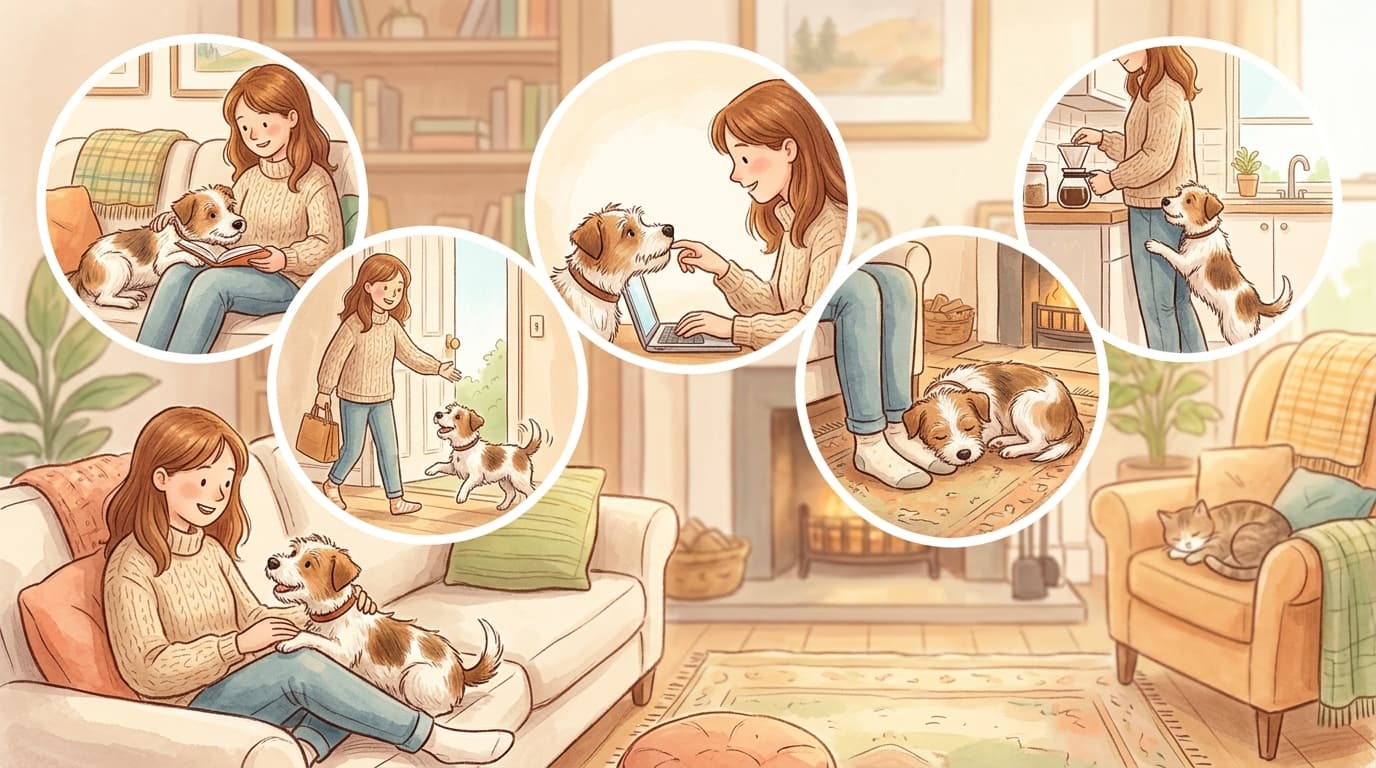
The “furry shadow” routine can be adorable… until you’re just trying to grab water and you trip over a tail. Still, following you is usually less about being nosy and more about pack instinct and attachment.
Dogs are built to track the important members of their group. Your movements matter to them. And many dogs also lock onto routines—your pace, your habits, even your mood shifts—so staying near you is how they keep their world feeling predictable and secure.
Your dog has a perfectly good bed, yet somehow they choose to sleep glued to your back like a warm, snoring backpack. That tight sleeping position is often about vulnerability.
Sleep is the one time an animal can’t stay alert. By choosing to sleep pressed against you, your dog is showing deep trust—like they believe you’re part of their safety system. Some dogs also seem to “stand guard” in their own way, choosing positions where they can be close to you and still monitor the room.
Long eye contact can feel intense, but with a relaxed, comfortable dog, it’s often a bonding behavior. That soft stare is emotional connection.
There’s also a reason it feels so powerful: mutual gazing has been linked with an oxytocin boost (the same bonding chemical humans associate with closeness). So if your dog is calmly looking at you like you’re the only thing in the room, it’s not a dominance contest—it’s attachment.
That big, slow exhale your dog does after flopping down near you? Most of the time, it’s a sign of release.
Dogs spend their day taking in information—sounds outside, movement in the home, your tone of voice, your energy. A relaxed sigh is often their version of “We’re good now.” If you hear it when the house finally settles, it’s a pretty strong clue your dog feels safe.
Yes, dogs yawn when they’re sleepy. But they also yawn when they’re managing emotions.
Yawning can be a calming signal—something dogs do to ease tension in themselves or in a situation. And many owners notice their dog yawns right after they do, which fits with the idea that dogs mirror the emotional state of the people they’re bonded to.
You’ll see your dog stand up, take two steps, and do a full-body shake like they just got out of a pool—except they’re bone dry. That shake is often a reset.
Dogs can use a shake-off to transition between emotional states: from alert to relaxed, from excited to calm, from slightly stressed to “back to normal.” It’s like they’re clearing the static.
When your dog pushes their face into your chest or wedges their head under your arm, it can look like extreme cuddling. Often, it’s comfort-seeking.
Some dogs do this to block out stimulation (noise, movement, chaos). Others do it during anxious moments. And because dogs experience the world through scent, pressing into you can also be a way of grounding themselves in the smell that means “home.”
This one confuses a lot of people. Your dog plops down with their back to you and stares into the hallway like you’re not even there—rude, right?
Usually, it’s the opposite. Turning their back can be a trust signal (they’re comfortable enough not to watch you). And if they’re sitting alert, facing outward, they may be positioning themselves to monitor the environment—basically covering the “outside world” so you can relax.
The head tilt is cute, but it’s also practical. Dogs adjust their head position to better locate a sound and to study what you’re doing.
Many dogs tilt when they’re trying to understand you—your words, your tone, your facial expressions. If you’ve ever said a familiar word and watched your dog tilt like they’re translating, you’re not imagining it.
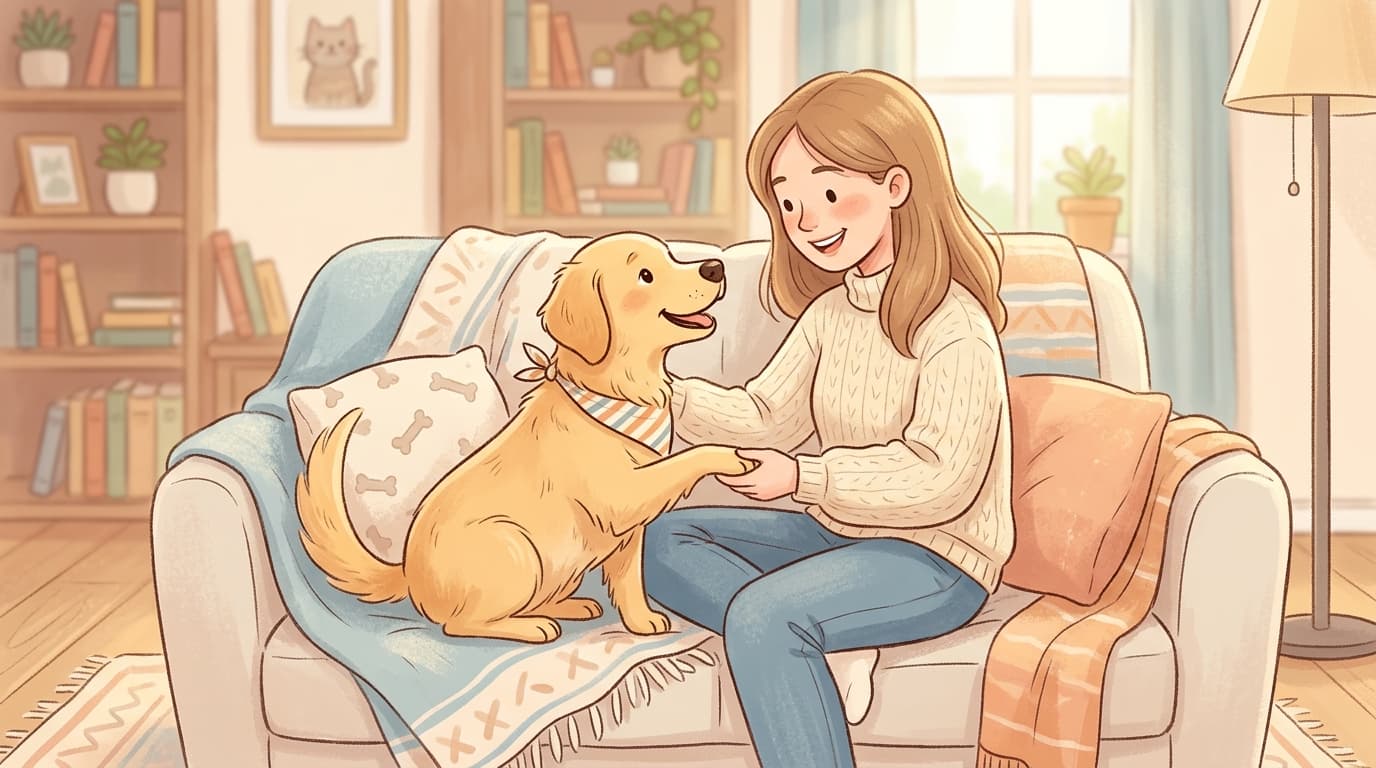
This is the big one. When your dog gently places a single paw on your arm or leg and just leaves it there, it’s often a connection gesture.
Sometimes it’s a simple request: “Hey, notice me.” But in quiet moments—especially when you’re sad, stressed, or distracted—a still paw can be your dog offering contact as reassurance. Physical touch is a huge part of dog-to-dog communication, and many dogs naturally use it to soothe and de-escalate emotion.
Most pet owners don’t realize how often dogs respond to subtle human cues: a change in breathing, slumped shoulders, a different energy in the room. That paw can be your dog’s way of saying, “I’m here with you.”
The sock presentation. The toy parade. The mysterious offering of a household item you didn’t even know was missing.
While it can be an invitation to play, it’s also commonly a celebration behavior—your dog channeling excitement into “holding a job.” Carrying something can help them manage big feelings, and offering a prized object can be a social gesture: sharing what they value with someone they love.
That wet-nose bump to the elbow is rarely subtle. A nudge is usually a direct check-in.
It can mean “pay attention,” “move,” “pet me,” or “let’s go.” Dogs also use nose nudges as gentle guiding behavior, similar to how adult dogs redirect puppies. Context tells you which version you’re getting.
Licking can be affection, grooming, appeasement, or self-soothing—sometimes all in one minute.
On one level, humans taste interesting (salt, scents, traces of food). On another, licking is a social behavior tied to bonding and respect. Many dogs also lick more when they’re keyed up, because the act itself can help them calm down.
Your dog’s “silent language” is happening constantly—through touch, posture, eye contact, and tiny rituals that repeat every day. The next time you feel that paw land gently on your arm, pause for a second and answer it with attention.
Your dog isn’t just doing a cute thing. They’re staying connected to you the best way they know how.