Dog Zoomies Explained: What Those Sudden House Sprints Really Mean
Dog zoomies aren’t just “extra energy.” Learn what triggers FRAPs, how timing matters, and how to read your dog after the sprint.
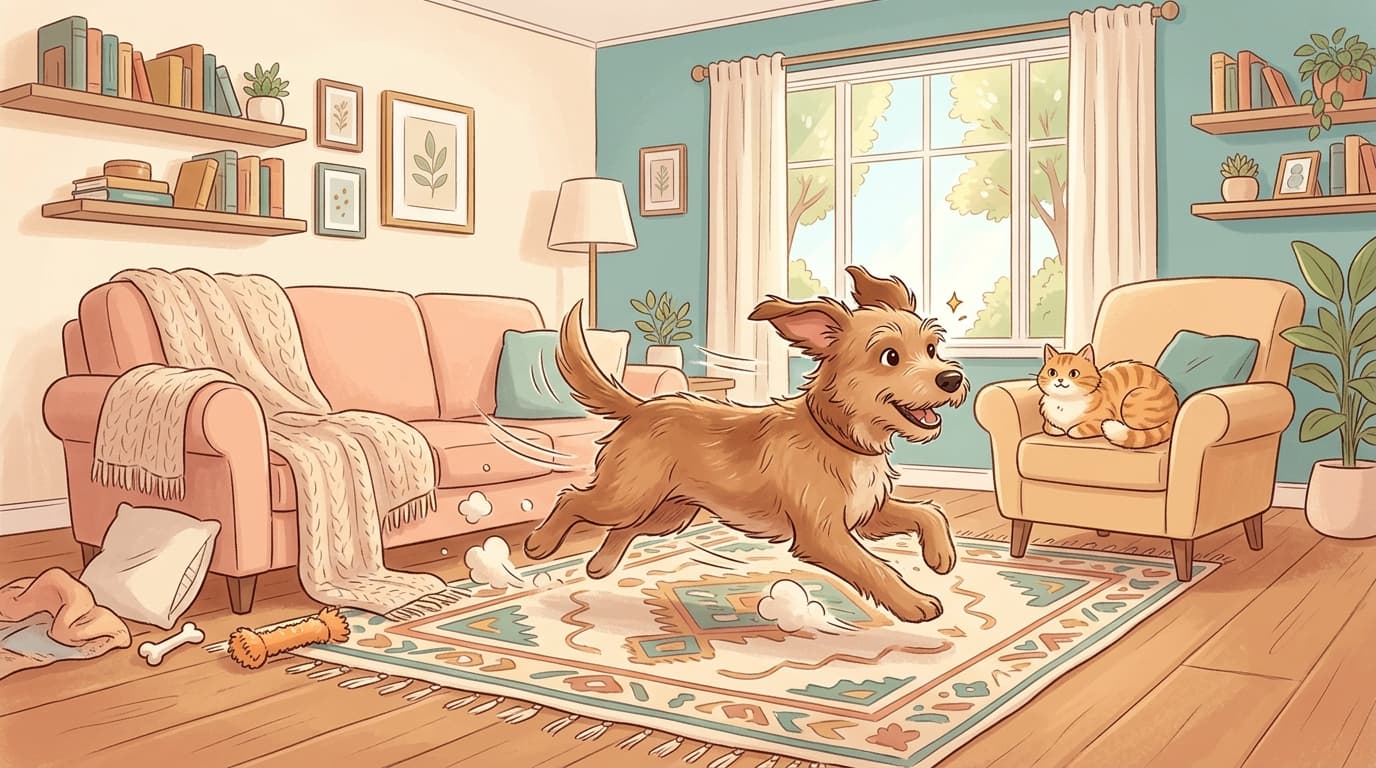
Your dog is peacefully existing… and then suddenly they’re doing NASCAR laps around your living room. It looks random, but it usually isn’t. In many cases, dog zoomies are your dog’s way of finishing a built-up “arousal cycle” and resetting their nervous system.
What dog zoomies really are (and why they happen so fast)
Zoomies are often described as “extra energy,” but that explanation is a little too simple. Many behavior pros describe these bursts as your dog hitting a threshold—after collecting little bits of stimulation all day—and then releasing it in one big, physical reset.
Veterinary researchers have a name for these episodes: FRAPs, short for frenetic random activity periods. The name sounds intense, but the idea is straightforward: your dog’s body has been storing arousal and tension (think adrenaline and stress hormones), and movement is how they clear the system.
If you’ve ever noticed your dog go from still to sprinting in a split second, that’s often the moment their internal “pressure gauge” tips over.
Why zoomies show up at transitions (nap time, your arrival, after a bath)
Zoomies happen a lot during moments of change because transitions create emotional shifts. Your dog finally gets an opening to let everything out.
Common transition triggers include:
- Waking up from a long nap
- You walking through the door
- A play session ending
- Finishing a bath
Here’s the part most pet owners don’t realize: if your dog consistently zooms in the evening or right when you get home, that pattern can mean they’ve been holding it together all day. They choose a moment that feels safe—often when you’re there and the house feels settled.
The “internal clock” factor: why dawn and dusk zoomies are so common
Some dogs seem to have a schedule: early morning chaos, then again around dinner time. That’s not your imagination.
Trainers have pointed out that many dogs have natural energy spikes around dawn and dusk, a rhythm linked to wild canids whose activity and hunting tended to peak during those hours. So if your dog predictably goes wild between roughly 5–8 p.m., biology may be teaming up with your household routine.
Not all dog zoomies mean the same thing
A zoom can look joyful and still be fueled by stress. Timing and context matter.
The happy zoomies
These often happen:
- After play
- After a nap
- When you come home
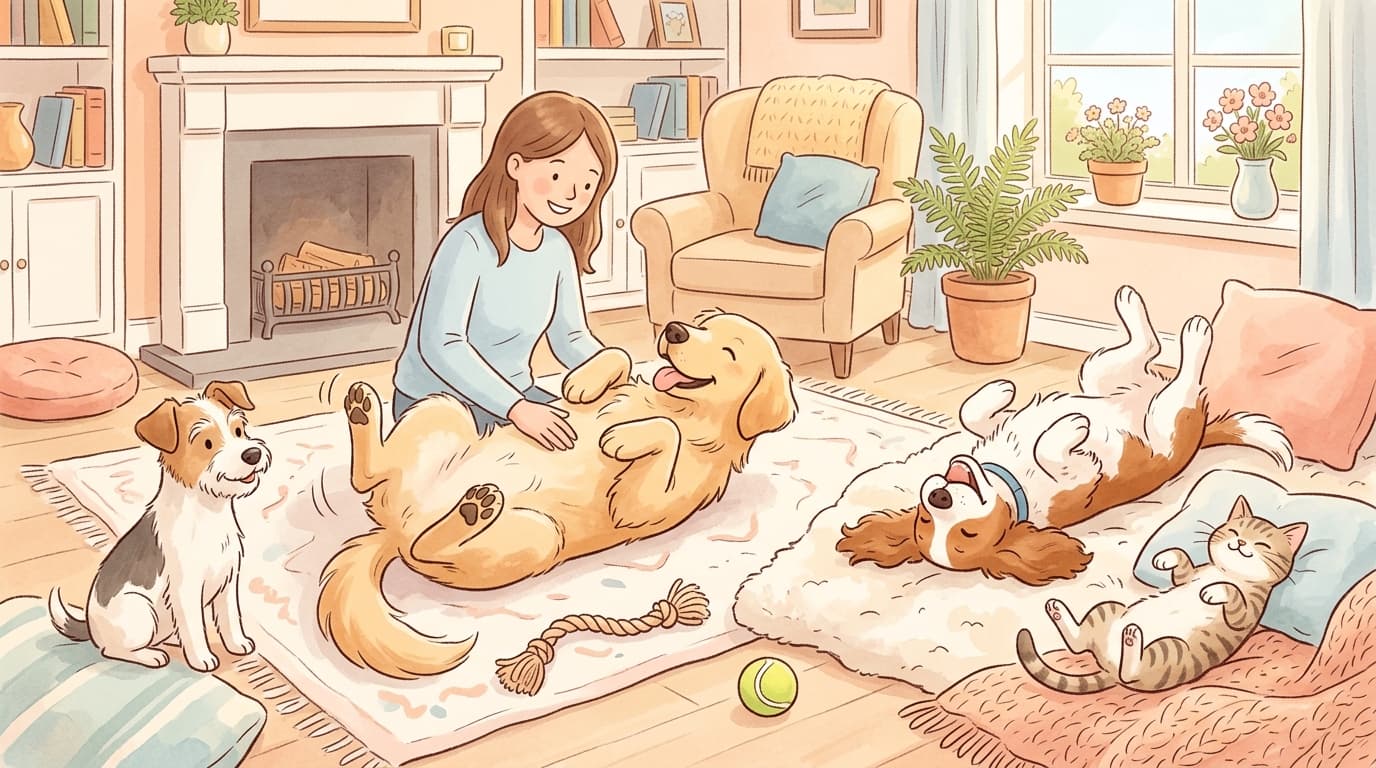
Dogs doing “joy zoomies” usually look loose and bouncy. You might see a floppy tongue, a relaxed tail, and a satisfied finish—like a play bow or a dramatic flop onto the floor.
There’s also a social element: observers of dog behavior have noted that zoomies can be contagious. One dog takes off at the park, and suddenly several dogs are sprinting together like they planned it.
The “I’m overloaded” zoomies (especially after walks)
If your dog zooms right after a walk, pay closer attention—especially if that walk was packed with things that rev your dog up (barking dogs, traffic noise, crowded sidewalks, surprises around corners).
For reactive or easily stressed dogs, the walk can stack up stimulation the whole time. Once they get home, the sprinting can be a release valve for all that stored tension.
One practical experiment: try a quieter route and build in more sniff time. Sniffing slows things down and can help your dog process the environment without hitting that overload point.
Post-bath zoomies: part stress relief, part “scent recovery”
If your dog bolts from the bathroom and starts rubbing on furniture like they’re trying to erase the entire experience, there’s a reason.
Dogs have an enormous number of scent receptors (the number varies by breed, but it’s famously high). A bath strips away their familiar smell and replaces it with something “wrong” to them—shampoo, clean towels, the whole situation.
After a bath, zoomies often serve two purposes:
- Burning off stress (baths can elevate cortisol for many dogs)
- Rebuilding their scent profile (movement and rubbing can help redistribute natural scent from skin and paw glands onto surfaces)
So yes, they may genuinely be trying to get their “dog smell” back.
The most useful clue is what happens after the running stops
The sprint is flashy, but the landing tells you what it meant.
Signs your dog’s zoomies were joyful release
After the zoom, a content dog tends to:
- Go soft in the body
- Relax their face and ears
- Flop down and pant calmly
- Settle near you (sometimes with a belly-up sprawl)
That’s a nervous system reset that worked.
Signs your dog’s zoomies were stress-driven
After the zoom, a stressed dog may:
- Keep their tail tucked
- Hold tension in the shoulders and face
- Look wide-eyed or avoid eye contact
- Pace, stay restless, or struggle to settle
In other words, the running ended, but the discomfort didn’t.
What you should do in the moment (and what to avoid)
If your dog is zooming safely, you don’t always need to stop it. What helps most is what you do right after.
Try this:
- Don’t immediately start giving commands. Let them “land.”
- Watch the body language as their breathing slows.
- If they come to you, be calm and still for a few seconds.
That quiet window right after zoomies is one of the clearest times to read how your dog is really feeling—and it can give you clues that change tomorrow’s walk, tonight’s routine, or how you handle the next bath.
A quick takeaway
Dog zoomies are often your dog’s built-in reset button, not random chaos. Pay attention to the timing, the trigger, and—most of all—how your dog looks once the running stops. The better you get at reading that “after” moment, the more you’ll understand what your dog has been carrying around all day.
Continue reading

7 Dog Body Language Signals Most Owners Miss (And What Your Dog Is Really Saying)
From play bows to doorway guarding, learn the dog body language signals that reveal trust, comfort, and connection.

Dog Body Language Signs of Love: 7 Little Moments That Mean “You’re My Person”
From the play bow at the door to sleeping pressed against you, these dog body language signs quietly prove how much your dog loves you.

Male Dogs vs Female Dogs: 5 Real Differences You’ll Notice at Home and on Walks
From pee-mail to leash pulling and rough play, here are 5 everyday ways male dogs tend to differ from females.