5 Subtle Cat Facial Expressions That Can Signal Pain (And How to Read Them)
Cats hide pain well. Learn 5 facial cues—squinty eyes, pinned ears, tense muzzle, stiff whiskers, low head—plus what to do next.
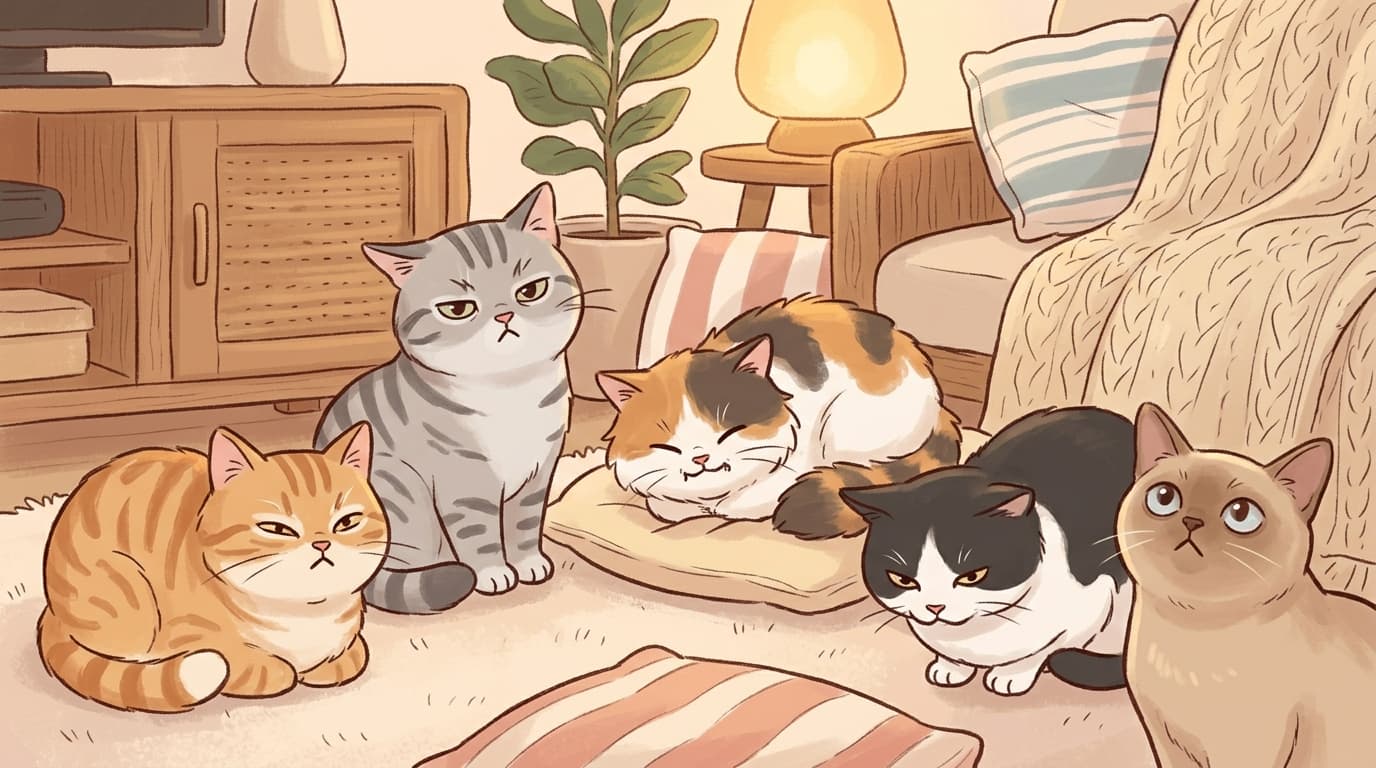
Cats are famously good at acting “fine,” even when they’re not. But if you look closely, your cat’s face can quietly give away discomfort—often before bigger symptoms show up.
Why cat facial expressions matter for spotting pain
Most pet owners don’t realize how much a cat’s face changes when something hurts. Unlike dogs, many cats won’t cry out or limp dramatically. Instead, they get tighter, stiller, and less expressive—like they’re trying to shrink into the background.
If you’ve ever thought, “My cat just looks a little off today,” you’re probably picking up on these micro-signals.
1) Partially closed, tense eyes (not sleepy eyes)
A relaxed cat blinks slowly and looks soft around the eyes. A cat in pain often holds their eyes half-closed for long stretches, with a more fixed or strained look.
This isn’t the cozy, drowsy squint of a cat napping in a sunbeam. It’s a persistent, guarded expression—like they’re bracing.
2) Ears turned back or flattened to the sides
Ears aren’t just for hearing; they’re mood indicators. When a cat’s ears sit low, rotate outward, or pin slightly back—and stay that way—it can signal discomfort.
You might also notice your cat seems less responsive to everyday sounds or to you calling their name. The change can be subtle, but the persistence is what makes it meaningful.
3) A tight muzzle and “serious” face
Pain can erase that familiar, neutral-cat expression. The muzzle may look tense, the mouth area less relaxed, and the overall face more stern.
This is one of the easiest signs to misread. People often assume the cat is grumpy, annoyed, or sleepy, when it may actually be physical discomfort.
4) Whiskers pushed forward and looking stiff
Whiskers “talk,” too. When a cat is comfortable, whiskers typically rest more to the sides. When something hurts, you may see whiskers held rigid and angled forward.